



By Anzar Mehraj
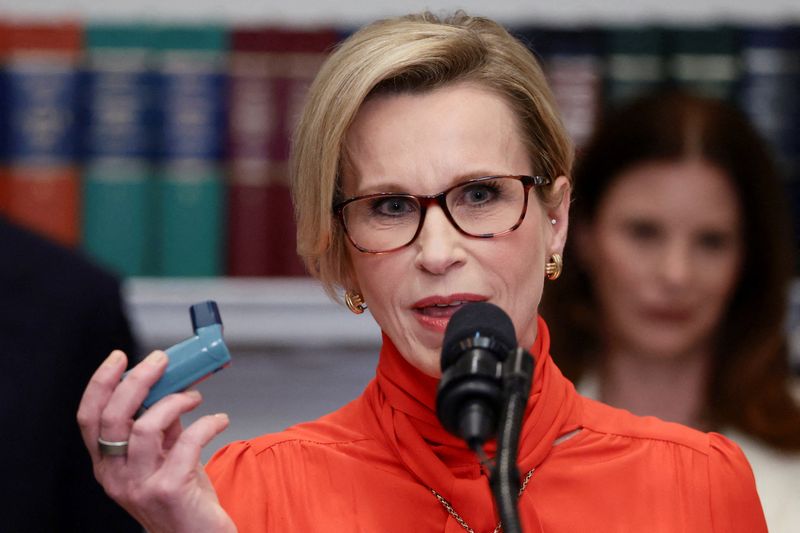
Nov 4 (Reuters) - HP Inc on Wednesday named former GSK chief and Microsoft board member Emma Walmsley as CEO to steer the PC maker through a memory-chip crunch that has driven up prices
and triggered a steep industry downturn.
She succeeds interim CEO Bruce Broussard on January 4, with Broussard transitioning to board chair in place of Chip Bergh.
Walmsley, who led GSK from 2017 until December last year, takes charge without prior tech hardware experience as HP looks to revive a sluggish PC market and capitalize on demand for AI-enabled devices.
Her seven years on Microsoft's board are her closest brush with the tech sector.
"Walmsley has no background in hardware, but she has experience steering a large company through a major restructuring, including the separation of Haleon from GSK, and that is closer to what HP needs," said Vitor Madeira, senior market specialist at Capital.com.
Shares of the Palo Alto, California-based company were up 6.6%. Through its last close, the stock has gained nearly 27% so far this year.
It would not be the first time Walmsley has faced doubts over her fit. Ahead of GSK's spinoff of Haleon, activist investors Elliott and Bluebell questioned her ability to lead "New GSK" without steady consumer health revenue to offset the unpredictability of drug development.
Their criticism centered on her lack of pharma experience, given she had previously run the consumer unit and spent 17 years at L'Oréal.
The key test, Madeira said, is whether she can protect profitability through the downturn and find growth beyond traditional PCs, such as AI devices, before memory costs ease.
HP, like peers Dell Technologies, Apple and Lenovo, is caught in a global memory chip squeeze, as massive AI data center buildouts absorb much of the available capacity.
The strain showed in HP's third-quarter results in August, when PC shipments fell 16% even as the unit's revenue rose 18% on a shift toward pricier, higher-margin products including AI PCs.
The company said in an SEC filing in September it is not providing a financial outlook for fiscal 2027 and assumes industry-wide PC unit volumes will decline in the mid-single digits next year.
(Reporting by Anzar Mehraj in Bengaluru; Editing by Anil D'Silva, Vijay Kishore and Leroy Leo)