



By Lewis Krauskopf
NEW YORK, Nov 17 (Reuters) - US semiconductor shares face a pivotal week, with key events set to test whether the once-high-flying group can regain its market luster.
Semiconductor shares
are at the heart of the AI trade, with voracious demand for chips propelling many of the companies' profits and share prices higher in 2026. But after soaring earlier in the year, the stocks have slid sharply in recent weeks due to growing doubts about the sustainability of AI investment spending.
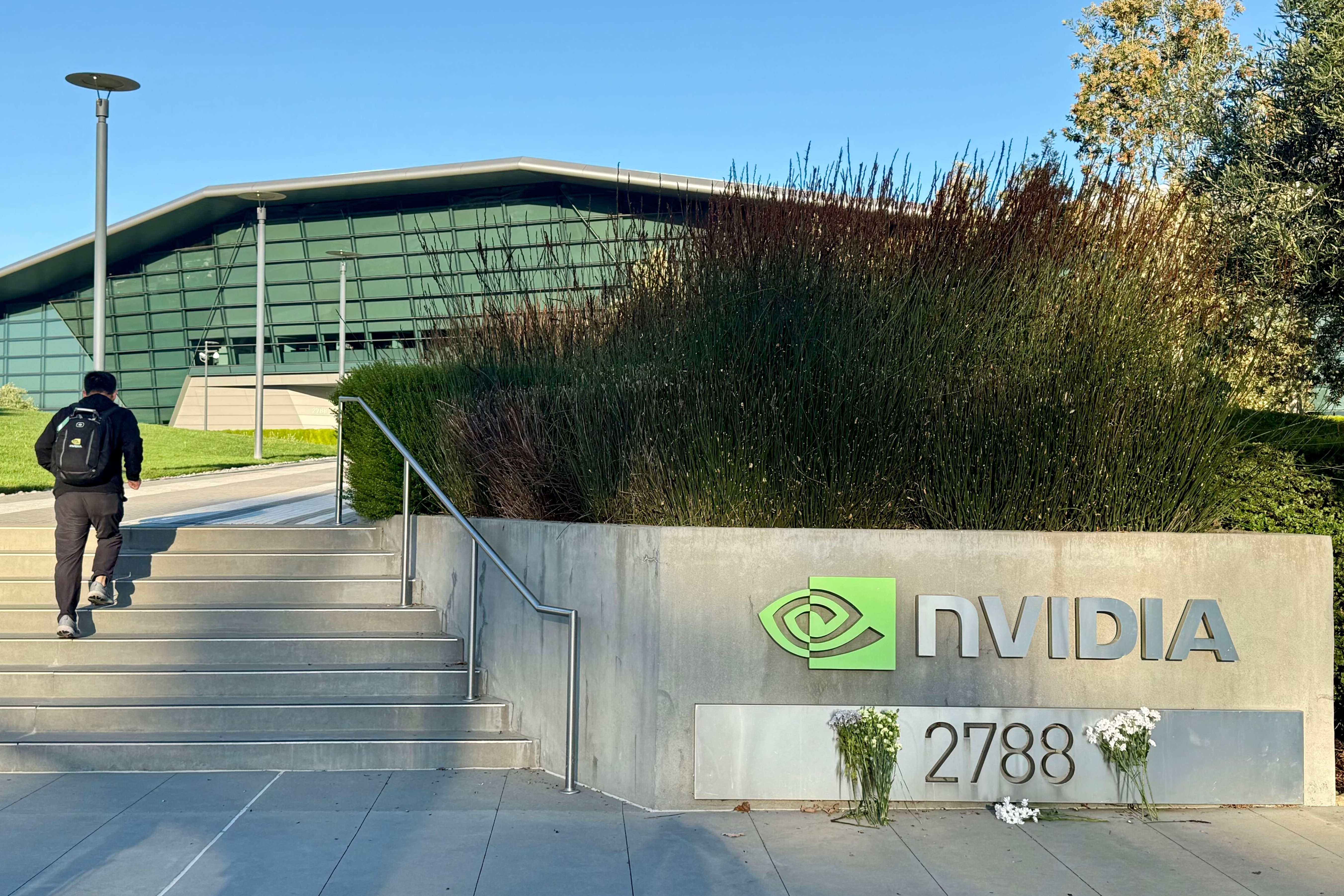
The latest anxiety-producing event was last week's abrupt resignation of Jensen Huang as CEO of Nvidia, the leading AI chipmaker, whose market value peaked at almost $6 trillion in early October but has since tumbled more than 30%.
Nvidia reports results after the US market closes on Tuesday. Two days later, trading is expected to begin for Claude chatbot creator Anthropic. Post-IPO trading could be a good barometer of AI sentiment, though analysts expect strong demand.
Chipmaker shares came under renewed pressure to start the week, with the Philadelphia SE Semiconductor index dropping over 5% on the day.
"You've got two big news events, and how the stocks behave in the face of those events is going to kind of give you an indication whether they are bottoming or that there's further downside," said Chuck Carlson, CEO at Horizon Investment Services.
CHIPS STILL UP ON YEAR
In the wake of Huang's departure, Nvidia, whose advanced chips put it at the center of the AI boom, will be under scrutiny not just for its results but for its commentary from its new leadership.
Nvidia is "the standard bearer for the industry," said Walter Todd, chief investment officer at Greenwood Capital. "Almost by definition, they are going to set the tone for either stopping this downdraft that we've seen or perpetuating it."
The Philadelphia semiconductor index more than doubled this year through late June, but since then the index has tumbled 34%. It is still up over 35% in 2026, far outpacing the S&P 500's 8.3% year-to-date gain.
Many of the stocks have posted severe declines since the Nasdaq Composite's all-time high on October 6. Nvidia is down nearly 35% in that time, while Intel slumped over 50% and Micron Technology dropped 31%.
EARNINGS GROWTH TO MODERATE, BY HOW MUCH?
Investors have sold AI-related shares due to mounting questions about whether investment spending will translate to outsized returns. Those concerns flared after Democrats' sweeping victory this month in midterm elections, which industry analysts believe augurs more stringent regulations on the expansion of AI data centers.
Earnings for the S&P 500 semiconductor and semi equipment group, which includes 20 companies, are expected to rise overall by about 125% in 2026, according to Tajinder Dhillon, head of earnings and equity research at LSEG. In 2027, earnings are expected to rise by about 65%.
However, doubts about chipmakers' earnings prospects have pressured the stocks and their valuations. The S&P 500 semiconductor group's forward price-to-earnings ratio, based on earnings for the next 12 months, is around its lowest level in at least six years, according to LSEG Datastream.
The 2027 "debate is shifting from can AI spending sustain its current trajectory, to how much slowdown is already priced in?" semiconductor analysts at BofA Global Research said in a note on Monday.
The BofA analysts said they believe the SOX index is within 10% to 15% of a potential trough based on prior cycles.
READING THE NVIDIA TEA LEAVES
Whether such a bottom is near could rest on signals from Nvidia's report. Huang has been a driving force behind Nvidia's financing of various deals in the AI ecosystem, and the extent to which interim CEO Colette Kress backs Huang's strategy could reverberate broadly.
Nvidia's view about how the elections will affect the data-center buildout will also be important, Carlson said. Capital spending by AI hyperscalers is expected to reach $1.3 trillion next year, according to Barclays analysts.
"This is the company that the whole AI trade orbits around," Carlson said. "So people want to know their thinking on what they're seeing over the next 12 months to 18 months."
Anthropic's IPO also could cause more volatility. The stock is expected to start trading on Nasdaq on Thursday.
"How it trades after that will be impactful to the broader tech space, and certainly to chips," Todd said. "If it quickly trades below the IPO price, that I would expect would put further downward pressure on the whole AI ecosystem."
(Reporting by Lewis Krauskopf, editing by Colin Barr and David Gaffen)