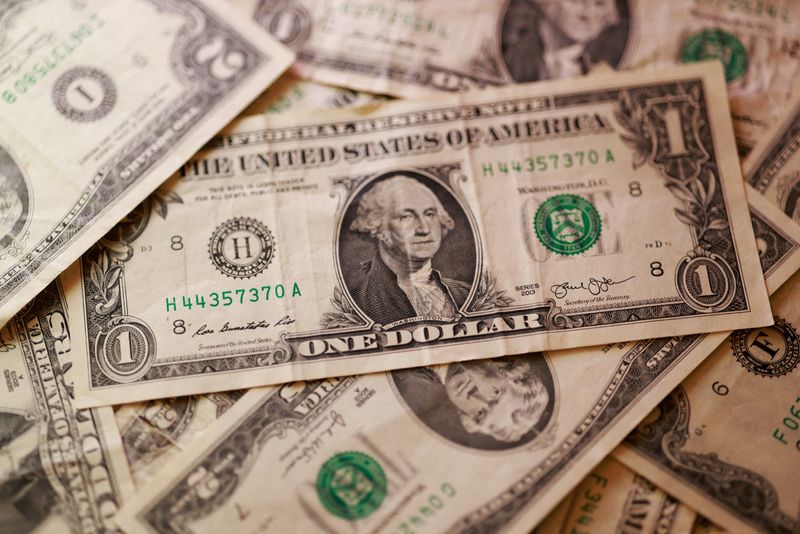




SHANGHAI/SINGAPORE, Nov 19 (Reuters) - The US dollar climbed to a fresh 19-month high on Thursday after Federal Reserve meeting minutes and hawkish comments from a Fed official pointed to further interest
rate hikes, while the Aussie dollar slipped to a 10-month low after soft jobs data.
A broadly stronger US unit pressured the euro to near its lowest since April 2025, last trading at $1.0963, while sterling eased to a one-month low at $1.3117. The yen eased against the dollar at 159.56, hovering around the closely watched 160 level.
The dollar index edged up 0.1% at 103.97, its highest level since April 2025.
Fed officials saw a growing risk last month that they might need to intensify their efforts to control inflation, even as they agreed to keep rates steady for the moment, the minutes of their October 27-28 meeting showed on Wednesday.
Fed Governor Christopher Waller reinforced that tone, saying the central bank should either raise rates by 50 basis points in December or signal faster hikes in 2027.
"More hawkish Fed pricing has so far offset weakness in technology stocks, keeping the dollar supported," OCBC analysts said, adding that a deeper downgrade to expectations for AI capital expenditure would challenge that support by pushing down US real yields and weakening equity inflows.
Chip bellwether Nvidia
Investors are bracing for the stock market debut of Anthropic later on Thursday as a test for AI sentiment.
FALLING YIELDS AND OIL PRICES
Treasury yields have fallen despite the dollar's strength. The 10-year yield fell to 5.05%, a one-week low, after easing about 4 basis points overnight following a solid 20-year auction. Yields move inversely to bond prices.
"Falling oil prices helped ease some inflation concerns, while weakness in US equities and worries about economic growth may have encouraged some safe-haven buying in Treasuries," said Dilin Wu, a research strategist at Pepperstone, adding that the dollar's performance will depend on how its interest rate advantage and safe-haven demand evolve.
Oil prices steadied on Thursday after losses in the prior session as expectations for a market surplus outweighed lingering worries about Middle East supply amid attacks on shipping in the Strait of Hormuz. Brent crude futures were trading up 5 cents, or 0.05%, at $92 a barrel.
Gold stabilised at $3,729 an ounce after a sharp selloff overnight on hawkish Fed signals.
The Swiss franc weakened 0.1% to 0.8435 per the US dollar. New Zealand's kiwi firmed 0.1% at $0.5496.
The Aussie dropped as low as $0.6662 for the first time since January. Australia's employment fell for a second straight month in October and the jobless rate climbed to a five-year high, bolstering the view that rates have likely peaked.
Following the data, UBS economist George Tharenou brought forward his forecast for the first Reserve Bank of Australia rate cut to August from November of next year, and extended the easing cycle to three cuts from two, citing elevated inflation and a deterioration in the labour and housing markets.
(Reporting by Li Gu in Shanghai and Ankur Banerjee in Singapore; Editing by Kevin Buckland)