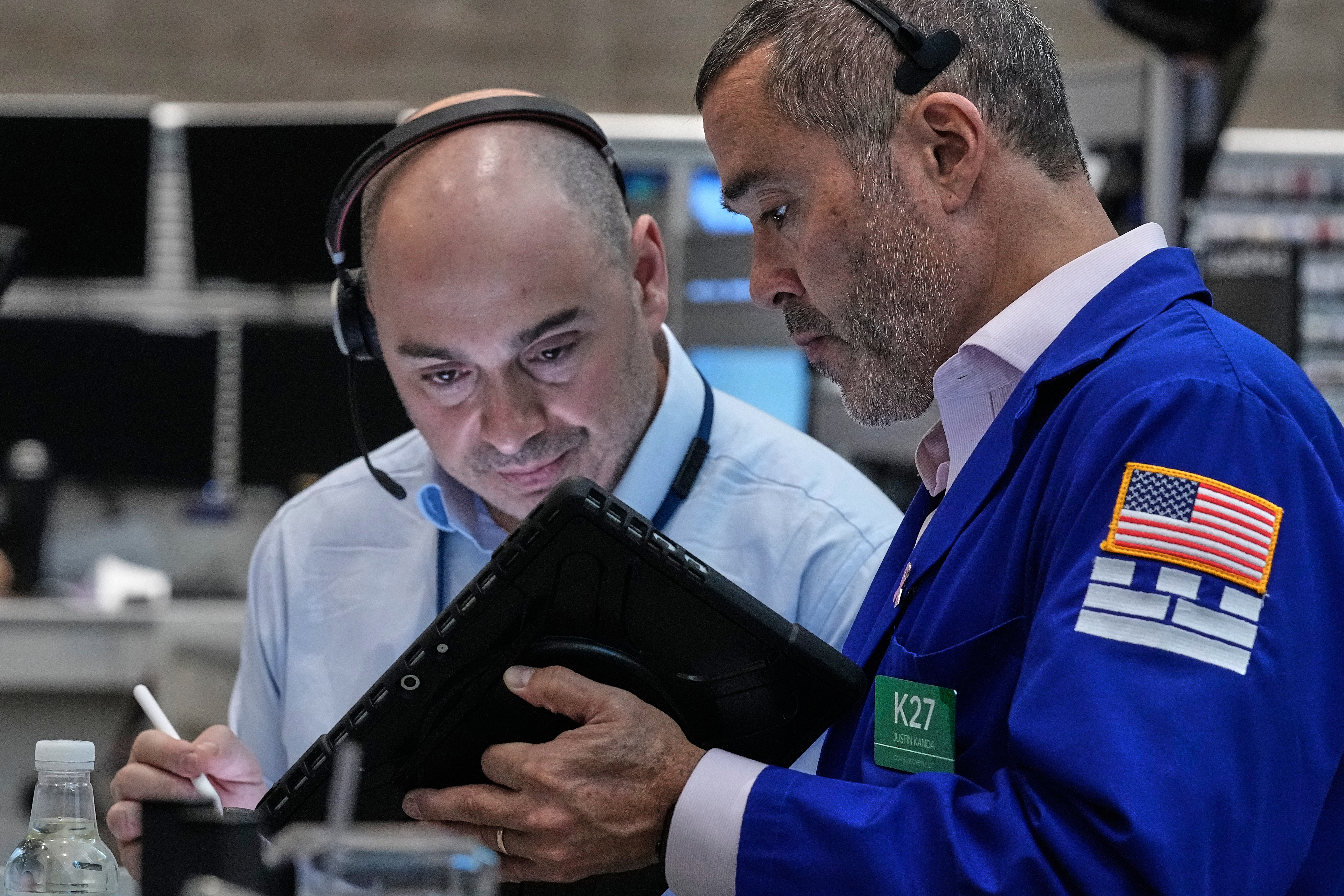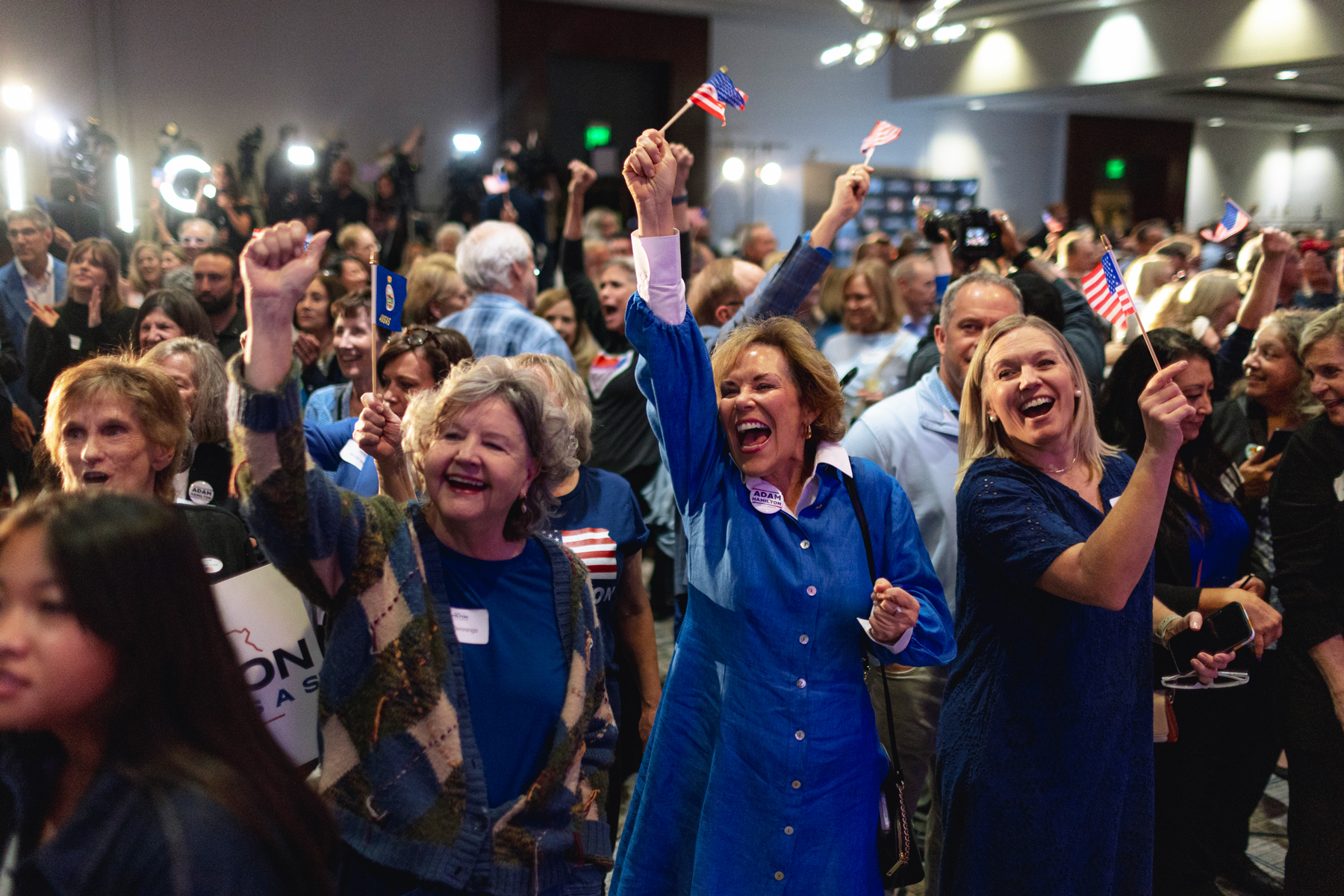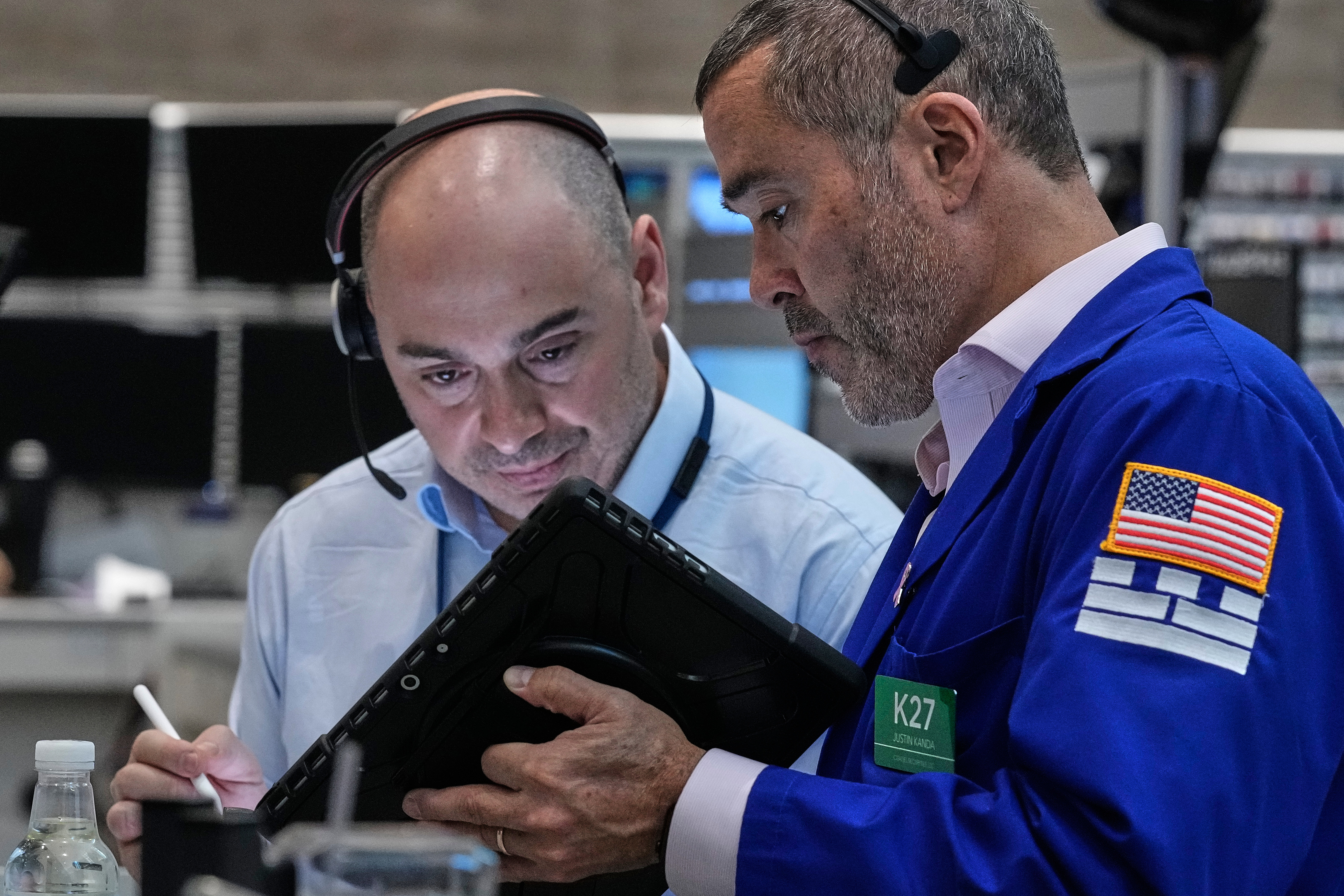


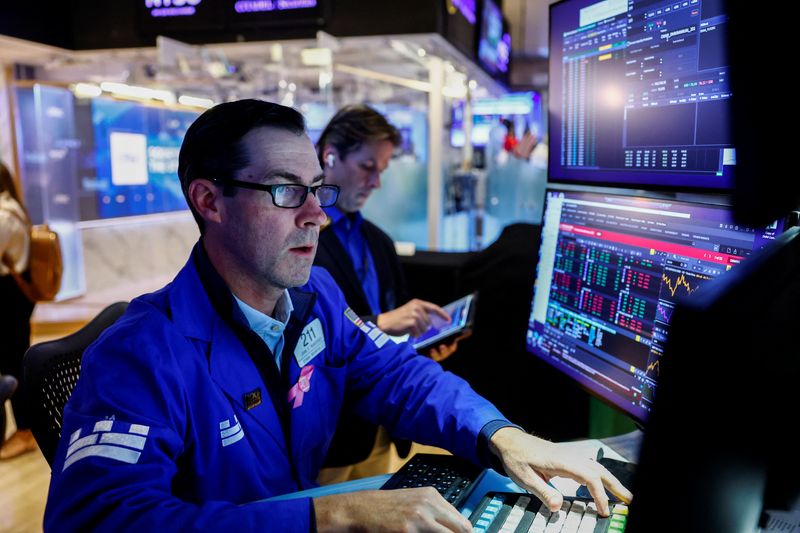

NEW YORK (AP) — U.S. stocks are soaring Wednesday after President Donald Trump’s party lost its sole control of Washington in the midterm elections.
Stocks generally do well in the months following any
midterm U.S. election, regardless of who wins, and the S&P 500 jumped 1.7% toward its best day since April. The Dow Jones Industrial Average was up 1,546 points, or 3%, with an hour remaining in trading, and the Nasdaq composite was 1.7% higher.
Stocks of hospital owners and dollar stores serving low-income Americans helped lead the widespread rally following the nationwide losses for Republicans. Investors, meanwhile, see risks ahead for Trump’s social-media company, the artificial-intelligence industry and businesses owned by Elon Musk, who donated heavily to Republicans.
The price for a barrel of Brent crude oil also tumbled below $95 and touched its lowest level in two months. Vice President JD Vance blamed the war with Iran, which caused a spike in oil prices, for Republicans’ midterm losses.
Strategists along Wall Street had been urging investors not to get swept up in the election because it may not matter much for the broad market in the long term. Prices for stocks depend more on where profits for companies and interest rates are heading than on who controls what in Washington.
“Earnings trump elections,” according to Brian Jacobsen, chief economic strategist at Annex Wealth Management.
Still, Wall Street may have gotten a preferred political scenario as Democrats are set to take control of both the Senate and the House of Representatives. Wall Street generally prefers split control of Washington because it lessens the risk of transformative changes to the economy.
Much remains impossible to predict, of course, and Trump retains executive authority over key areas such as defense, foreign policy and in some instances trade.
A downbeat forecast could be that “Trump is not now a lame duck, but an angry duck” who might restart tensions over tariffs and NATO allies’ levels of military spending, said Carsten Brzeski, global chief of macro at ING Bank.
An optimistic view, Brzeski said, is that Trump becomes “a tame duck ... that he will slow down any disruptive efforts and that he will put more focus on trying to win the Nobel Peace Prize by ending the two big wars without big disruption, and on trade, nothing happens but a few words.”
Here’s a look at some of the moves rippling through financial markets:
Trump’s social-media company, Trump Media & Technology Group, was one of the market’s bigger losers, down 23.5%.
Since briefly touching a peak of $175 five years ago, it’s dropped below $5. Its main business is Truth Social, which is most well known for Trump’s postings on the platform.
Elon Musk’s businesses also struggled. Tesla fell 2.6%, and SpaceX sank 5.3%. Musk, a former top Trump adviser, is among the possible targets for investigations by a Democratic-controlled Congress.
Trump has been a big backer of the AI industry, and Democratic victories across the country could mean more regulation or restrictions. Concerns have grown across political parties about AI in general.
Investors see Democratic wins in Texas in particular as possibly slowing the further build out of AI data centers. AI-related stocks came into Election Day already under pressure because of worries their prices had shot too high.
Nvidia, the chip company that quickly became the poster child of the frenzy around AI-related stocks, sank 2% and was the heaviest weight on the S&P 500. CoreWeave, a company that rents out access to AI chips to customers over the cloud, dropped 9.6%. Advanced Micro Devices slipped 0.3% even though the chip giant reported a stronger profit for the latest quarter than analysts expected.
Companies that have been spending heavily on AI chips held up better. Alphabet rose 4.1%, for example. It had tumbled more than 12% Thursday to its worst loss ever on worries that it was spending too much on AI investments.
A Democratic-led Congress could push Trump to pull back on the war with Iran.
That helped send down stocks of companies that make weapons and other equipment for the U.S. military, including drops of 6.7% for Lockheed Martin, 4% for Northrop Grumman and 2.5% for General Dynamics.
The possibility of pressure to pull back on the war sent the price for a barrel of Brent crude oil plunging 8.7% to $94.62.
The price for the most actively traded contract in the Brent market has been veering between roughly $70 and $120 per barrel since just before the war with Iran began.
That hurt stocks of big oil companies, which had been rallying for much of the year. ExxonMobil fell 4.9%, and ConocoPhillips dropped 56%.
Falling oil prices usually hurt stocks of renewable-energy companies because they can lessen the incentive to switch to other energy sources. But Democratic control of Congress could light the way for companies in the solar and wind industries.
First Solar rose 4.7%, and Enphase Energy climbed 4.3%.
A Democratic-led Congress could try to reverse some of the cuts to federal healthcare and food assistance that Republicans approved during the summer in their “One Big Beautiful Bill Act.”
That helped stocks climb across the healthcare industry, including a rise of 10.9% for HCA Healthcare, which runs hospitals and ambulatory sites.
Retailers also benefited on hopes that Democrats may push policies to help Americans struggling to keep up with the fast-rising cost of living. Dollar Tree, which focuses in particular on lower-income Americans, had one of the market's bigger leaps and rose 8.7%.
In the bond market, Treasury yields tumbled as oil prices dropped and took pressure off inflation. It could also be a signal that investors see less risk of Washington piling even more debt onto its already big mountain with the coming end to one-party control.
Treasury yields had surged through the summer and reached their highest levels in decades because of worries about the U.S. government’s big debt, along with higher inflation and other concerns. A Congress controlled by Democrats could provide a check against more spending and cuts to taxes that would widen Washington’s deficit.
The yield on the 10-year Treasury dropped to 4.88% from 4.95% late Tuesday.
Indexes climbed across most of the world. Stocks leaped 2% in Paris, 2.2% in Shanghai and 1.8% in London. Japan’s Nikkei 225 was an outlier and fell 1.4%.
___
AP Writer Elaine Lai contributed to this report from Hong Kong, and McHugh contributed from Frankfurt, Germany.