






A New Era of Road Safety
The Telecom Regulatory Authority of India (TRAI) has put forth a groundbreaking proposal designed to significantly elevate road safety standards and streamline
traffic management across the nation. This initiative centers on implementing an automated wireless communication framework, specifically engineered to provide drivers with immediate warnings about potential collision hazards and to identify instances of traffic rule infractions. This crucial proposal was formally introduced through a consultation paper released recently, marking the initiation of a formal regulatory pathway for this forward-thinking technology, which promises to revolutionize how vehicles interact with their environment and each other.
Seamless Data Exchange Network
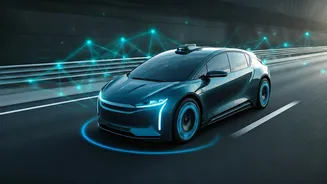
At the core of TRAI's proposal is a sophisticated system known as vehicle-to-everything (V2X) communication. This technology facilitates the instantaneous exchange of data among vehicles, traffic control systems, and the broader cellular network infrastructure, all coordinated through compact wireless devices installed within vehicles. The potential benefits are immense: enhanced driver safety through proactive alerts about potential collisions or sudden loss of vehicle control, and improved traffic efficiency via dynamic optimization of traffic signal timings and intelligent route planning to alleviate congestion and reduce fuel consumption.
Tackling Fatalities Head-On
The driving force behind this ambitious proposal is India's alarming road fatality rate, which tragically claimed an estimated 173,000 lives and injured 463,000 people in 2023 alone. TRAI highlights that conventional safety measures like airbags and seatbelts are no longer sufficient, as human error in recognition and decision-making contributes to approximately 92% of all road accidents. The consultation paper explicitly states that the 'first and the foremost reason for adoption of V2X Technology/Intelligent Transport System is to improve road safety,' underscoring its critical role in saving lives.
Global V2X Adoption
Globally, numerous countries have proactively established the necessary regulatory frameworks and fostered industrial development for V2X technology. Automotive manufacturers are actively integrating communication hardware into their latest vehicle models, urban centers are retrofitting traffic intersections with roadside communication units, and governments are allocating specific radio spectrum to support these advancements. China stands out as a leader in these endeavors, though significant trials and implementations have also been successfully conducted in countries like the United States, Japan, South Korea, and the United Kingdom.
Diverse Communication Modes
The TRAI consultation paper meticulously outlines the operational framework for the proposed V2X network, detailing four distinct communication modes. These include vehicle-to-vehicle (V2V) for direct car-to-car alerts, vehicle-to-infrastructure (V2I) for communication with road elements like traffic signals, vehicle-to-pedestrian (V2P) to warn drivers of vulnerable road users, and vehicle-to-network (V2N) for broader connectivity. Each mode serves unique safety functions, such as providing warnings about sudden braking from a preceding vehicle, broadcasting real-time traffic information from smart signals, and alerting drivers to pedestrians entering their blind spots.
Phased Rollout Strategy
India has already witnessed preliminary successes with real-world trials of this advanced technology on its roads. A notable trial in 2022 demonstrated effective communication between traffic infrastructure and emergency vehicles and buses up to 800 meters away, leading to marked improvements in travel times and reductions in signal waiting periods. Recognizing the substantial undertaking involved in a full-scale deployment, a dedicated task force has recommended a phased implementation approach. This strategy prioritizes the immediate deployment of vehicle-to-vehicle (V2V) features, which can be activated without the necessity of extensive roadside infrastructure, paving the way for gradual adoption and integration.