






The G-Body's Impact
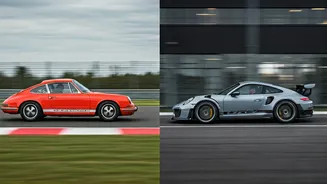
The 1970s marked a pivotal moment for the Porsche 911 with the introduction of the G-body. This iteration significantly broadened the car's appeal and
established key design and performance benchmarks that would echo for decades. Its wider profile not only gave it a more commanding presence on the road but also hinted at enhanced handling capabilities. Powering this evolution was a robust 3.0-liter air-cooled engine, a powerhouse that became synonymous with the 911's distinctive character. This combination of a visually striking design and a potent, characterful powertrain laid the groundwork for the 911's enduring legend, setting an aspirational standard within the sports car landscape that few could match.
Modern Marvels, Classic Soul
Fast forward to the present day, and models like the Carrera 4 GTS showcase the remarkable continuity of the 911's engineering philosophy. Despite incorporating advancements like turbocharging and hybrid technology, the core essence of the 911 remains vibrantly alive. Drivers still experience that signature rear-engine layout and the unmistakable flat-six engine note, a sensory connection to its heritage. These contemporary machines now achieve staggering speeds, capable of accelerating from 0 to 100 km/h in a mere three seconds, a testament to their immense power, which can reach up to 541hp. Yet, in their thrilling performance, they also offer a profound nod to their predecessors, demonstrating that it is entirely possible to embrace cutting-edge automotive technology without sacrificing the soulful spirit and driving experience that has defined this iconic car for generations.