






Autonomous Fleet Production
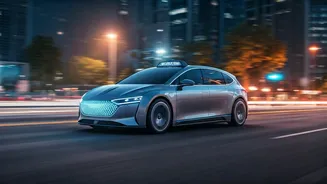
A significant leap forward in self-driving technology is underway, marked by the commencement of mass production for autonomous robotaxis. This initiative
is the product of a strategic alliance between a prominent Chinese company specializing in autonomous driving solutions and a globally recognized Japanese automotive manufacturer. The partnership aims to bring a substantial number of these driverless vehicles to market, with an ambitious goal of producing 1,000 units of these self-driving cabs within the current year. These vehicles are notably based on the well-established Sienna model from the automotive giant, integrating advanced autonomous systems with a reliable and familiar vehicle platform. This development signals a crucial step towards the widespread adoption and commercial viability of autonomous transportation solutions in urban environments.
Scaling Up Autonomous Mobility
The immediate deployment of these newly manufactured robotaxis is slated for major metropolitan areas across mainland China, forming a core part of a much broader strategic expansion. Looking ahead, the company has set an impressive target to significantly expand its autonomous fleet, aiming to operate more than 3,000 units by the close of 2026. This ambitious fleet expansion will encompass both domestic operations within China and ventures into international markets, indicating a global vision for autonomous mobility. A company representative highlighted this achievement as ushering in a 'new phase of scaled production and commercial deployment' for their collaborative efforts with the automotive partner. This strategic scaling is essential for establishing a robust infrastructure and service network required for large-scale robotaxi operations, promising to reshape urban transit.
Synergy in Autonomous Development
The collaborative relationship extends far beyond the mere manufacturing of vehicles; it encompasses a deep integration of expertise in autonomous driving technology development, intricate vehicle production processes, and sophisticated supply chain management. This holistic partnership signifies a powerful synergy between a cutting-edge provider of self-driving intelligence and a seasoned automotive assembler. Experts believe that this fusion of technological prowess and manufacturing strength is precisely what is needed to accelerate the growth and widespread acceptance of robotaxis in densely populated urban centers. The joint efforts are focused on refining the complex algorithms that govern autonomous navigation, optimizing the production lines for these specialized vehicles, and ensuring a resilient supply of components, all while leveraging the established automotive infrastructure of the partner.
Level 4 Autonomy Explained
These cutting-edge robotaxis are equipped with what is known as Level 4 (L4) self-driving capabilities, a designation defined by SAE International, a leading global authority on vehicle standards. This advanced level of autonomy means that the vehicles are designed to operate independently of human drivers in a wide array of typical driving scenarios and conditions. In essence, under specific operational design domains, the vehicle can manage all aspects of driving, including navigation, steering, acceleration, and braking, without requiring any human intervention. This significant technological achievement is widely regarded as a pivotal advancement toward the commercialization and widespread adoption of autonomous cabs on a global scale, with the potential to fundamentally transform how people move within cities and beyond.