





Click here to read the full article.
Some of the puzzles and trivia moviegoers see when they arrive before showtime at the cinema may be going the way of Good N’ Plenty and Jujubes.
Movie screens under the aegis of movie-ad titan Screenvision will unfurl
a new pre-show starting in October. The new concept tamps down on the old puzzles and behind-the-scenes format that has become such an expected part of cinema culture and instead features content blocks devoted to topics including food, sports and fashion, among others.
“It’s all built on the premise that 50% of our audience is Gen Z and they really want content that reflects who they are, not just quizzes and trivia,” says Geoff Schiller, recently installed as the company’s new CEO following a stint as chief revenue officer at Vox Media. “The audiences are hungry for more.”
They’ll get it. As part of the company’s new initiative, audiences in place ahead of a movie’s showtime, will see video content from providers including Eater, Complex and NowThis. Many of the venture’s new content partners are encouraged by projections of new spending at movie theaters, with younger consumers craving more in-person gatherings.
Recent box-office stats have been encouraging to an industry that continues to grapple with the appeal of top movies eventually turning up on widescreen home TVs thanks to premium subscription services. Even so, movies in recent months such as Universal’s “The Odyssey,” A24’s “Backrooms”: and Sony’s “Spider-Man: Brand New Day” have generated impressive revenue. They will be followed at the end of the year by Warner Bros. latest piece of its “Dune” franchise and Disney’s “Avengers: Doomsday.”
PwC calls for cinema advertising to rise to climb to $2.7 billion in 2030, compared with $2.4 billion in 2026. Box office revenue, meanwhile, is seen rising to $39.5 billion in 2030 compared with $34.6 billion at the end of this year.
Some partners are eager to broaden their mix of video distribution and to get in front of younger consumers., “We need to be more diverse in the places where we put our content and to be where the Gen Z consumer is,” says Sharon Mussali,” the CEO of NowThis. Complex views the alliance as a way “to get our programming in front of some of the most engaged, pop culture and entertainment obsessed consumers in North America,” says Moksha Fitzgibbons, the company’s president.
For Eater, getting recommendations and content in front of moviegoers can only help burnish the outlet’s desire to be seen as “the best trusted restaurant discovery brand for people who care about food,” says Jill Dehnert, Eater’s publisher. Eater, is, like Variety, part of Penske Media.
More publishers are finding new audiences for signature video clips and programming, with major outlets like Netflix doing deals in recent months to show more short-form content on their platforms.
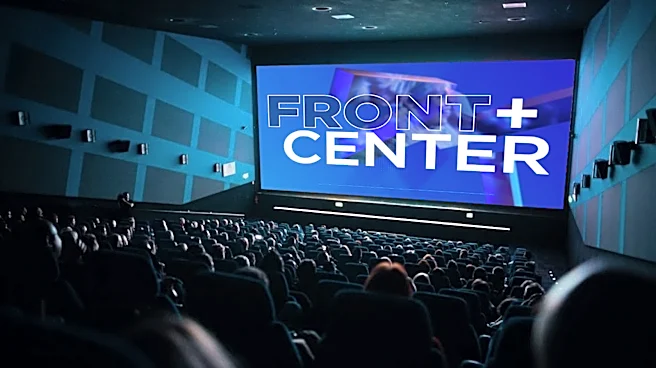
Screenvision’s pre-show, called “Front and Center,” will still last around 28 minutes and contain commercials. After what Schiller calls a “soft launch,” it will appear in more theaters by holiday time.
The executive says he remains mindful of a need to entertain moviegoers ahead of the main attraction, and not make them feel as if they’re a crowd being held captive in front of a long stretch of promotional messages. “’Front and Center will be a show that has advertising, not advertising that has a show,” he says. He believes ticket buyers will be happy if they are getting something of value like an interview with the cast of a current or upcoming film. “If you entertain them, they will be happy. If you don’t, then they won’t.”
Screenvision has other plans in place to lure advertising and promotional dollars. Schiller says he would like to develop a “watch party” concept that brings audiences to movie theaters to watch live events The company worked earlier this year with the BET Awards and held watch events in Atlanta, New York, and Philadelphia. “We had red carpet interviews, DJs, step and repeat, fan engagement in the theaters as they were watching us stream” the show, he says.
He also sees an opportunity to give marketers other kinds of access to movie crowds. Would an advertiser appreciate the chance to offer product samples to consumers in theaters to see movies on the last shopping weekend ahead of Christmas, he asks. With many theaters close to retail outlets, malls and shopping centers, he believes local stores may be interested in doing anything from offering coupons to making scents available to a crowd.
Schiller, a veteran of print and digital publishing, has worked at Vice, Group Nine, People, USA Today and many other outlets. He says he is “not docile” and thinks companies need to examine even years-old models like the movie pre-show to see what can be updated. And he thinks advertisers have yet to make full use of the movie house. “Our ability to create a suite of solutions that offer brand marketers the ability to influence purchase decisions I think has been untapped,” he says.