


Click here to read the full article.
Director Paolo Natale’s experimental hybrid documentary/video-essay, “Our Raised Skin” (“Nuestra Piel Levantada”), is currently in advanced development as part of Madrid Film School’s (ECAM) incubator program. It’s
one of the five projects selected for La Incubadora’s ninth edition.
“The film reflects on and questions self-perception, asking at what point in childhood we go from being children to patriarchal men,” says Natale.
Even though Natale says the film is not autobiographical, he draws from the fact that he, his father and his grandfather all suffered from the same compulsive eating disorder.
“Our Raised Skin” is produced by Manuela Gutiérrez Arrieta, Juan Carlos Ballesteros, Nabil Ejey and Mubox Studio. Gutiérrez Arrieta and Natale studied together at ECAM and they have received development funding from the Region of Murcia and La 7, Murcia’s regional television channel. They are seeking other sources of funding in Spain and Italy, where Natale is from. They are planning to shoot at least parts of the film in the summer of 2027.
Variety interviewed Natale about the film.
You say the film is about male bodies and the fear of its touch. Can you elaborate?
Paolo Natale: This film is written from a very specific and precise observation of the dynamics that drive relationships of power and violence against bodies within the family, but drawing on reality is just one further layer, and I believe the project straddles the line between situational portrayal and theatrical staging. I’ve always been aware, ever since my childhood, that I had a problem with food. Or rather, an emotional problem that was managed through food and, consequently, a sense of the violence directed at obese bodies and all that this entails in various spheres. I didn’t know how to put this into words until I was 23. I gradually realized that there was a pattern, passed down through the male figures in my family via their upbringing. A way of managing emotions that involved food. I’ve internalized this, just as my father did.
It’s very common for men with eating disorders to feel shame and guilt. This is something that often leads to delayed diagnoses. We tend to associate bigorexia with men. All men are taught that they must achieve a certain physique in order to exert power over others — a strong body with which to capitalize on everything. However, emotional hunger or binge-eating disorders are different. Softness and flaccidity are frowned upon, and there is still a great deal of silence surrounding these issues among men.
Why did you decide not to do a regular narrative feature film?
Natale: I feel more at home with a documentary-style approach, so to speak. I’m also interested, from a cinematic perspective, in films that manage to navigate different layers and textures, whether on a formal, aesthetic or narrative level. I like films that are unsettling in that sense, and that’s what I want to make. I almost always value the risk and the intentions more than the result itself. I like and am moved by films that are mistakenly regarded as cinematic exercises, as imperfect films from an industrial point of view. The ‘small, fragile films’ are far removed even from standardized forms of funding, although sadly most of us find ourselves swept in the same direction.
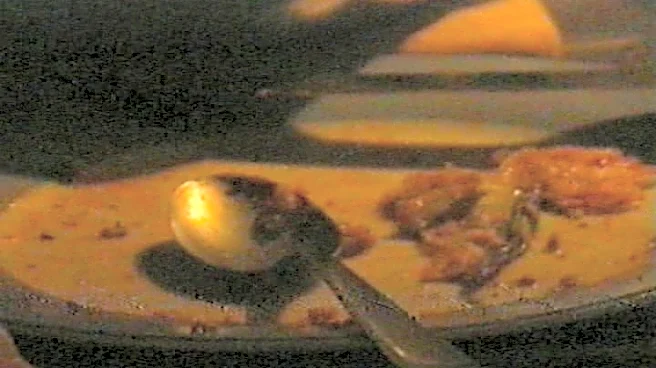
You mentioned that as a child you heard orange fat overflowing and and flooding everything. What do you think it meant?
Natale: Fat is something that is present in our bodies from the moment we are born until we die. Our fat is political. It is a viscous substance with which we must come to terms. It is also guilt and pain, but above all, for me, it represents life itself. All bodies store fat, no matter how much of a calorie deficit you create. Fat has been present throughout human history.
What do you mean when you say you want to make the aesthetic political, while reflecting on the ethics of aesthetics and representation?
Natale: I am someone who is quite concerned about the issue of representation, cinematic formats and their use. I am a little tired of canonically beautiful, sharply defined images, of that sense of neatness. What does an image need to have to be considered cinematic? What must it possess to attain that status? What hierarchy lies behind these images? What constitutes an ‘elevated’ image?
I believe we find ourselves immersed in a contemporary context overflowing with canonically beautiful images, featuring naturalistic lighting and well-defined faces and bodies. Neat digital images and unjustified uses of film that reflect a social and class-based hierarchy of images. While high-resolution images seem to possess a certain power, low-resolution images bear witness to a technological failure and amateur production.
I wish to champion imperfection, placing at the center those images that show signs of fading, blurred and out of focus. I wish to approach male bodies from a place of acceptance of ‘flaw,’ thereby eschewing the norms and fetishism of visual capitalism.