







Click here to read the full article.
The French audiovisual sector is gearing up for the Unifrance Rendez-Vous in Le Havre, not only France’s premiere TV programming market but also an industry confab offering a clear assessment of how business trends
and global developments are reshaping the domestic playing field, from evolving distribution models to programming increasingly tailored for export.
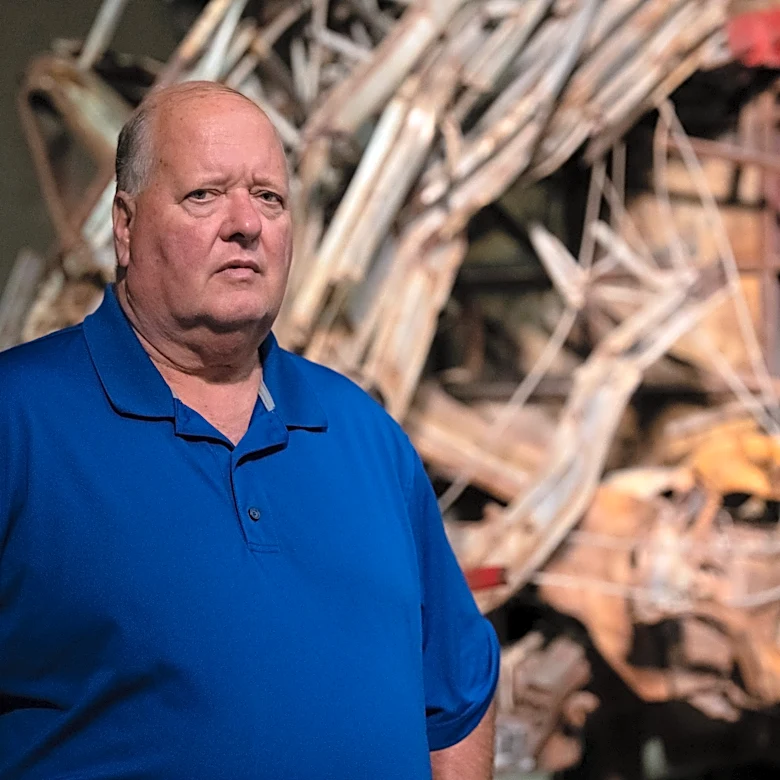
Speaking to Variety ahead of the event, which runs Sept. 7-10 in Normandy’s famed port city, Unifrance President Gilles Pélisson discusses the pressing issues facing French distributors and producers and the continuing strength of local content on the international market.
The changing landscape for French TV distribution in the wake of increasing consolidation and streaming dominance is one major topic du jour that is affecting industries across Europe.
“French TV distribution is not immune to the turbulence of the international market, and there is real concern among French distributors,” Pélisson points out.
“Some critical questions have emerged with everyone watching: What will be the future model of European public broadcasters, how much will the streamers continue to produce locally and buy new programs, and how will private free-to-air channels cope with a shrinking advertising market?”
Nevertheless offering an upbeat take, Pélisson stresses that new content is still needed regardless.
“This is why we are delighted to welcome once again around 130 buyers to Le Havre this year. We worked with our distributors in June to preview their expectations, and the message is clear: French production keeps offering exceptional diversity, with relevant content for every kind of buyer.”
The changing distribution landscape has, in the face of streaming dominance, seen the rise of “hyper-distribution.” Discussing the strategy at last year’s Mipcom, Glance, the TV and video market intelligence division of French audience measurement company Médiamétrie, stated: “[T]he need to distribute content everywhere while collaborating with rivals often creates a winning strategy.”
Pélisson agrees: “Hyper-distribution can be scary, yet it’s showing some true benefits. It can clearly expand reach: A hit like ‘Miraculous’ can be present simultaneously on a wide range of channels and platforms across many countries, more than what was possible or even thinkable a decade ago. But simple presence does not guarantee to be seen.”
Indeed, when the same content is available everywhere simultaneously, “it can disappear into the catalogue just as easily as it can stand out,” Pélisson emphasizes.
“This is why, alongside our sales data, Unifrance tracks not only where French programs are distributed but how they actually perform, with data such as audience market share or viewed hours.” Continued analysis and receiving as much data as possible from all players is therefore crucial, he adds.
“Quality programs can only be made if there is money to produce them!”
Turning to the international appetite for French content, the Unifrance chief notes that Europe remains its core market, “and where the momentum is the most solid.”
Poland, in particular, has become a leading territory this year as the top country for broadcasts of French programs on linear channels, while Germany remains a leading territory “thanks to a rich offering on the streaming side.”
Despite reports that global audiences are moving away from Hollywood content, Pélisson remains cautious.
“Buyers are certainly more risk-averse and negotiations may take longer, which leads some players towards proven, well-known IP,” he explains. “Nevertheless, the appetite for a strong non-English alternative is real, and France is very well positioned to answer.”
He adds: “All genres travel well — that’s the strength of the French offering. Animation remains our flagship in terms of sheer volume on foreign linear channels, carried by evergreen franchises like ‘Miraculous’ and ‘Grizzy & the Lemmings.’”
The story is different on streaming, however, where fiction leads the way and, in value terms, drama has become France’s leading export genre over the last two years. Documentary, meanwhile, remains “a strong, steady genre, with real festival and platform presence.”
Looking at emerging markets, Pélisson points out that “it is more about volume than value: buyers are very price-sensitive and increasingly digital-driven, so animation and formats do well there.”
Overall, animation leads the way in global sales, “with ‘Miraculous’ enjoying by far the widest international footprint of any French title, alongside strong travelers like ‘Grizzy & the Lemmings’ and the ‘Totally Spies!’ revival.”
On the fiction side, Pélisson notes that older titles are still doing well abroad: Federation’s hit espionage thriller “The Bureau” has continued its remarkable international journey, while series like Studio TF1’s profiler crime drama “Profilage” (“The Paris Murders”) and Film & Pictures’ mystery miniseries “Un Soupçon” (“The Black Widow”) have found substantial audiences on major channels and platforms across Europe.
Among documentary shows that have reached strong global audiences on streaming are Balanga’s “Miyazaki: The Spirit of Nature,” about Oscar-winning animator and filmmaker Hayao Miyazaki, and Netflix’s “Tour de France.”
Despite an increasingly challenging environment, animation remains France’s top audiovisual export due to a number key factors, Pélisson says.
“French animation rests on sound foundations: world-class studios, a training pipeline which is the envy of the sector, and a catalogue of IP with real brand equity.
“This being said, we have been seeing sales decline for a year now, for two main reasons. First, streamers — and French broadcasters too — are ordering fewer new projects and fewer new IPs. Secondly, the major streamers take a global approach when producing.”
Pélisson points to Netfix’s “Asterix & Obelix: The Big Fight” as an example.
“When a global streamer produces the series, the entire international value is folded into a single production figure that counts as financing for a French production, not as an export sale. This is exactly why data matters so much — the only way to know what a program is really worth, on an international basis, would be to separate the value of its national exposure from its international one. Therefore, part of our real international success simply does not appear in the figures, both on the sales and audiences sides.”
Animation producers are likewise finding ways to better navigate the tougher market.
“Producers are leaning into exactly what makes the sector resilient — building franchises rather than one-off titles, accelerating co-productions to share risk, and designing for both linear and streaming distribution from the outset,” Pélisson explains.
Among the new and returning shows that are dazzling audiences abroad are Banijay Kids & Family’s “Totally Spies!” revival, which “has found a genuinely global audience”; and, from Mediawan Kids & Family, “Robin Hood: Mischief in Sherwood,” which “keeps expanding its territory count”, and the “Miraculous” universe, which “continues to extend across formats.”
“The winning formula, Pélisson adds, “is a strong brand that can live across many windows at once — which is precisely where the market is heading.”