



Click here to read the full article.
As revisionist narratives that seek to rehabilitate a villain’s reputation, “Shrek” and “Wicked” have set the standard for what this type of alternative fairytale can look like, whether comic or dramatic. The new Netflix
animated feature “Steps” follows in the footsteps of those more accomplished predecessors, showing that Cinderella’s stepsisters may have been more nuanced characters than just evildoers standing in the way of a pristine princess.
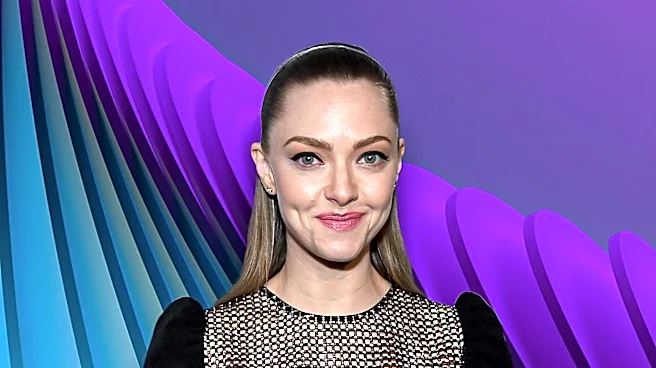
Veteran animator John Ripa (a co-director on the Oscar-nominated “Raya and the Last Dragon”) joins creative forces with first-time feature director Alyce Tzue for a reimagining of the timeless yarn that introduces new lore — the harmless results are consistently funny, but convoluted and emotionally shorthanded. Here, the spotlight is not on Cinderella (Amanda Seyfried) herself, but rather her stepsibling Lilith (Ali Wong), an angsty goth-girl type with a Hot Topic look.
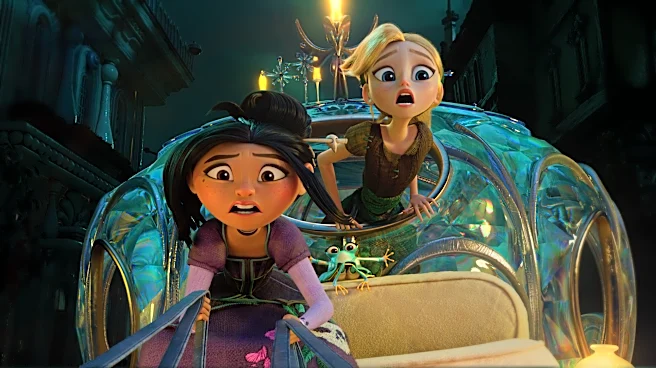
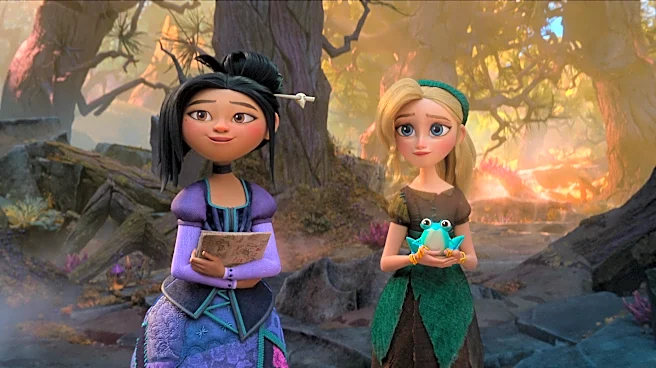
Lilith and her younger sister Margot (Stephanie Hsu) arrived at the kingdom of Alouette a decade earlier when their mother, a traveling seamstress, fell for Cinderella’s father. A schism in their relationship with their new stepsister formed early — following an incident where Cinderella, afraid of being ostracized, didn’t stand up for Lilith and Margot. Now, as a teen, Lilith loathes Cinderella’s picture-perfect personality. Through a series of magic-driven ordeals, “Steps” sees them trying to mend their bond.
That Lilith and Margot are the only Asian girls in this white society is never addressed in a significant manner. Indeed, a musical number, which gives Seyfried a new chance to sing, implies people in town don’t like Lilith and Margot only because they assume the girls bully Cinderella.
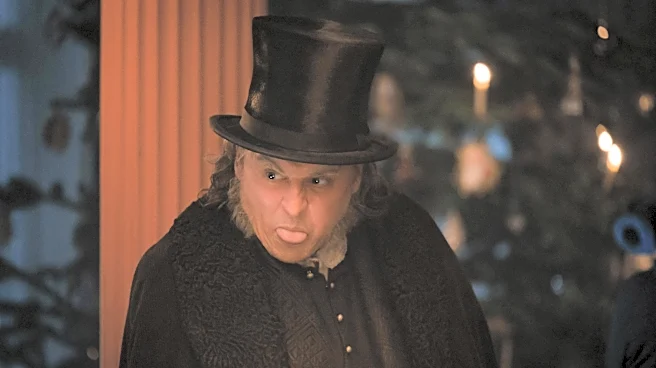
Since Cinderella and Lilith aren’t portrayed as mutual antagonists, but instead as misunderstood counterparts, the film introduces Priscilla (Nikki Glaser), a self-centered girl envious of anyone who gets more attention than her. And Priscilla has a henchman, Roderick (Peter Dinklage), who is the film’s most memorable side character — his unrequited fatherly adoration for her driving his murderous determination to please her every command.
There’s plenty of invention here, as Cinderella’s entire story as we know it comes to pass before the film’s halfway point, leaving extensive room for “Steps” to take the characters into new territory. It certainly does, but with mixed results.
Given that this story hinges on Cinderella and Lilith’s wish for sisterhood, it’s odd that the 10 years between their initial rift and the present are brushed over so quickly, as is the family dynamic that allowed the grudge to persist. Was Lilith encouraged to develop a relationship with her stepsister? Does Cinderella have a good relationship with her stepmother — a character who is virtually absent for most of the film? By the same token, how did Lilith and Margot feel about their stepdad? Early on, a brief scene shows the whole family eating dumplings together, but that’s the extent of the parents’ involvement.
In an overstuffed plot, the time not spent on developing that familial foundation is filled instead with expected appearances by the Fairy Godmother (a wonderful Bette Midler) and the prince (Daniel Radcliffe), but also a romantic interest for Lilith, multiple chases, and eventually even time travel as a solution to the conflict.
With five credited writers, the script for “Steps” feels like a too-many-cooks situation, with emotional cohesion sidestepped for boisterous action. What they do deliver on, however, is humor. Numerous one-liners, often cleverly mocking the tropes of the fairytale, land with the desired irreverence. And that comedy holds together various more disparate elements that ultimately fail to come across as singular.
Though the kingdom is intricately conceived in gorgeous pastel colors, the character design, while not aesthetically unpleasant, can best be described as standard — the way most 3DCG humans look in mainstream animated features. When Margot (a character with little to do) turns into an adorable, pudgy frog, her design — with her hair buns becoming the creature’s bugging eyes — provides a rare interesting edge to the film’s mostly generic visual identity. The brightly colored world of “Steps,” as well as its use of pop songs and the contentious banter between Wong and Seyfried, may work well enough to entertain young viewers, but it doesn’t make for a classic.