
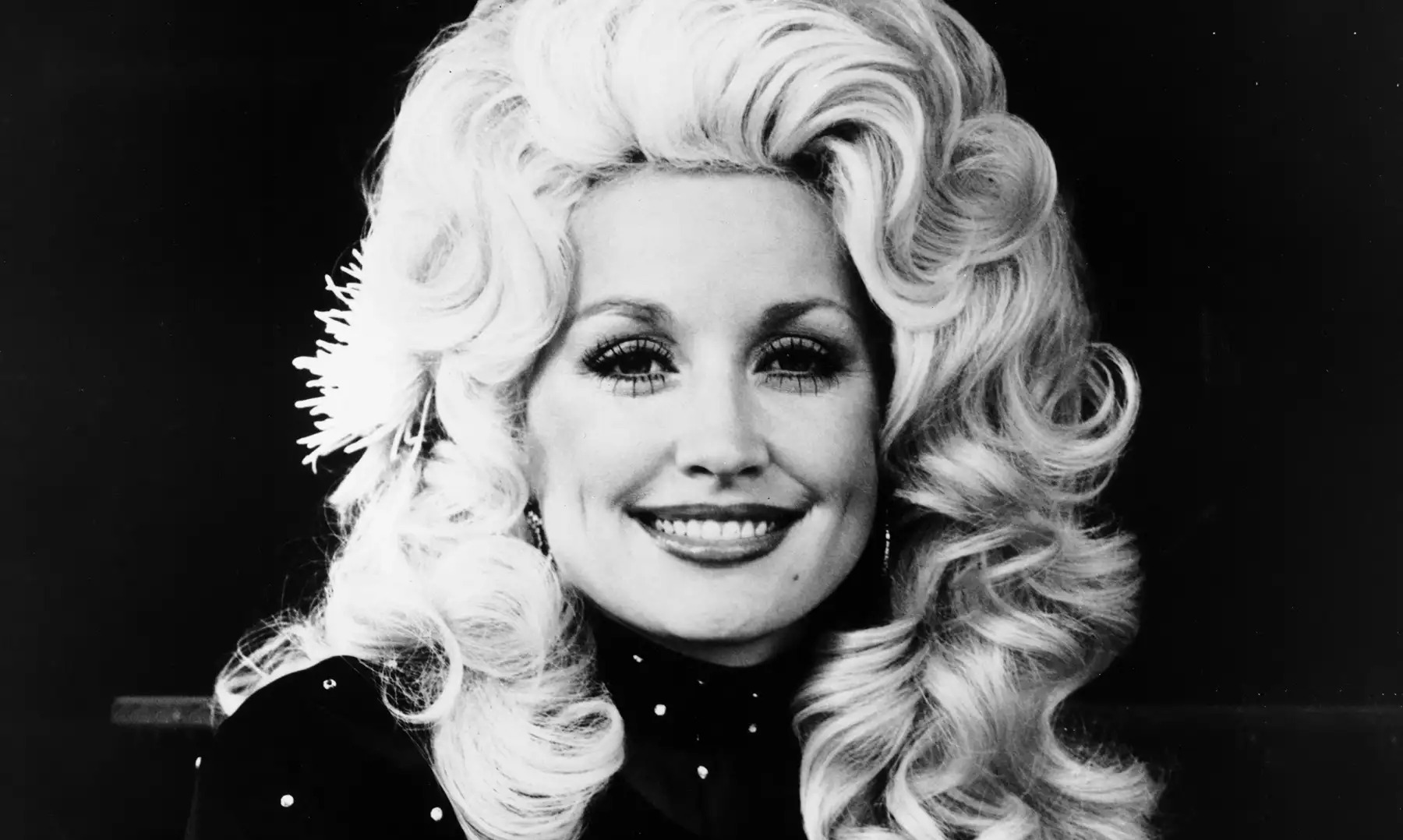
Click here to read the full article.
Singer-songwriter-actress Dolly Parton, whose glittering country music stardom was matched by her pop fame and popular parallel careers in film and TV, died on Aug. 25. She was 80 years old, with her family not releasing
a cause of death, but saying she “died peacefully today in Nashville.”
The announcement came on her official Instagram, with a video from her nephew Bryan Seaver on behalf of the Parton family.
Per the family’s official obituary, “A rhinestone life that shone bright enough for the world to see, Dolly will forever stand as an inspiration not only through her timeless music and prolific songwriting, but also her wit, warmth, and kindness that made us all feel like family. Dolly Parton’s legacy is one of love, compassion, and resilience. With a seven-decade career, she inspired multiple generations of artists and fans with her music and an unwavering commitment to making the world a better place. Her songs will continue to resonate with people of all ages, and her philanthropic work will have a lasting impact.”
In mid-August. she said she would not be able to make it to a Dollywood appearance and was suffering from dehydration and dizziness, writing “My Nashville doctor has kinda clipped my wings, saying, ‘You ain’t traveling this week.’”
Parton’s health issues had become headlines in the fall of 2025, when she announced that she would not be able to follow through on a six-show December residency at Las Vegas’ Caesars Palace that had been announced as a long-awaited return to the concert stage.
“As many of you know, I have been dealing with some health challenges, and my doctors tell me that I must have a few procedures,” she wrote at the time. “As I joked with them, it must be time for my 100,000-mile check-up, although it’s not the usual trip to see my plastic surgeon! In all seriousness, given this, I am not going to be able to rehearse and put together the show that I want you to see, and the show that you deserve to see. You pay good money to see me perform, and I want to be at my best for you.”
Parton’s health had become a further subject of concern on Sept. 30 when she announced that she would not be participating in the Motion Picture Academy’s Governors Awards in November to accept the Jean Hersholt Humanitarian Award. It had been understood that Parton would accept the award remotely, but Parton ultimately ruled even that out.
But Parton had not been sidelined for very long, it seemed. She was on hand for multiple shows and participating jn the creative process when a new musical about her life, “Dolly: An Original Musical,” had its premiere engagement at the Fisher Center on the campus of Belmont University in Nashville this past July and August. The autobiographical music held its pre-Broadway run there, with expectations that the show might open in New York in 2026.
Parton had also been an active participant in the creation of “Dolly Parton’s Threads: My Songs in Symphony,” a traveling concert in which other singers sang her songs along with local symphony orchestras, with Parton herself seen on the big screen. Parton was on hand for that show’s world premiere performance in Nashville in March.
Parton’s biggest public moment in recent years had been her induction into the Rock & Roll Hall of Fame in 2022. She first said she did not want the honor when her name appeared on the ballot that year, saying she was not a true rocker, but she relented under enthusiastic pressure. Parton subsequently released what turned out to be her final album, “Rockstar,” in 2023, doing duets with top stars and claiming the “rock” mantle she had resisted.
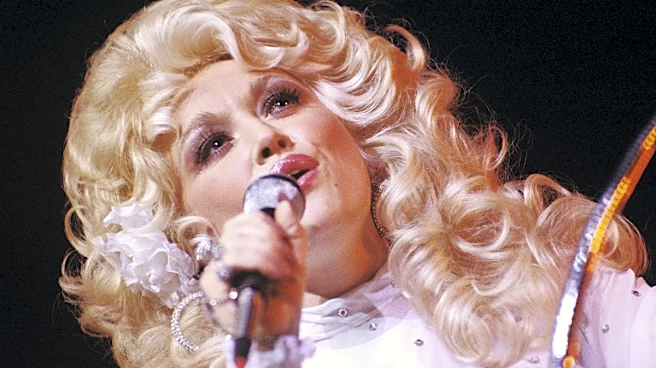
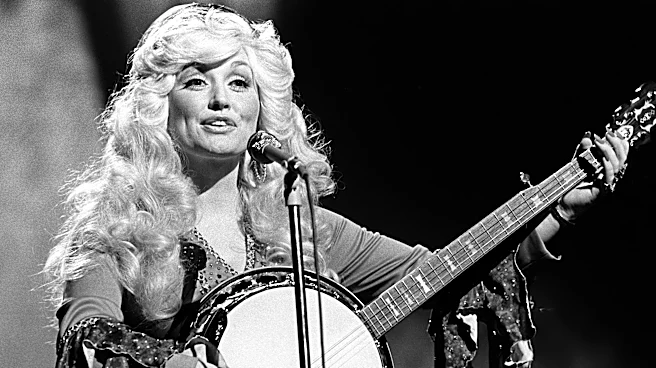
Extravagantly bewigged, boldly buxom, and graced with a peerless, vibrato-laden soprano voice, the exuberant Parton succeeded a hit-making early career in partnership with vocalist Porter Wagoner with a long series of solo hits.
Many of her 25 No. 1 country singles were self-penned; after her predecessor Loretta Lynn, she was one of the first major female stars of the genre to write much of her own hit material.
Country music historian Bill Malone noted, “As a songwriter she has had few peers in country music, bearing a strong comparison with Merle Haggard in her wide range of interests and in her facility with a diverse array of idioms. Her compositions encompass a virtually every major theme in country music.”
Her best-known song is “I Will Always Love You,” a ballad she authored after sundering her association with Wagoner in 1974. The tune reached No. 1 on the country charts in two different versions by Parton, in 1974 and 1982; in 1992, Whitney Houston’s dramatic reading, from the soundtrack of the feature “The Bodyguard,” spent a record-breaking 14 weeks at No. 1 on the U.S. pop charts and sold 4 million copies; it was the lead track from the film’s soundtrack album, which sold 45 million copies worldwide.
Beginning in the late ‘70s, Parton’s pop music profile rose, as did her visibility on TV (where she toplined three variety shows during the course of her career) and film. She did her most high-profile acting work in the early ‘80s in movies like “9 to 5” (which garnered her a Golden Globe acting nod and the titular crossover pop and country hit), “The Best Little Whorehouse in Texas” and “Steel Magnolias.”
As a producer, Parton, in partnership with her former manager Sandy Gallin, launched the hit TV series “Buffy the Vampire Slayer” and the top-grossing Steve Martin/Diane Keaton “Father of the Bride” comedy vehicles.
Her pop stardom began to fade in the mid-‘80s, but she continued to flex her country bona fides on two well-received “Trio” albums with Emmylou Harris and Linda Ronstadt and three striking bluegrass collections issued by the indie country label Sugar Hill Records.
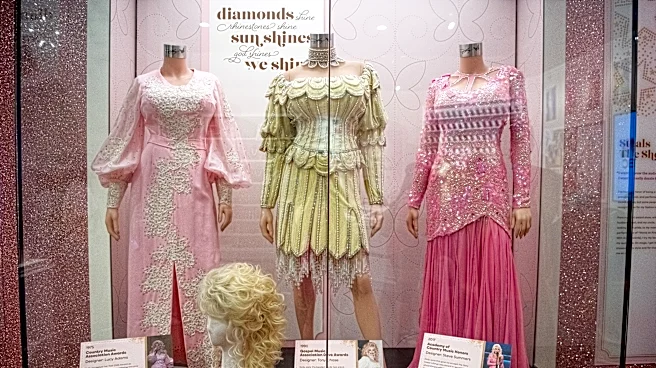
Parton’s bigger-than-life personality and rags-to-riches career were celebrated in her own theme park, Dollywood, located in Pigeon Forge, Tenn., not far from her childhood home in rural Sevierville.
A 1999 inductee in the Country Music Hall of Fame, she also joined the Nashville Songwriters Hall of Fame in 1986 and the Songwriters Hall of Fame in 2001. She was a National Medal of Arts honoree in 2005 and a Kennedy Center Honors recipient in 2006.
The fourth of 12 children, she was born Jan. 19, 1946, into a poverty-stricken farming family. Deprivation drove her mother to make her children’s clothes from rags; Parton transformed that experience into one of her signature early songs, “Coat of Many Colors.” The Parton family was religious and musical, and she began performing as a child in the Pentecostal Church of God.
Parton first sang on local radio, and issued her first single, “Puppy Love,” on the Louisiana label Goldband when she was 13. She performed on the Grand Ole Opry as a teen. Immediately upon graduation from high school in 1964, she bolted for Nashville, where she set up shop as a songwriter, writing material for Skeeter Davis, Kitty Wells and others.
Signed to Monument Records, home of pop-oriented singers Brenda Lee and Roy Orbison, in 1965, she reached the country top 20 with a couple of her own songs. But she first struck paydirt when she replaced Norma Jean as duet partner of the pompadoured, flamboyantly togged vocalist Wagoner in 1967.
Though her predecessor’s fans were vocal in their dislike for replacement Parton, she quickly became a favorite via Wagoner’s nationally syndicated weekly TV series. In ’67, a cover of Tom Paxton’s “The Last Thing on My Mind” became the first of the duo’s 11 top-10 singles; the pair peaked in 1974 with their only No. 1 hit, the co-written number “Please Don’t Stop Loving Me.”
While the singers would subsequently release three more top 10 singles together, Parton – whose solo career had consistently taken a back seat to her work with Wagoner – finally stepped away from the act in ’74. By that time, she had notched a solo country chart-topper, “Joshua” (1970), the top-10 singles “Coat of Many Colors” (No. 4, 1971) and “Touch Your Woman” (No. 6, 1972), the signature “My Tennessee Mountain Home” (No. 15, 1973) and another No. 1, the much-covered “Jolene” (1973).
“I Will Always Love You,” written as a farewell to Wagoner, reached No. 1 on the heels of her exit from the act. (Significantly, Parton held onto her rights to the song and declined an offer to record it by Elvis Presley, who customarily claimed publishing of the tunes he waxed. That decision would secure millions for her when Houston cut the number in 1992.)
Parton logged half a dozen more No. 1 singles through the end of the ‘70s. The biggest of these, “Here You Come Again,” became her first major crossover hit, climbing to No. 3 on the pop chart in 1977; it also won her the first of seven Grammys when it was named best female country vocal performance.
A quartet of No. 1 country singles in 1980-81 included the double-barreled movie-driven smash “9 to 5,” which collected Grammys for Parton as best country song and best female country vocal and an Oscar nomination as best original song. The album “9 to 5 and Odd Jobs” reached the apex of the country albums chart and topped out at No. 11 on the pop side. Parton launched her film career opposite Jane Fonda and Lily Tomlin in Colin Higgins’ hit workplace comedy.
The ubiquitous 1982 pop and country chart-topper “Islands in the Stream” paired Parton with Kenny Rogers, the reigning pop-country star of the day, and the still ultra-hot Bee Gees, who authored the tune, with the group’s Barry Gibb producing. The same year, Parton co-starred with Burt Reynolds in the film version of the Broadway tuner “The Best Little Whorehouse in Texas”; the second No. 1 version of “I Will Always Love You” was drawn from its soundtrack.
Parton derived another country No. 1, “Tennessee Homesick Blues,” from the soundtrack of “Rhinestone,” but that catastrophic flop, in which she was incongruously paired with Sylvester Stallone, would make producers skittish about her box office drawing power thereafter.
Another pairing with Rogers, the country No. 1 “Real Love,” became Parton’s last single to cross onto the pop charts, peaking at No. 91.
Her bestselling work of the era was “Trio,” a tradition-based collaboration with peers and admirers Harris and Ronstadt; the set topped the country albums chart, became a No. 6 pop set and reaped a Grammy for best country performance by a group. A long-delayed sequel, “Trio II,” finally saw release in 1999; it contained a Grammy-winning version of Neil Young’s “After the Gold Rush.”
“Rockin’ Years,” a 1991 duet with Ricky Van Shelton, was Parton’s last No. 1 country single (save for a guest shot on Brad Paisley’s 2005 hit “When I Get Where I’m Going”). By the early ‘90s, country radio had moved on to a younger generation of performers, and Shania Twain was the reigning country diva. Parton never again commanded the upper reaches of the country singles charts.
At the turn of the millennium, Parton saw a striking aesthetic renewal with her bluegrass albums, “The Grass is Blue” (1999), “Little Sparrow” (2001) and “Halos & Horns” (2002). The first of these collected a Grammy as best bluegrass album, while its sequel contained “Shine,” which was named best female country vocal performance. The third set in this trilogy contained a startling reading of Led Zeppelin’s “Stairway to Heaven.”
“Travelin’ Thru,” a song Parton wrote and recorded for the feature “Transamerica,” garnered her second Academy Award nod for best original song in 2006.
In 2008, Parton inaugurated her own independent imprint, Dolly Records; four of the singer’s first five album releases on the label hit the country top five, and 2016’s “Pure & Simple” became her first No. 1 country album in 15 years.
Parton’s heightened profile on the charts followed a refreshed commitment to touring in 2002, following a decade-long absence from the stage. She made regular treks for the next 14 years.
In 2016, “I Will Always Love You” was adapted as part of the Country Music Assn. anniversary single “Forever Country,” an all-star affair that included Parton among the participants. The single debuted at No. 1 on the country chart.
In later years, Parton and her charitable Dollywood Foundation were active in charitable work encouraging literacy and combating the spread of HIV and AIDS.
She published her autobiography, “Dolly: My Life and Other Unfinished Business,” in 1994.
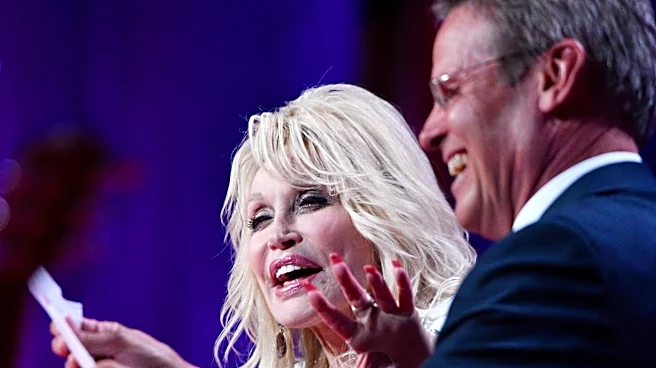
Active in film and TV into the late decades of her career, Parton was also a regular fixture on talk TV, where she poked fun on the dais at her own penchant for extensive cosmetic surgery, regularly employing the punch line, “It takes a lot of money to look this cheap.”
A series of TV movies produced under the Parton banner generated Emmy nominations and wins for her in recent years. She won the 2021 Emmy for outstanding television movie for “Dolly Parton’s Christmas on the Square: in 2021.
Her final Grammy came in 2021 in a contemporary Christian music category for “There Was Jesus,” a song she recorded with Zach Williams. She was nominated again this past year in the audiobook category for her reading of the book “Behind the Seams: My Life in Rhinestones.”
Parton was preceded in death by her husband, Carl Dean, whose death at age 82 was announced in March of 2025.
The family has requested that donations may be made to Dolly Parton’s Imagination Library at imaginationlibrary.com.