




Click here to read the full article.
Global film distributor and production company Mubi has picked up “The Meltdown” (“El Deshielo”) by Chile’s Manuela Martelli(“Chile’76”), which world premiered at the Un Certain Regard sidebar at Cannes last May.
Mubi
plans to stream Martelli’s latest drama later this year after it screens at the San Sebastian Film Festival’s Horizontes Latinos strand in September, one of the festival’s most important sections after its main competition focusing on best-of-fest Latin American titles.
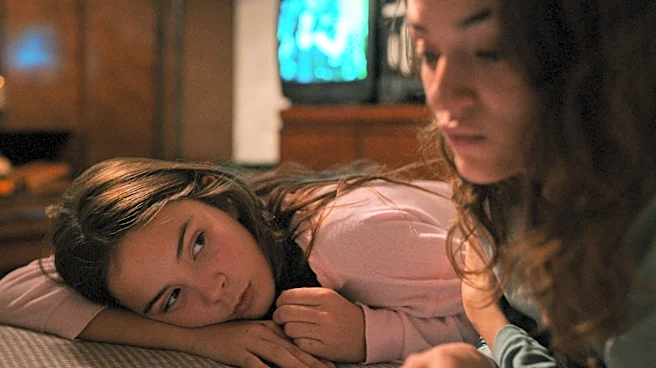
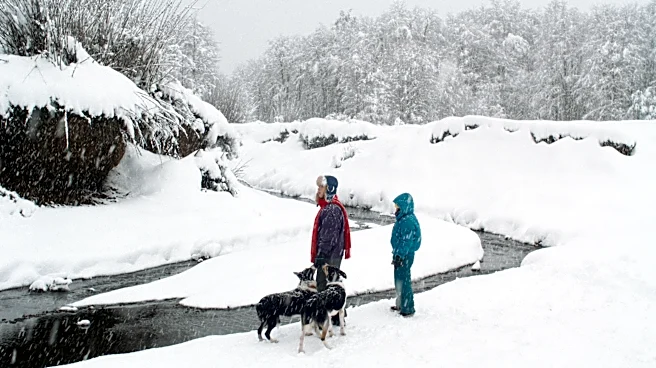
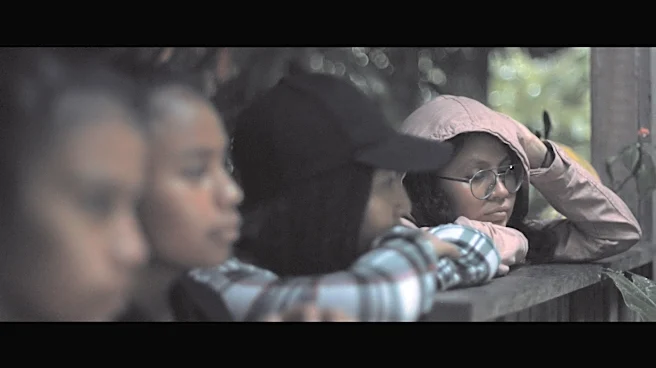
Set at an Andes ski resort in post-Pinochet Chile, the story unfolds through the eyes of a young girl who witnesses unsettling events that test her loyalties. It stars Maya O’Rourke – in her film debut – alongside Paulina Urrutia, Mauricio Pešutić, Paula Zúñiga, Marcela Salinas and Lautaro Cantillana.
Written and directed by Martelli, with cinematography by Benjamín Echazarreta, the film is a Chilean-American-Mexican-Spanish co-production involving top players in Latin America and Spain: Ronda Cine, Cinema Inutile, Wood Producciones, Elástica Films, Piano and Fundación Río.
Drama is in contention to represent Chile at the Oscars and Spain’s prestigious Goya Awards and is among the many outstanding films to emerge in recent years from the country despite its paltry set of state-backed funds.
Those funds have grown ever sparser as the administration of new President Jose Antonio Kast, who took office in March, has announced cuts to the Ministry of Culture and various competitive funds for the Arts. The ministry downplayed the reduction, stressing that it was an overall decrease of 9% next year. However, the Audiovisual Investment Support Fund drops from approximately $586,000 (540 million pesos) in 2026 to $208,000 (192 million pesos) in 2027—a 64% reduction.
“The recent budget cuts to culture in Chile are deeply frustrating. It’s difficult to understand why a country’s support for culture is still seen as an expense to be reduced, rather than an investment that should be strengthened,” said “The Meltdown” producer Alejandra Garcia of Ronda Cine.
“Many countries have strengthened their audiovisual industries through public funding and tax incentives that can recover 25%–40% of production costs, attracting both domestic and international productions. Chile has made progress, but there is still much to do. This is especially important now, as Chilean cinema is enjoying an unprecedented international moment. This year, three Chilean filmmakers were at Cannes: Manuela Martelli with ‘The Meltdown’ in Un Certain Regard– the first Chilean woman to compete in the section – Dominga Sotomayor with ‘La Perra’ in Directors’ Fortnight and Diego Céspedes, who also served on the Official Selection jury,” she pointed out.
“At precisely the moment when Chile is beginning to see the results of years of work and investment, cutting rather than strengthening these policies risks undermining that progress. Culture is not an expense. It is an investment in identity, talent, jobs, economic development and Chile’s place in the world.”
Diego Rougier, president of the Chilean Film & TV Producers Association, APCT, agreed: “Any news about cuts to funding for audiovisual production is bad news. When this happens, both the quantity and quality of productions are affected. Not only are fewer stories told, but employment for technicians and artists declines, impacting the entire ecosystem surrounding the audiovisual industry.”
The 74th San Sebastian Film Festival runs over Sept. 18-26.