



Click here to read the full article.
As audiences have seen with films like “Barbie,” intellectual property yields the best results when it’s mined with some intellect. “Matchbox: The Movie” feels more like a stopgap between “Fast and the Furious” installments
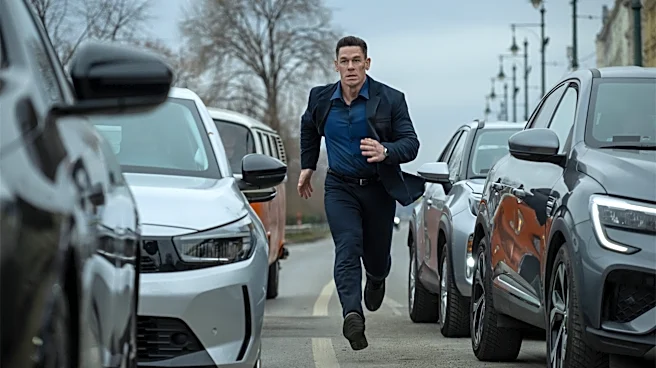
— and not necessarily the good ones — than a deeply authentic adaptation of Mattel’s 73-year-old toy brand. John Cena, an alumnus of both “Barbie” and the last two “Fast and Furious” entries, serves as the glue between brand identity and blockbuster potential as a spy who enlists his car-obsessed middle-school friends to help clear his name, while director Sam Hargrave (stunt coordinator and “Extraction” film series helmer) stages setpiece after setpiece around a script that unfolds with algorithmic precision.
Cena plays Sean Walker, de facto leader of the Matchbox Gang, a group of kids who grew up in the late ‘90s playing with the expansive toy car collection curated by small-town mechanic Smalley (Bill Camp) for his niece Aimee (Jessica Biel). When Smalley dies almost three decades later, Sean returns home for the funeral, reconnecting him with Aimee and the others: Ted (Arturo Castro), now a high school science teacher; Charmaine (Teyonnah Paris), a helicopter pilot hoping to become a news reporter; and Crosby (Sam Richardson), a construction foreman and Charmaine’s husband. Their reunion is cut short when the group gets drugged and kidnapped by Agent Mosier (Corey Stoll), an aspiring CIA director who blames Sean for losing — or stealing — a nuclear warhead that was to be delivered to one of the agency’s allies.
Armed with a certain set of skills, Sean extricates his chums from Mosier’s intended rendition site and promises to repair their reputations from smear campaigns planted in the media by the CIA. For some insider support, he reaches out to Helen (Danai Gurira), his liaison during the initial operation to apprehend the warhead, but quickly realizes that his old friends may be the only allies he has, even if they’re pretty angry that his covert activities have landed them in trouble. Though they’re woefully underqualified as spies, the gang insists on joining Sean to do the only thing that will clear their names — namely, to locate and recover an active bomb before someone plunges the world into nuclear war.
It feels like a bit of a tell about the cultural relevance of Matchbox that the film has kids, even in 1998, gathering not around their own collection of toy cars but one assembled by a Boomer relative. Yet the screenplay by David Coggeshall (“The Family Plan”) offers a dutiful reminder that the first die-cast collectibles were designed as a gift from parent to child, ensuring audiences learn the brand’s narrative as a source of generational bonding, along with the noisy story being told on screen.
But like the lesser “Fast and Furious” films, “Matchbox: The Movie” can’t quite decide if it wants to be a car movie or fighting movie, and in aiming to split the difference, Coggeshall mostly tackles the film’s emotional themes with a heavy air of obligation rather than dedicated interest. Meanwhile, it’s hard to know what the statute of limitations is on certain familiar action-movie gags — in this case, a guy supposedly driving off a precipice, only to walk up behind his friends peering over the edge in horror — but several bits here feel cribbed from the genre’s greatest hits, going back as far as “Indiana Jones and the Last Crusade.”
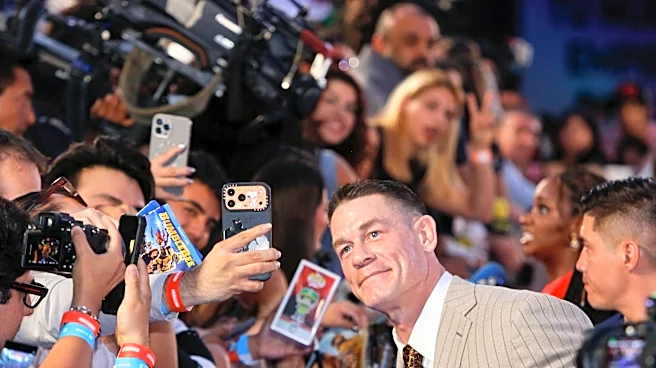
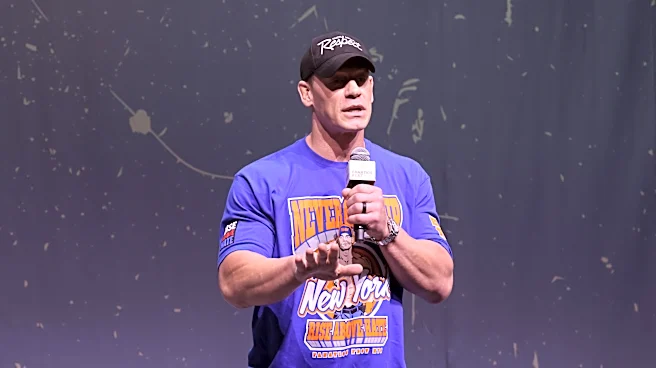
Cena is a likable presence on screen but he’s in danger of overexposure; though not all of them are full-fledged star vehicles like this one, “Matchbox” is his 19th film in the last five years. That said, he carries a lot of the lovestruck middle-school demeanor that Graham Harvey sets up as young Sean, even when he’s knocking skulls together and throwing bodies out of airplanes. It’s probably the film’s most successful characterization that this childhood bully fighter grows up to be a do-gooder as an adult.
In her first film role in almost a decade, Biel is less convincing as a hot-rod nut than as a daredevil driver, but she makes the viewer understand why Sean spent 30 years pining for Aimee. Underappreciated Iranian actress Golshifteh Farahani (“Paterson”) is a welcome presence as sexually fluid arms dealer Robbie, briefly elevating the film to something more edgy. In the meantime, Richardson and Parris are more convincing as best friends than they are as a married couple, but they and Castro supply a steady stream of humorous, civilian incredulity as Sean demonstrates his violent proficiency as a spy.
Hargrave has the pedigree and then some to mount the film’s muscular action sequences, many of which seem more practical than one might expect (including that aforementioned drive off of a precipice). But he seems to understand energy and momentum more than emotion: There is little acknowledgement of what’s happening in each sequence, or what’s more deeply at stake. Consequently, the action is more exhausting than invigorating, even when the physical challenge offers the possibility of something cool or inventive.
Arriving just a few weeks after the release of Apple’s “Mayday” further diminishes the film’s impact; in that film, John Francis Daley and Jonathan Goldstein tackle a lot of similar setpieces with a better balance of images, action and emotion. But the bigger problem may be that Matchbox is simply not as meaningful a property as Barbie, Masters of the Universe, or any of the dozen or so productions Mattel currently has in various stages of development. Trying to rally a bunch of teenagers around their mentor’s antique car collection as some kind of safe haven from the realities of adulthood is an ambitious idea, but the five kids at the beginning of this film are already way too old to be playing with these toys. Though it’s not without occasional charm, “Matchbox: The Movie” just does not feel like a film for adults, no matter how big or flashy it gets.