





Click here to read the full article.
Far too often, relationship dramas devolve into screaming matches with a predictable crescendo that exhausts both actors and audiences: They’re using words, but since few writers have the caustic wit of Edward Albee,
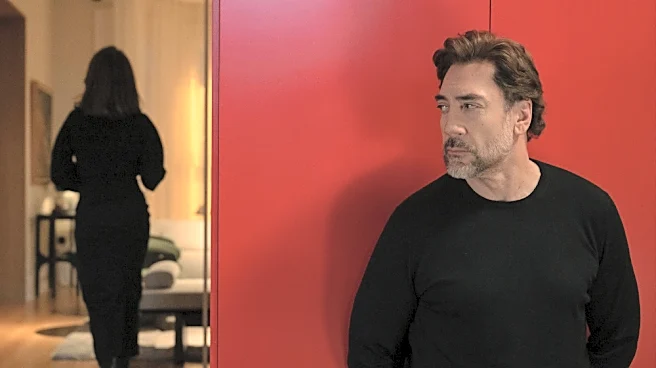
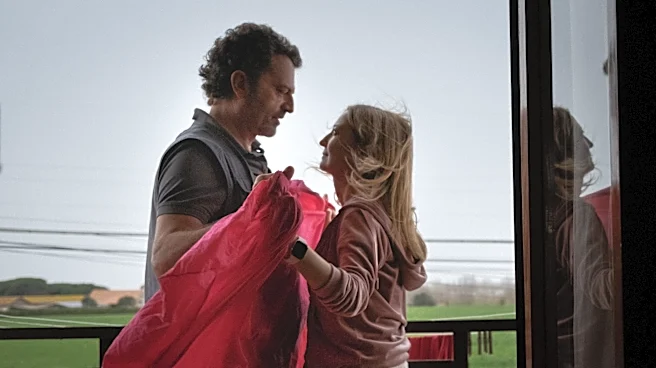
what they say is more tiresome than trenchant. Perhaps because debuting director Anna Foglietta is first an actor, she understands that silences are more powerful than screeches, even more so when a couple want to express themselves but just can’t find the words. “A Common Story” is a revelation, not just in an Italian film landscape that too often falls back on verbal assaults, but more broadly, thanks to Foglietta’s sensitivity to the spaces between speech, and the superlative performances from Alba Rohrwacher and Guido Caprino, who have never been better.
This sensitivity to voids is revealed in the opening montage, consisting of empty rooms in university buildings, their vacant stillness a troubling indication of absence. It’s the perfect visualization of the empty-nest syndrome experienced by parents Erika (Rohrwacher) and Mauro (Caprino), bringing their only child Irene (Ksenia Borzak) to college. She’s probably the first member of the family to seek higher education, and mom and dad are super proud. Once back home, they fall into their usual patterns: Mauro works in construction with his father Marcello (Elio De Capitani), and Erika is a supermarket cashier.
Her days always had a structure that reflected her sense of purpose: she’d get up early each morning to bake a bundt cake for breakfast, check in on her mother Altea (Caterina Casini) after work to bring groceries, clean the house, cook the meals. She was useful, and being useful signified she had a role to fill that brought meaning to her life. Now she’s nearly 45, her daughter is out of the house, and she finds herself suddenly adrift without the self-analytical tools to understand what she’s feeling.
Being needed is her reason for waking up in the morning, but Irene is away and self-sufficient Altea is busy with her friends. Perhaps if she could talk about her feelings with Mauro, they’d be able to negotiate the changes together, but notwithstanding a deep love, they’re not people who’ve ever talked about their personal psychology. Unequipped to find the words that could identify her state of mind, Erika begins to fall apart.
The building blocks of “A Common Story” can be found in countless feminist texts describing the lack of self-worth felt by women whose circumscribed lives seem meaningless when their perceived usefulness is over. But what about the women unable to articulate those emotions, who don’t have access to such texts and for whom the words “mental health provider” might as well be gibberish? Erika is incapable of understanding her depression because she can’t name it, and without the vocabulary she’s unable to share her despair with Mauro, who watches his wife’s disintegration with bewilderment.
As a man, he’s meant to hold everything together; after all, he’s in construction, he fixes things. But he can’t fix this. Making matters worse, his father’s constant barbs have emasculated him, and when he learns that Marcello sold the business without letting him know, it feels like his role as the anchor of the family has been smashed. Following a humiliation at a family luncheon, Erika and Mauro have an argument; Foglietta first discreetly shoots them at a distance, through the windows of their parked car, then as Erika starts to shout, the angle shifts to the other side, until the camera is very close and the meltdown is as raw as it’s going to get.
It’s a wrenching moment, and a rare one in a film with barely any cuts within a scene (DP Andrea Benjamin Manenti’s careful framing meaningfully creates barriers within the fixed field of vision). It’s also the only time their voices are raised, yet they still can’t find words to convey their vulnerability. Filling the quivering void is their intense need for each other, and an inability to understand how to make themselves whole again.
Home alone, no longer driven to bake a cake or organize the house, Erika calls a telemarketer after seeing an infomercial for a face cream. The slick saleswoman asks questions about her skin type, which she can’t answer because she’s never thought about herself that way before, and after excitedly imagining what this product will do, she hangs up disillusioned: no longer able to fulfill the roles of daughter and mother, she also can’t become the kind of woman shaped by a consumer-driven society.
The scene highlights Rohrwacher’s delicate vulnerability and her masterful way of capturing Erika’s inner life, at once hollowed out yet in turmoil. It’s the character’s perplexity that’s so heartrending, perfectly matched by Caprino’s subtlety in conveying Mauro’s incomprehension at what’s happening to his marriage. With eyes, body language and the charged spaces between words, the two performers show us a couple on the verge of collapse, whose love for one another holds out the promise of salvation.