






Click here to read the full article.
Since Spanish Prime Minister Pedro Sánchez launched the E.U.-backed Spain Audiovisual Hub in March 2021 with a first phase $1.7 billion budget, Spanish governmental figures have used San Sebastián to announce its details
(2021), and its impact on Spain’s international shoot scene (2024).
Discussions from 2023 have been led by Spain’s Ministry for Digital Transformation which has just announced a deal with the San Sebastián Film Festival to bulwark its industry events. On Sunday, Sept.20 at a morning conference, The New Script of the Audiovisual Industry, Diversity, Investment and Future, organized by the Ministry, looks set to present ongoing initiatives shaping Spain’s film, TV and other AV sectors, including a $521 million investment surge powered by the Ministry’s Spanish Society for Technological Transformation (SETT), its sovereign venture capital fund.
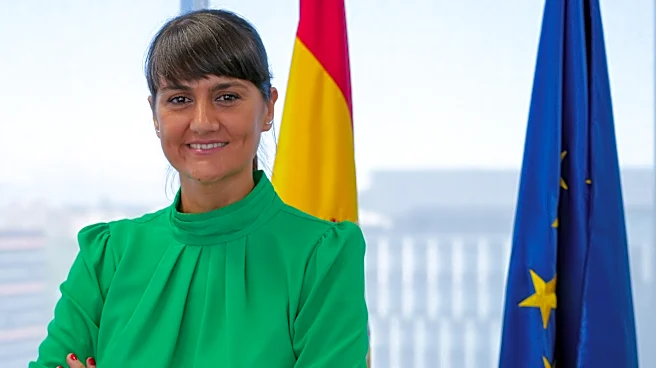
In August, María González Veracruz, Secretary of State for Digitization and Artificial Intelligence, a key figure at the Ministry for Digital Transformation and Public Service, fielded questions from Variety about second-phase Spain AVS Hub, which includes SETT investments, and what Spain needs to continue rating as one of the leading non-English film, TV forces in Europe.
The first phase of the Spain Audiovisual Hub created a collaboration between ministries. The second phase is led by the Ministry for Digital Transformation and Public Service through SETT. I think that reflects the current focus of the Spain Audiovisual Hub. Could you comment?
Absolutely. The first phase of the Spain Audiovisual Hub was a unique national strategy, coordinated by 13 ministries and designed to strengthen the audiovisual ecosystem as a whole — from film and television series to video games, globalization, emerging technologies, and general infrastructure. Thanks to that joint effort, Spain has managed to establish itself as one of Europe’s leading audiovisual hubs. The second phase addresses a new reality. Having shown that public policy can accelerate the sector’s growth, the Ministry for Digital Transformation and Public Service now wants to consolidate that growth and support companies as they enter a new stage of maturity. That’s where the Spanish Society for Technological Transformation (SETT) takes on a central role, providing financial tools specifically designed to drive innovation, facilitate access to financing, and strengthen the international competitiveness of Spanish audiovisual companies.
Can you provide any ballpark figure for the scale of SETT investment:
SETT’s operational data illustrates this shift in scale very well: We have generated €450 million ($521 million) across twelve direct investments and three indirect ones, providing €215.6 million ($252.3 million) in private capital. This shows that SETT isn’t just supporting individual projects, it’s helping to build a more sophisticated audiovisual financing market.
Among the direct investments are some highly representative examples of the sector’s diversity: Lazona, Amuse Animation, Ánima Kitchent, Moonlighting, The Refinery, Good Films and Milo, among others.
Alongside these projects, notable indirect investments include Aurora Media (Secuoya), Culture CAP 7 and Moby Dick. It’s a portfolio that reflects an industrial, technological, domestic and international view of Spanish audiovisual production.
In short, we are moving from a phase focused on driving the ecosystem forward to one aimed at consolidating a truly international audiovisual industry.
SETT’s Spain Audiovisual Hub reflects an increasingly global vision of the audiovisual sector — not just as a driver of economic growth, technological innovation, and national influence, but as an innovative goal to achieve longer-lasting results. Would you agree?
Absolutely. Today, the audiovisual industry is much more than a cultural industry. It’s a strategic sector that generates quality employment, drives technological innovation, attracts investment, strengthens our international standing, and contributes to our national economic growth. The Spanish Government, led by President Pedro Sánchez, recognized its potential early on and decided to make the audiovisual sector a priority as part of its economic transformation agenda.
The main innovation of this second phase is precisely its transformative, long-term goals. We want to keep attracting international productions and supporting its creators, but we also want to strengthen companies, drive emerging technologies, and facilitate the emergence of new business leaders capable of competing in global markets.
How can SETT achieve this?
SETT is a fundamental tool for making this possible. Its direct investments total €104.8 million ($122.6 million), and its indirect investments, through investment funds, total €110.8 million ($129.6 million). This combination allows us to support specific companies and projects as well as funds capable of attracting more private capital for the audiovisual sector.
A few examples illustrate this very well. Aurora Media (Secuoya) has received €98 million from SETT and €102 million in private capital for a total of €200 million in co-investments. Culture CAP 7 has received €9.7 million from SETT and €10 million in private capital for a total of €19.7 million. Finally, Moby Dick has received €3.1 million from SETT and €3.3 million in private capital, for a total of €6.4 million. These are tools that help close a historic gap: the financing for business growth in the audiovisual sector.
Your investments are not just in film and TV….
Yes, we also champion a broad, modern vision of the audiovisual industry. We’re talking about film, television and series, but also video games, immersive experiences, digital content, visual effects, animation, studio facilities, distribution, post-production, and new forms of technological creation. That holistic vision has been one of the defining traits of the Spanish Hub and one of the reasons it has drawn international interest and recognition. Internationally, the Spanish Government’s audiovisual policy is seen as a benchmark and we are being recognized as leading innovators.
Given the fierce competition to attract international productions, does SETT also represent a shift from attracting productions to supporting globally competitive Spanish companies that own intellectual property and can export it to the world?
I would say it’s not about replacing one goal with another, but about complementing them. Spain will continue to be one of the world’s most attractive destinations for international productions. We have highly skilled professionals, world-class infrastructure, diverse filming locations, and incentives that have proven their effectiveness. The collaboration between the Spain Film Commission and ICEX is essential in promoting Spain as a place for talent and opportunity, both for filming and for investment. In fact, every euro invested in tax incentives for international productions generates nine euros in return for the Spanish economy.
But we want to go a step further. Our goal is for a share of the value generated by that activity to remain in Spain through strong companies, homegrown intellectual property, and innovative technological capabilities. We want Spanish companies to take part not just in major global productions, but to be able to lead them, finance them, develop them, and export them.
Could you give more examples?
SETT’s updated operations data helps illustrate this with concrete examples. In animation, investments include Amuse Animation, with €6.5 million from SETT and €13.2 million in total investment; Ánima Kitchent, with €25 million from SETT and €51 million in total investment; and Milo, with €9.3 million from SETT and €19 million in total investment. In audiovisual production with international reach are Moonlighting, in partnership with South Africa; Ítaca, in partnership with Mexico; Good Films, in partnership with the United Kingdom; and The Refinery, involved in post-production and in partnership with South Africa. There are also operations focused on infrastructure and distribution.
All of which illustrates your roadmap….
That map of operations perfectly reflects the direction we want to take: support companies, content, infrastructure, talent, technology, and international expansion capacity. The goal of the Hub’s second phase is clear: that Spain continues to be not only a great place to film, but also a great place to create, produce, finance, and export content, technology, and intellectual property to the world.
The second phase of the Spain Audiovisual Hub coincides with notable indicators of success for the film and television industries, both in Spain and abroad. Could you highlight two or three of the most significant ones?
Several very solid indicators showing the extraordinary progress of the Spanish audiovisual sector in recent years. First, production capacity. According to the FOCUS report from the European Audiovisual Observatory, Spain is the leading production market in the European Union, with 423 productions, a 31% increase compared to 2024. These figures reflect the strength of Spain’s creative and industrial ecosystem.
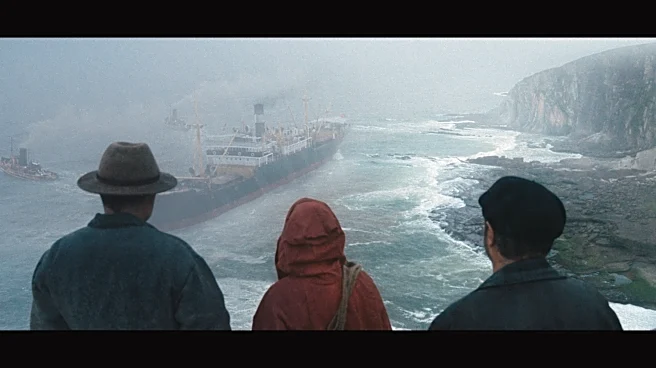
Second, the international success of our content. According to data from the European Audiovisual Observatory, Spain leads the European Union in streaming platform investment in original European content. Furthermore, nine of the eleven most-watched European series on streaming platforms across Europe are Spanish, and the most-watched film on streaming across Europe is Spanish, “Society of the Snow.” These figures show that Spain isn’t just producing more, but producing content able to compete and connect with global audiences.
Third, employment and economic growth in the sector. Employment in the audiovisual sector rose from 30,900 people employed in the first trimester of 2020 to 64,100 in the first trimester of 2025, a 107.6% increase. Over the same period, female employment rose from 12,600 to 22,900, an increase of 81.75%. In addition, employment in film, according to INE data, shows that in the film industry as a whole, employment rose from 86,300 people in 2020 to 114,500 in 2025, a growth of 32.7%.
And I would add a fourth indicator, particularly important for the future: the sector’s growing business and financial maturity. SETT’s operations total almost €450 million in overall co-investment. That ability to mobilize private investment alongside public investment is a strong sign of confidence in Spanish audiovisual production and the sector’s industrial maturity.
Basically, the data points to an extraordinarily positive evolution. Spain has been able to combine creative talent, industrial capacity, technological innovation, and institutional support to become one of Europe’s greatest audiovisual hubs. Now, with the second phase of the Spain Audiovisual Hub and SETT’s goals, we want to consolidate that leadership by backing stronger, more innovative companies with a greater capacity to compete in the global market.