

Click here to read the full article.
Fusee Films entered documentary territory in a major way at the Cannes Film Market, unveiling co-production commitments to three non-fiction projects spanning Vietnam,
the Philippines, Canada, Belgium, and France.
Leading the slate is “The Last Note,” which has already secured international sales representation through Quebec-based HG Distribution ahead of its release.
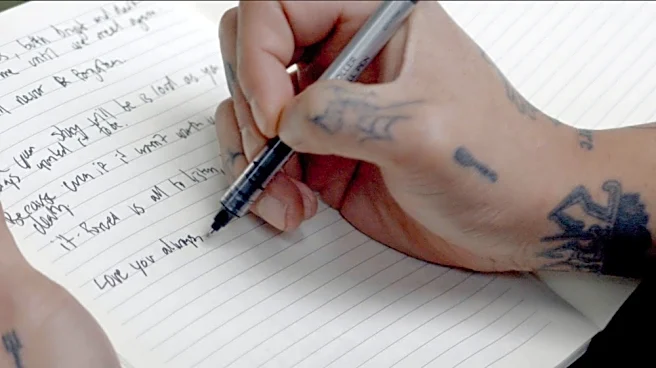
The Canadian film is directed by Patrick de Belen and follows a Filipino-Canadian poet piecing together the life of his younger brother, who died, through journals, songs, and memory fragments. The film confronts grief, mental illness, and the silence that surrounds these subjects in Filipino diaspora communities. The film is produced by Still Here Productions and Fusee.
“The themes in this film are often difficult to talk about, and it is sad to think we must feel alone because of that discomfort. This story encourages us to witness the rawness of both beauty and devastation, while reminding us that the only way through it is together,” de Belen said.
“‘The Last Note’ is a powerful, intimate film that transforms personal grief into a lucid act of witness. Its blend of poetic reconstruction and unflinching honesty about BPD, migration, and precarity makes the story both heartfelt and urgently relevant. As a Filipino-Canadian documentary, it speaks to diasporic experiences and colonial legacies that will resonate strongly with multicultural audiences and festival programmers alike,” added Henry Gagnon of HG Distribution.
The second project, “Land of Evanescence,” featured in the Cannes Docs-in-Progress Showcase, presented by Docs by The Sea. Directed by Vietnamese filmmaker Nguyen Thi Xuan Trang, the 60-minute film traces the multigenerational weight of the Vietnam War through archival material, poetic reconstructions, and encounters with a former propagandist and an American veteran. The Vietnam–Philippines–France co-production, produced by Wilfredo Manalang and Charlotte Lelong through Lagi Ltd., Fusee, and Trance Films, is targeting a 2027 release.
“This is a wonderful opportunity to introduce the film for the very first time. After three years of development, I truly need feedback to help me see my own story more clearly, and to connect with the right people to bring this film to completion,” Nguyen said.
“Cannes Docs is a great opportunity to introduce the first images of our project to the world stage and find the right partners to complete the film. Bridging Europe and Asia is part of Trance Films’ identity. It is exciting to be working with Vietnam for the first time, a country which France has a long shared history with, and this project has been a wonderful opportunity to put into practice principles of creative equity and inclusive partnerships,” added Charlotte Lelong, producer at Trance Films.
Rounding out the slate, “Forgive Me Father for I Have Sinned” is in development as a Belgium–Philippines co-production between While We’re Here and Fusee. The film is directed by Jeremy Luke Bolatag, a young Filipino filmmaker who recently emerged from the Belgian singing competition series “Voice van Vlaanderen.” It draws on Bolatag’s personal experience navigating queer identity against a backdrop of faith, family, and diaspora.
“Telling personal stories with universal impact is, in my opinion, the cornerstone of documentary filmmaking, and Jeremy’s story touched me deeply. His film is critically important to be told at a moment when public debate has become so profoundly polarized,” said Frederik Nicolai, producer at While We’re Here.
The three-doc push marks a significant departure for Fusee, which built its profile on prestige festival fiction including Cannes selection “Plan 75,” Venice Critics’ Week Grand Prize winner “Don’t Cry, Butterfly,” Locarno’s “Topakk,” and Berlinale short “Through Your Eyes,” alongside Netflix Asia hit “Blue Room” and Torino Screenplay winner “Elsewhere at Night.” The company was founded by Wilfredo C. Manalang.
“Documentary filmmaking is where Fusee’s soul lives. These three projects are not just films. They are invitations to a global conversation that we believe the world is ready to have, and urgently needs,” Manalang said.