


Click here to read the full article.
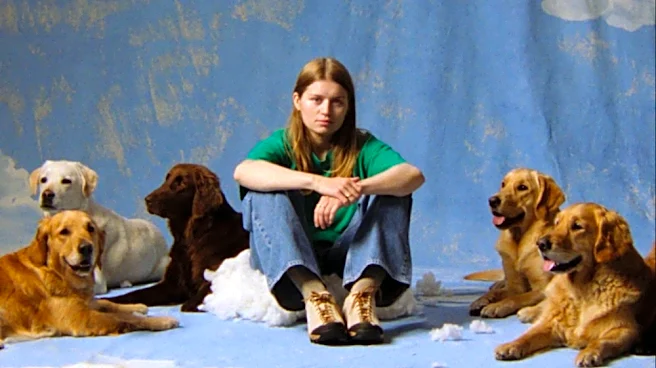
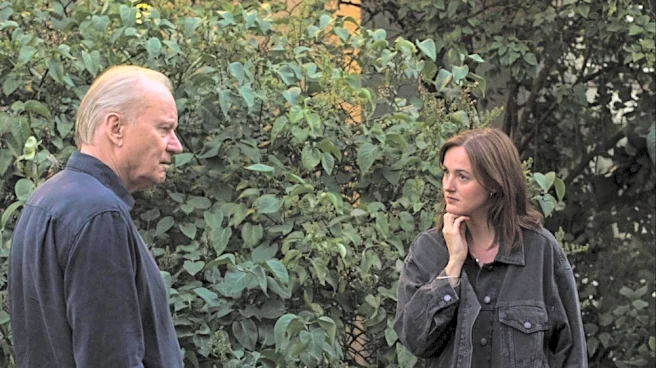
Singer Marie Ulven, known to her millions of fans and followers as girl in red, plays a musician in Eivind Landsvik’s drama “Low Expectations.” But she’s not playing herself.
“It has been a little frustrating because
I’m very different from Maja, and I put a lot of work into this role. But just because I’m an artist as well, some people assume: ‘I guess that’s her.’ It annoys me, which is why I was hesitant when Eivind said he wanted me to play the part,” she tells Variety.
In“Low Expectations” – shown at this week’s Norwegian International Film Festival Haugesund following its premiere at Cannes’ Directors’ Fortnight – Maja breaks down after years of international success. She returns home and starts working at a local high school.
“When I first heard the synopsis, I was like: ‘I don’t want to pretend to be singing or pretend to be an artist when that’s really who I am.’ But then I read the whole script and realized: ‘OK, there’s a distinction here’.”
Ulven rose to global fame in 2018, also thanks to her single “I Wanna Be Your Girlfriend,” with The New York Times proclaiming she’s becoming the “gay musical role model she never had.” Since then, she has collaborated with Sabrina Carpenter on “You Need Me Now?” and opened for Taylor Swift’s The Eras Tour – the highest-grossing tour of all time.
Unlike Ulven, Maja decides to give up her artistry. Or rather, she puts it on pause.
“Maja still feels she has something special [to offer] and it would be a shame to give it up. But she’s not being an artist at that time in her life, and that’s ultimately what made me say ‘yes.’”
This doesn’t mean Ulven is opposed to taking time off as a creator.
“I think it’s necessary. I met an incredible person in L.A. and he told me: ‘Marie, you’re in a period of incubation.’ As an artist, it’s important to allow yourself those moments when you immerse yourself in books or other people’s art,” she states.
“It’s different for everyone, but as an artist, you have to stay potent. You can also be very prolific, but if your motive is stress and the need to stay relevant, that’s not truthful.”
She adds: “Maja had success, but she couldn’t handle it because of mental illness, drug abuse and the pressure. At least, that’s my interpretation of it. It’s a relatable situation when you’ve done something of some level of importance. Afterwards, you feel like you need to live up to it.”
Her character transitions from someone who commanded massive stages to someone who just wants to disappear.
“You start asking yourself: ‘Maybe she wasn’t made for that?’ What I love about this movie is that you really want the best for her. I don’t know if it was bad for her, and I don’t know if she’s going to figure it out. But I hope so, you know what I mean?,” she says.
“In the end, it’s about finding balance in life. Maja tipped the scale over to something that became toxic for her. But she’s still passionate about making music, so maybe she can figure it out? That’s the big question, I think.”
Ulven isn’t quite done with acting, she states.
“I have a real interest in acting, and it feels genuine. I had genuine fun making this. I was intrigued and challenged on set. That also means I can’t be too upset when people say: ‘Is that you? What percentage of you is Maja?’ Someone asked me that yesterday!”
“In some ways, I also don’t care because I know the truth. It’s the same when some people tell me my music is shit. You can’t stop because of that.”
“I definitely want to try more acting, but I agree: it’s a really hard transition because people know your face. Also, just because you can make music doesn’t mean you should be an actor. But if that’s what you want to do, you should do it.”
According to director Eivind Landsvik, different generations have been going forward ever since the premiere, calling the film “honest and true.”
“And they appreciate that,” he says.
“With Marie, we talked a lot about the character and how she’s very distant and introverted at first, but she slowly opens up through small gestures from the people around her. There are scenes where she almost doesn’t respond to people talking, and this was a challenging thing for Marie. It’s so far from who she is as a person. At the same time, I guess it’s what intrigued her. Neither of us intended for her to play herself.”
He notes: “During rehearsals, I discovered that Marie had this quality of expressing so much without words or grand gestures. Her presence is so great.”