




Click here to read the full article.
In early June, Tate McRae celebrated her recent move to New York by catching Knicks fever. It was less than a year since she relocated from Los Angeles, where she kick-started her career as music’s next Main Pop Girl,
yet she could feel the electricity coursing through her new city over a potential championship win. So she did what any young celebrity would do: She put on a Knicks T-shirt and headed up to Madison Square Garden to watch Game 4 from a suite with her close friend Hailey Bieber. “I really was the one who jumped on the bandwagon. I was like, ‘I love New York!’” says McRae with a laugh.
It’s now a few weeks later — the late afternoon of the Knicks’ victory parade — and she’s seated in a conference room of a photo studio overlooking the Flatiron District. On the streets below, vendors are hawking bootleg merchandise as stragglers from the festivities color the sidewalks with blue-and-orange jerseys and hats.
McRae, meanwhile, is just trying to blend in. Near the end of the shoot, she glides from room to room, swarmed by her team. Few heads turn despite her tall, unmistakable frame shuffling across the floor. As much as she has been seen these days — which has been a lot, to the tune of more than a million Tater Tots (her fandom name) at her latest tour — she’s still unsure how to deal with the glare of thousands of iPhones. She’s figuring herself out, like any 23-year-old would, by clinging to her journal.
“You’ve gotta learn yourself. You have to write down, ‘What are my favorite songs? What are my favorite colors? What are my favorite references? What are my favorite movies?’” she says. “That, I think, shapes your identity and hopefully comes across through you as the vessel.”
It’s been about seven months since she concluded her “Miss Possessive” tour, an 88-date worldwide trek that grossed more than $100 million, and she’s finally coming back down to earth. The experience was unparalleled for anyone her age, bringing the kind of attention that sends our best and brightest stars into spectacular spirals. (Think Britney Spears, with whom she’s endlessly compared.) For McRae, the concerts were so overwhelming that she can’t even recall the finale at Los Angeles’ Kia Forum in November. When asked about her electric piano not cooperating as she stood behind the keyboard that night, she draws a blank: “I have early signs of dementia, I think, because I can’t remember anything that’s ever happened to me.”
To the world, McRae is a strong, fearless entertainer, a triple threat who can pen songs that recall the fizzy pop of the early aughts and bring them to life as a ferocious singer and dancer. But in her new home, she’s relishing the cloak of anonymity that only New York can offer. She set up shop in NoHo, frequenting her local coffee shop and going for hot Pilates. She’s read some books — recommending Sidney Sheldon’s 1982 thriller “Master of the Game” — and learned how to cook three things: ground turkey, eggs and sweet potatoes, the latter of which she makes in an air fryer. On some days, she’ll walk through Washington Square Park or talk with random strangers; on others, she’ll log on to Zoom for meetings with her team.
Life is, for now, normal, whatever that means. But that’s about as normal as it can get for a pop star of McRae’s standing. Over the past few years, the Canadian native has risen from a YouTube upstart to what some are christening Gen-Z’s answer to Spears. Her breakthrough sophomore album, 2023’s “Think Later,” was a purposeful shift from introspective balladry to Y2K-era pop, spawning the Nelly Furtado-indebted single “Greedy,” which climbed to No. 3 on the Billboard Hot 100. A little over a year later, McRae hit full throttle with “So Close to What,” which bowed atop the albums chart in February 2025. Not long after, she scored her first Grammy nomination with the slick “Just Keep Watching” off the “F1: The Movie” soundtrack.
Amid it all, McRae’s stock continued to rise in celebrity circles. Following the Grammys, where she came up empty-handed, she put the loss behind her at Charli xcx’s after-party. In May, she made her Met Gala debut in custom Ludovic de Saint Sernin and held hands with Blackpink’s Rosé as they stepped into GQ’s post-gala fete. After the Knicks’ historic Game 4 win, McRae and Bieber headed down to the club Zero Bond to hobnob with Sombr, the Haim sisters and Taylor Swift, who had previously sent her a homemade loaf of sourdough bread.
“The basket smelled amazing,” McRae recalls, leaning forward as though she’s letting me in on a secret. “I don’t know what perfume she wears, but I was like, ‘She must smell incredible.’”
In July, Swift invited McRae to attend the wedding of the century at Madison Square Garden, and a few weeks later, McRae was back in Los Angeles to deliver the match ball at the opening of a FIFA World Cup game.
“I think she just stands out so distinctly,” says Bieber, who attended husband Justin Bieber’s Skylrk World Cup party with McRae following Spain’s title win on July 19. “You can’t help but want to listen and watch her. She works her ass off. She’s making a clear mark.” It only helps, adds Bieber in an email, that McRae is gracious with those she chooses to keep company with: “Tate is as sweet as they come. I may be biased when I say I love a Canadian” — like her husband — “but I really do. She is salt of the earth, grounded and always fun to be around.”
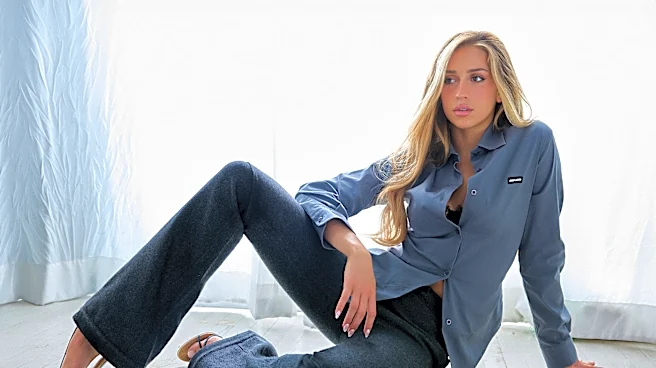
At Blonde Studios in New York City, McRae appears to be enjoying the leisurely pace of a photo shoot. She’s tried on several looks and ends the day in jeans and a denim-meets-tiger-print spaghetti-strap top. She loves the jeans so much, in fact, that she asks her team if she can keep them. You wouldn’t know it from her bubbly disposition, but her songs tend to be the tell: McRae can’t help facing her darkest thoughts in her music. It’s evident on songs like “Nostalgia,” where she sings of having “a lot to lose, so I might as well lose it anyway,” or on “Horseshoe,” a cinematic tune in which she asks, “Where should my sadness go?”
McRae speaks as though a giggle is always on the verge of escaping her lips. But she’s clearly overcome by her inner monologue. As she discusses the swings of her career, she’s candid about the pressures of fame and its often crushing weight. She looks back on the emotional comedown from the “Miss Possessive” tour, for instance, and muses about just how deeply it embedded itself under her skin.
“I remember reading Sylvia Plath being like, ‘I am her,’” she says as she lets out a small laugh. “My thoughts felt so dark at the time, and I felt so lonely. I really needed to come back into my body and regulate my nervous system. I was so shot after the tour. I couldn’t really sleep at night. I’d seen so much of myself that I was like, ‘I want to go into a black room and not look in a mirror for six months.’ And I think I really had to check myself and be like, ‘You’re not the worst person in the world. You’re not the ugliest person in the world. You haven’t done everything wrong. And, you know, you’re just doing what you love.’”
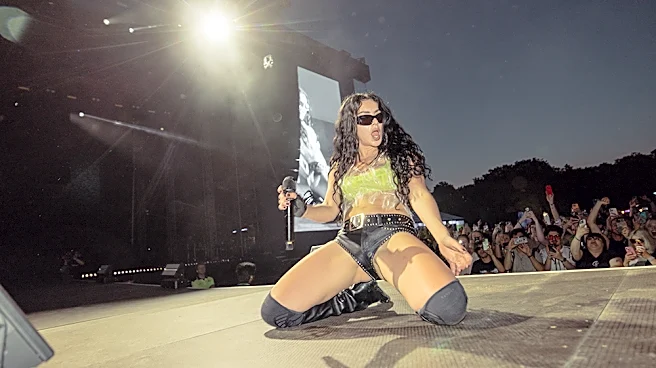
McRae has turned to the stage to establish some semblance of stability. Performing, she says, is where she feels most at home. Much like Beyoncé’s Sasha Fierce, she inhabits a character onstage named Tatiana, who allows her to tap into the raw energy that powers her shows. She’s at her peak when she’s dancing and singing; remove the dancing, and she’s slightly less confident. Put her onstage to accept an award and give a speech, and her anxiety kicks into high gear.
“Sometimes in smaller rooms, you feel more nervous than [in front of] 20,000 people, and you start to target why you feel nervous and why you don’t try to overcome that,” she says. Dancing is her sweet spot, and she’s gone viral time and again for her exacting moves. Her performance from last year’s MTV Video Music Awards, a showstopping medley of the zippy “Sports Car” and “Revolving Door,” was just nominated for a 2026 Emmy. “I think it’s muscle memory. When I was a kid feeling awkward in my skin or feeling uncomfortable, dancing was my way of feeling cool and feeling like I excelled at something. And I think I feel that way when I perform, like I’m in my element.”
McRae has been nurturing her passion for performance since she was 6, studying ballet in her native Calgary before expanding her love of the arts to music. In 2017, she began posting original songs on YouTube via her “Create With Tate” series that, two years later, led to her signing with RCA. Her first album, 2022’s “I Used to Think I Could Fly,” might as well have been from an entirely different artist, one who wallowed in her feelings on ballads with grim titles like “Hate Myself” and “Feel Like Shit.”
It was with “Think Later” and, subsequently, “So Close to What” that she found her footing, quite literally, by marrying her love of choreography with her propensity for singing and songwriting. (“Sad girl bit got a little boring,” she admits on “Think Later” opener “Cut My Hair.”) It was all in service of the spectacle — McRae meticulously delivers bespoke performances for almost all her gigs, whether as musical guest on “Saturday Night Live,” twice, or at events like the iHeartRadio Music Festival and the Billboard Music Awards.
She manages all this, she says, by treating work like play: “Our biggest thing is romanticizing and making everything so fun. It’s like, let’s go rent a pink Jeep and romanticize the shit out of this experience. That keeps life very light and exciting and a bit like a fantasy, which is the only way to approach this because it can come with a lot of pressure.”
McRae tries to stay in control as much as she can. Her songs have elicited speculation online about their subjects, as though they are the Rosetta stone of Tate McRae. “So Close to What” is assumed to be about her then-boyfriend, rapper the Kid Laroi, who is featured on one of its songs. After a year and a half of dating, they split last summer, and in September, McRae released the scathing kiss-off “Tit for Tat,” which was largely believed to be about the betrayal she felt from the breakup. (“My dad hates you, my dog hates you, my brother hates you and I do too / I asked all of California, they all happy that you moved,” she sings on “Anything but Love” from the deluxe edition of “So Close to What.” The songs sent some corners of the internet into overdrive.)
For her own sanity, McRae prefers to float above the noise, staying out of the discourse and letting the work speak for itself. “If you think about the reception while you’re creating, you’re destroying the process. Thinking about reception and people interpreting is so terrifying to me,” she says.
McRae has famously disavowed X, instead curating her online presence with carefully deployed posts on Instagram and TikTok: “I’m always shocked by how much people speculate and talk about things. It’s really scary. So I try not to read it, and let it drift off into the wind.”
That also means walking a tightrope of keeping her relationships out of the public eye. Just a day before the photo shoot, celebrity gossip account DeuxMoi published a post speculating on the status of her romance with New Jersey Devils center Jack Hughes, with whom she was linked earlier this year. It’s not a stretch, given her fierce hockey fandom: On the cover of “Think Later,” she wears hockey pads — a very Canadian move — and she was a celebrity co-captain with Justin Bieber and Michael Bublé at the 2024 NHL All-Star Game.
“I try to keep my relationships as sacred and private as possible,” she says. She’s careful about how much she reveals, taking a moment to collect her thoughts before continuing. “I love the people in my life. They love me. You just try to keep that circle as positive and supportive as possible. And the outside noise, I can’t do anything about that. Focusing my energy on something that I can’t control, it just puts me in a bad mood.”
Things she can’t control? Last year, she duetted with Morgan Wallen on the song “What I Want,” which debuted at No. 1 on the Hot 100 but enabled the internet to brand her as a MAGA supporter by association with the country singer. Her relationship with Hughes only strengthened that narrative after his team laughed at a distasteful joke made by President Trump during a congratulatory call following their Olympic win earlier this year.
I ask her why it’s important for her not to tread into that sort of conversation. “I like to say my piece through organizations I support and the environment that I have on tour,” she says. Last year, for instance, she posted a TikTok advertising a “Little Miss Possessive” hoodie, with a portion of proceeds going to The Trevor Project, a nonprofit focusing on suicide prevention for LGBTQ+ youth, and Global Fund for Women. “I think it’s pretty obvious what kind of person I am and the things I support. And I hope that my fans can see that through the things that I’m putting my energy towards.”
As she navigates the choppy waters of superstardom, McRae has been finding comfort in her family. At the photo shoot, her mother, Tanja Rosner, sits in the adjacent room with McRae’s manager as the crew packs up. Usually her mom is back in Canada, and they talk to each other, McRae says, “around seven times a day.” “I’m living with my mom on FaceTime,” she adds, often starting her day by having a virtual coffee with her. Her only sibling, Tucker, who just graduated from Dartmouth, is about to come live with her in New York. She goes home a few times a year, mainly for her birthday and Christmas, to see her parents, grandfather and friends.
She’s also begun work on her fourth album, which is in the see-what-sticks phase. She had her first session for the project in February with hit songwriters Amy Allen and Emile Haynie, whose collective credits include everyone from Sabrina Carpenter and Lana Del Rey to Olivia Rodrigo and Harry Styles. As with her past records, McRae is mood-boarding much of the project but still doesn’t know how it will take shape. All she really says about it is that she flips through a Dolly Parton coffee-table book filled with her lyrics for inspiration and has some of the country legend’s songs on a playlist she calls “Bubbly Bubbly Brain Refresh.” She avoids listening to straightforward pop music while writing and recording; it leaves her uninspired.
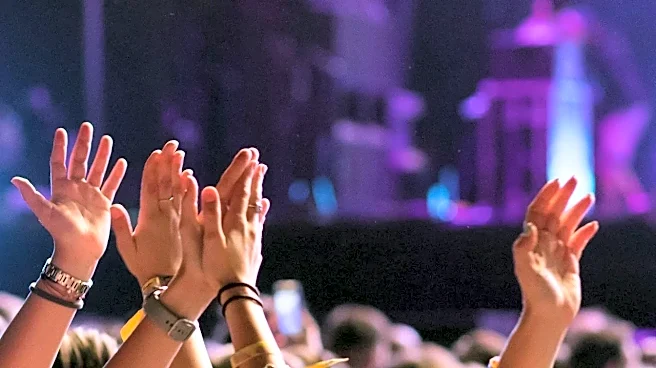
As the sun begins to set on New York City, McRae says she’s looking toward the two major festival appearances looming on the calendar. She’s headlining Montreal’s Osheaga Festival and Chicago’s Lollapalooza, taking place on the same weekend in early August, and rehearsals are starting in a few weeks. A lot is riding on Osheaga, she says, since it’s her first time performing at a festival in Canada. She knows it needs to be above her standard, which is already impossibly high.
“There’s always thought about how you want your legacy to go down,” she says. “For me, the way to do that is try to beat your last performance, try to beat your last song, try to grow, evolve, pick it apart, rip it apart, figure out what didn’t work, what I didn’t like about that performance, what I could have done better, why I was nervous, figure out how to not be nervous. I think the more you can master yourself and your performances, the better you get.”