






Click here to read the full article.
Elon Musk’s ex Ashley St. Clair spoke about her decision to reject a $40 million non-disclosure agreement after the influencer gave birth last year to Musk’s 13th child. By turning down the alleged payday, St. Clair was
able to sit for an interview in “Musk,” a new documentary from Alex Gibney that seeks to make sense of the controversial billionaire who has outsized influence on the world in which we live.
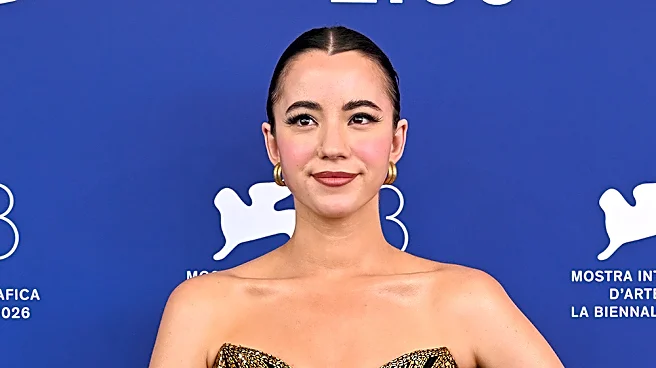
“When you are offered something like that, it creates a debate about what your speech means and how valuable that is,” St. Claire said at a Venice Film Festival press conference for “Musk,” which premieres on Tuesday. “Why do they want to offer me this amount of money to not speak?”
St. Claire participated in the doc to “set the example for my kids that we should never take being materially comfortable that we’re speaking the truth,” she said. St. Clair gained prominence as a right-wing political commentator who advocated for conservative and anti-trans politics. She is now expressing her regret for platforming those beliefs, which she chalked up to her youth and confidants at the time.
“I got involved with Republican politics when I was 18 after I met Charlie Kirk, and there was an air of ignorance,” said St. Clair, who is now 28. “But that ignorance does not excuse any role in that. I hope the risk that I’m taking now is speaking out and trying to fight back at least helps a little bit.”
Gibney, an Oscar-winning documentarian, has investigated corrupt corporations (“Enron: The Smartest Guys in the Room”), sexual abuse coverups in the Catholic Church (“Mea Maxima Culpa: Silence in the House of God”), Scientology (“Going Clear: Scientology and the Prison of Disbelief”) and alleged Russian interference in the 2016 U.S. presidential election (“Agents of Chaos”). Gibney began working on a film about the tech titan and world’s richest man, with an estimated net worth of $900 billion through ventures including SpaceX and Tesla, back in 2023.
“The thing that struck me most, particularly early on, there was a tremendous sense of fear of talking — both among people who were his critics, colleagues and friends,” saidGibney said. “I talked to many, many, many people. Many declined to speak.” Gibney and St. Clair were joined at the press conference by another interview subject, tech journalist Zoë Schiffer.
“Musk,” which premieres at the festival on Tuesday, is nearly four hours long — and Gibney joked he didn’t set out to make such a long movie.
“We intended to make a shorter film before Musk became wrapped in the career of Donald Trump and the United States,” Gibney said, adding the first thing he did was reach out to Musk, who declined to be interviewed.
“Musk” promises to reframe all we know about him, “revealing that the so-called ‘visionary genius’ is little more than the 21st-century reincarnation of a confidence man,” according to the synopsis. Musk himself has said that perceived reality may be nothing more than a simulation, and Gibney argues “even his most heralded accomplishments are rife with illusion and misdirection.” Musk’s recent ventures include buying Twitter (and renaming the social media platform X) and starting xAI and its chatbot Grok. Although Musk didn’t participate in Gibney’s doc, he long ago called the film a “hit piece.”
Gibney called Musk a “very dangerous” man and expressed a deep concern about Musk’s unwillingness to show concern about other people.
“I would say he has a very difficult time with empathy, especially cognitive empathy, which is putting himself in the shoes of others,” Gibney said. “He seems incapable of doing that.”
Added St. Clair, “He makes a conscious choice to not put himself on other people’s shoes. It is a deliberate rejection of empathy.”