




Click here to read the full article.
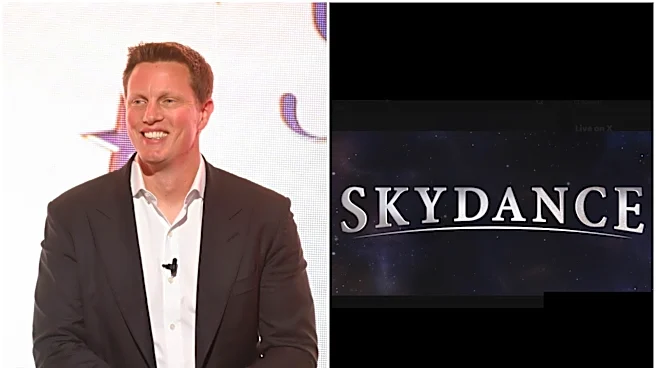
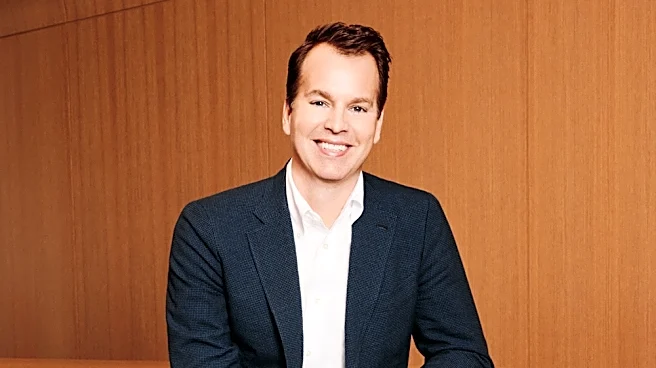
David Ellison has emerged victorious. And he’s boldly — or arrogantly, if you prefer — decided to name the entertainment giant that he’s bolted together Skydance Corp., nodding to the original name of his film production
firm that has swallowed up two Hollywood studios over the past 14 months.
Defying skeptics and beating back opponents, Ellison has harpooned his white whale in buying Warner Bros. Discovery. Now he has to prove that the $111 billion mega-merger can become a profitable entertainment powerhouse, and not just a vessel that will get sucked under by a massive whirlpool of debt.
As the closing of the deal — set to occur Tuesday, Oct. 6 — became a certainty, entertainment industry insiders started to come to grips with the reality that the enlarged company is a new and unpredictable force in town. The deal has been polarizing for the creative community, with many boldface names going public in their opposition to the merger. The new leadership team that Skydance is assembling under the direction of Ellison and Ynon Kreiz, just recruited from Mattel to serve as co-CEO, has to navigate that dynamic. And they must do it while walking a tightrope on Wall Street to pay down debt and grow profits across film, linear TV and streaming.
“They need to move as quickly as possible to get the leverage down,” says Jawad Hussain, managing director at S&P Global. “The biggest hurdle and the biggest thing we’re going to be keeping our eye on is integration and execution.” Two years ago, Hussain says, Skydance Meida was a small company that turned out a few films a year. “Now it’s managing one of the largest media companies. It’s not necessarily an easy task.”
Related Stories
Skydance Shuffle: David Ellison Addresses Troops About New Name, Says Adieu to Mike and Pam and Sets Table for ‘Barbie 2’
New Name of Paramount-Warner Bros. Unveiled: Skydance
Skydance Says It’s Committed to L.A., but Threat to Leave Has Proved Potent
George Cheeks May Be Poised for Expanded TV Role at Skydance Post Paramount-Warner Bros. Merger
European Entertainment Leaders Mostly Optimistic About David Ellison’s Takeover of Warner Bros.: ‘I Believe in His Commitment to Cinema’
It’s all been a whirlwind. On the morning of Sept. 30, Ellison still didn’t know if it was a done deal.
He had spent more than a year in his relentless pursuit of acquiring Warner Bros. and HBO. The WBD board rejected his takeover offers eight times. David Zaslav, Warner Bros. Discovery’s boss, ghosted Ellison in December 2025 after Netflix clinched a deal for WB’s streaming and studios business. But Ellison didn’t surrender; he finally outbid Netflix in February, with a $31/share offer that was nearly 2.5 times the stock price before the M&A frenzy kicked off. It was an offer WBD couldn’t refuse.
Ellison and his legal team, headed by former DOJ official Makan Delrahim, predicted the proposed Paramount-WB combo would easily clear regulatory approvals. In June, Trump’s Justice Department rubber-stamped the pact without attaching any conditions. All told, regulators in 68 jurisdictions worldwide cleared the merger with minimal pushback.
The last barricade in Ellison’s way? An antitrust lawsuit brought by 12 Democratic state attorneys general, led by California’s Rob Bonta. Ellison believed the litigation was politically motivated, stoked by fears he would try to turn CNN into a Trump-friendly mouthpiece. (He has repeatedly promised a hands-off approach to CNN’s news coverage.) But the AGs pressed their case and a federal judge agreed that their arguments — that Paramount-Warner Bros. would wield undue power in theatrical and basic cable markets — had merit. A trial was scheduled to begin in March 2027.
Frustrated and incredulous, Ellison let it be known through press leaks in August that he would pull Paramount out of California if the state AGs didn’t let him close the WB deal. Paramount insiders continue to insist the notion of Ellison’s Golden State exit wasn’t a bluff or a threat. Bonta, seeming to realize he would gain no political capital by derailing or delaying the merger, relented. Paramount and the AGs announced a settlement of the suit on Sept. 21 — with a list of concessions so lenient that it surprised not only industry watchers but also employees at both companies.
Now all that was left was the judge’s approval of the settlement. Worryingly for Ellison, U.S. District Court Judge Araceli Martínez-Olguin at a Sept. 24 hearing had left the door open to a potential further third-party review of the settlement at the behest of Sen. Cory Booker (D-N.J.). The groups behind the #BlockTheMerger coalition, which had amassed more than 5,700 signatories from actors, filmmakers and industry workers opposed to the deal, filed a brief with the court urging Martínez-Olguín to reject the settlement.
But on Sept. 30 at just after 12:30 p.m pacific time, the judge issued her ruling: She had approved the settlement.
The proposed consent decree, Martínez-Olguin wrote, reflects a “compromise that may leave some dissatisfaction for both sides and the public but a compromise that saves the risk, time and expense of litigating through trial.”
Boom! Teams at both companies swung into action to make the final preparations needed to close the deal. That evening, Paramount and WBD confirmed the merger’s expected closing date of Oct. 6, at which point Paramount’s common stock will move from Nasdaq to list on the New York Stock Exchange. The stock symbol will change from “PSKY” to “SKYD,” reflecting the Skydance corporate name.
Ellison is expected to lead a town hall meeting with employees next Tuesday, and Ellison and Kreiz are scheduled to host a virtual press briefing — along with the new Skydance’s executive leadership — at 7 p.m. ET on Oct. 6.
Coincidentally, on Sept. 30 Ellison had been sitting on his own bit of hot news: He was ready to announce that he recruited media vet Kreiz to be co-CEO at the combined Paramount-WBD. The merged entity’s businesses will jointly report to Ellison and Kreiz.
Word of Kreiz’s joining Paramount trickled out earlier in the day, but Ellison had already decided to wait until after market close to announce it. Paramount put the release on the wire at 1:06 p.m., a little over half an hour after the judge OK’d the antitrust settlement.
Ellison triumphantly sent Paramount employees a companywide email about Kreiz’s hiring, timestamped at 1:18 p.m., praising the exec as a “proven builder and operator.” Kreiz, during his eight years at Mattel, had helped cut costs through layoffs — and oversaw its first theatrical release, 2023 blockbuster “Barbie.” He swung the company to profitability, but revenue has stubbornly stayed flat the last four years.
Ellison wrote in his email: “Together we are well positioned to integrate, operationalize and run the businesses as we build one of the most ambitious next-generation media companies in the industry’s history. Kreiz, as part of his compensation package, will receive $31.5 million in fully vested stock as a signing bonus with the merger close.
Then on Friday, Oct. 2, Ellison shared on X that the new corporation would be … Skydance. His post included a sizzle reel of the combined company’s biggest hits, leading off with a clip from “Titanic” — an inauspicious choice, perhaps, given how that infamous voyage turned out.
“Paramount and Warner Bros. shaped over a century of culture,” Ellison wrote. “By combining them, we aren’t rewriting history — we’re equipping these iconic studios with a more powerful engine. Together, we are Skydance: a creative-first home for bold, quality storytelling.”
Three years ago, Ellison was primarily known as a rich kid — scion of Oracle billionaire Larry Ellison, one of the world’s richest people — and a semi-successful movie producer, most notably with 2022’s “Top Gun: Maverick,” which turned in a boffo $1.5 billion at the box office. Now, having bagged Warner Bros., he can lay claim to being a titan in the business and no mere nepo baby.
“Ellison stared down the attorneys general and won. He stared down the unions and won,” says Prof. Erik Gordon of University of Michigan’s Ross School of Business. “You can’t see David Ellison as daddy’s boy anymore. He’s a formidable force in the industry.”
The Paramount-WBD merger is the biggest M&A deal in Hollywood history. It brings together two of Hollywood’s biggest movie studios, HBO Max and Paramount+ streaming services dand TV brands including CBS, CNN, MTV, TBS, Comedy Central, Food Network and more. The new company’s entertainment franchises span Harry Potter, Lord of the Rings, Game of Thrones and other HBO hits, the DC superhero universe, “Yellowstone,” “Mission: Impossible,” “Top Gun” and the Nickelodeon kids’ empire.
“We still have work to do before the deal closes, and nothing changes until it does,” Ellison told employees in his memo about Kreiz.
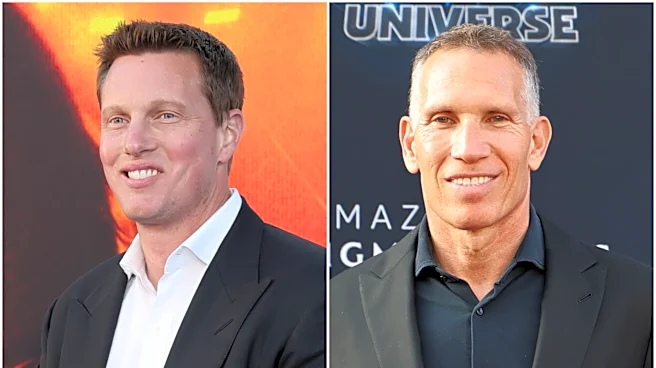
But even before the deal closed, the company’s new leadership was taking shape. Michael De Luca and Pamela Abdy, co-heads of Warner Bros. Motion Picture Group, will leave post-merger, sources told Variety. Paramount film heads Dana Goldberg and Josh Greenstein are in line to oversee both movie studios.
With the deal close, Zaslav is expected to depart — with a boatload of money. Zaslav stands to earn at least $550 million in stock and cash once the Paramount-WBD deal closes, including $34.2 million in cash severance payments, per the terms of his “golden parachute” package.
Skydance’s settlement-related obligations around theatrical film and the operation of its Paramount and Warner Bros. cable channels will undoubtedly have ripple effects in the marketplace that extend well beyond the U.S. Showbiz leaders in Europe have closely watched the transaction at a time when local-language production is at a peak thanks to the influence of Netflix, Amazon and Disney+. HBO has a growing international footprint that will be crucial to Skydance’s future growth.
Pierre-Antoine Capton, chairman of France’s Mediawan, says the broader film and TV business is in line for a bumpy few years amid the shakeout of what he calls “a period of intense consolidation” of media assets. Mediawan bought Peter Chernin’s North Road Company earlier this year. It’s also circling Lionsgate as a potential acquisition.
“Having spoken with David, I believe his vision is first and foremost an artistic, creative ambition,” Capton says of the Skydance merger. “He wants to build a more powerful group in order to invest in creation. It’s not only about making cuts. I believe in his commitment to cinema and to theatrical releases.” At the same time, “everywhere in the world we’re entering a much more difficult phase, where consolidation will be, in my view, one of the solutions to the economic problems we’re all going to face,” Capton says.
Ellison and Kreiz will also be under pressure to deliver a clear roadmap for generating bigger profits from its streaming pillars, HBO Max and Paramount+.
Casey Bloys, head of WBD’s HBO, is poised to assume oversight of the combined Paramount-Warner Bros. streaming business after Cindy Holland announced on Sept. 29 to staffers that she was stepping down from her role running Paramount+ and other direct-to-consumer businesses.
Holland’s resignation blindsided some senior managers at Paramount, who thought Ellison had hired her for the long haul. “We all thought we had the home-court advantage — that David was bringing all the new people at Paramount to have them be part of Warner Bros.,” a company insider says.
Paramount+ and HBO Max will together have more than 200 million subscribers. The newly merged Skydance can save money by consolidating its back-end streaming infrastructure. But “you don’t want to immediately combine the two streaming services because people won’t pay the sum of the two subscription prices,” says Prof. Sridhar Tayur of Carnegie Mellon University’s Tepper School of Business. For the foreseeable future, HBO Max and Paramount+ will continue as discrete brands.
Another area to watch: what Ellison does with CNN, which throws off operating cash that Skydance Corp. will need to bolster its finances. Ellison has held preliminary talks with CNN chief Mark Thompson about staying on after the merger, sources tell Variety. The prospect of Thompson continuing at the helm, at least for now, came as a relief to CNN personnel, who have been worried that Bari Weiss, the “anti-woke” media entrepreneur Ellison put in charge of CBS News, might extend her fiefdom to include the news cabler.
Under the settlement with the 12-state coalition, the merged Paramount-Warner Bros. will be subject to monitoring by a “news editorial independence board.” The board, which will include representatives from the states, will establish which will establish “guiding editorial and journalism principles” for CNN and CBS News. But critics have dismissed this as a toothless condition. One player displeased with this outcome was Connecticut Attorney General William Tong, who, although he signed off on the settlement, said afterward he had advocated for a full divestiture of CNN and CBS News.
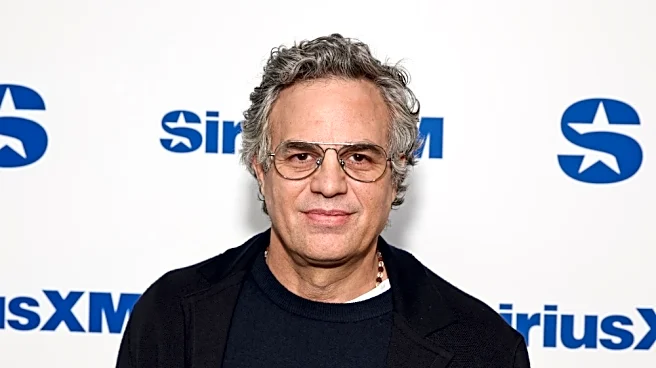
Foes of ParaBros remain hopping mad. Actor Mark Ruffalo, one of the deal’s most strident critics, has vowed to continue the fight. “This merger will stifle creativity, weaken free speech and cost people their jobs — it is a bad deal for this country and should never have been approved,” he said in a social media post Sept. 30.
Ruffalo’s feud with Paramount got ugly. On Aug. 21, he posted a message warning about the dangers of the Paramount-WB merger and alleged Larry Ellison’s Oracle was complicit in “what we now have come to see as a genocide” by the Israeli government against Palestinians. Paramount responded forcefully. A company rep asserted the “antisemitic tropes” Ruffalo invoked “aren’t just wrong — they’re a bridge too far.” Ruffalo has been set to reprise his role as an FBI agent in a second season of HBO’s “Task” crime drama. It remains to be seen if Ellison will let bygones be bygones.
Apart from the shouting, the biggest burning questions about the new entity are about its financial condition.
How is Paramount buying Warner Bros. Discovery, which has a market cap that’s six times larger? Paramount is issuing billions in debt securities and securing new loans to help foot the bill. Larry Ellison is bankrolling the WBD merger to the tune of $46.7 billion in equity financing. Paramount also lined up about $24 billion in commitments from the sovereign wealth funds of Saudi Arabia, Qatar and the United Arab Emirates. In April, Paramount said the three Middle Eastern funds will own 38.5% of the combined entity, but that they will have no board seats or governance representation.
The new company will be controlled by the Ellison family alongside Gerry Cardinale, founder and managing partner of RedBird Capital Partners. Cardinale’s firm is also pitching in equity for the WBD deal, after funding Skydance’s Paramount Global takeover.
The new company’s net debt is estimated to be more than $80 billion. That staggering amount would translate into annual interest payments topping $6 billion. Add to that the fact that Paramount-WB, under the settlement with the AGs, is obligated to invest at least $300 million more on film production in the U.S. annually (above what the studios combined spent in 2025).
Paramount execs have told Wall Street they can achieve $6 billion in cost savings through the merger. But not everyone thinks there’s $6 billion in cost savings to be squeezed out without negative consequences. There are obvious areas of overlap in corporate functions like IT, marketing, procurement and legal. But a big risk in executing a media merger of this scale is cutting into bone — resulting in the loss of creative professionals who are essential to the enterprise, says Prof. Tammy Madsen, a professor of management at Santa Clara University’s Leavey School of Business.
“Creativity matters,” Madsen says. “If you are too aggressive in eliminating redundancies in the creative parts of the company, you could kill the value.”
Ellison, after the final clearance for the merger came through, wasn’t exactly popping the Champagne just yet. But he did, apparently, pop open some breakfast burritos.
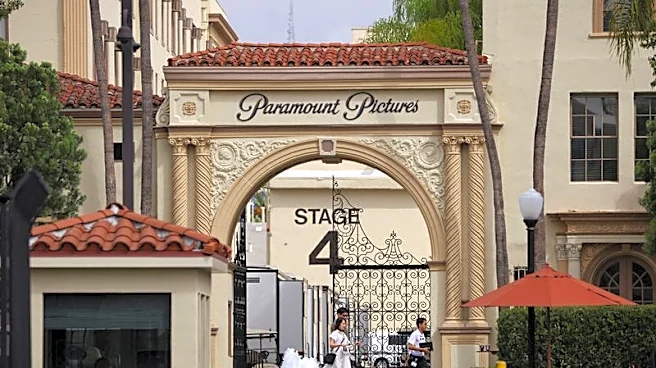
On Oct. 1 — out of nowhere — employees on the Paramount Studios lot in L.A. and at the company’s offices Burbank were welcomed with buffet breakfasts: French toast, pancakes, egg burritos, shakes, berry bowls, chia pudding and more. One insider says it was the first time they had ever seen the company put out that kind of spread.
Perhaps it was more like a peace offering, coming before the pain of a first wave of layoffs at the new Skydance expected before the end of the year. The merger could result in the loss of some 4,500 film and TV jobs over three years in L.A. alone, according to a report issued by Los Angeles County in August. Insiders believe layoffs will continue with further rounds into 2027.
There’s no way around the fact that thousands of employees across the former Paramount and WBD are about to get pink-slipped. But Ellison is betting that through the crucible of consolidation, a stronger company will emerge. “We have big goals for Skydance,” he wrote in his post on X about the new name, “and we intend to pursue them with passion, imagination and a willingness to take smart risks.”
Marc Malkin, Michael Schneider, Cynthia Littleton, Elsa Keslassy, Matt Donnelly, Angelique Jackson, Brian Steinberg and Gene Maddaus contributed to this story.