
Click here to read the full article.
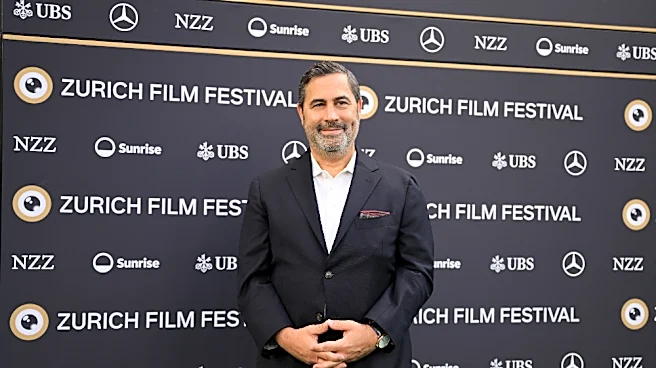
CEO of FilmNation Entertainment Glen Basner was feted by “Conclave” director Edward Berger as he received this year’s Game Changer Award at the Zurich Summit. During
the hour-long talk that celebrated the accolade, the exec fondly recalled working with Berger, spoke about buzzy upcoming releases, and revealed that FilmNation will expand its slate for 2027.
Asked about the future of his company, Basner said he woke up on Jan. 1, 2026, feeling that “the business is still challenging, but we actually think we understand it.” That sentiment was something he had not experienced since 2019, in the days before the COVID-19 pandemic. “For the first time in a while, there wasn’t this macroeconomic curveball being thrown at us.”
“We are just being more ambitious by investing more and making more films,” he continued. “This year we will make four films and a television series, and next year we already have four films in pre-production and hope to make another three […] Right now it’s about maintaining the same high-quality standards.”
As for 2026, FilmNation has a high-caliber slate of possible awards contenders, including two Zurich Film Festival titles in Florian Zeller’s “Bunker” and Peter Farrelly’s “I Play Rocky.” Basner recalled eagerly wanting to meet Zeller, having been a fan of his work both on stage and screen for years. “Meeting him, I told him to his face that he was my filmmaker crush of the moment,” he joked.
At that point, the “The Father” helmer was courting Javier Bardem and Penélope Cruz for the main role, holding steady in his belief the film would not work without them. “Because there were stars in the film, and the script was exquisite, it fell into a fairly traditional old-school pre-sales model where we pre-sold, I’d say, 75% of international.”
Now, following its Venice premiere, Basner is looking forward to bringing “Bunker” to audiences, as he believes the film offers great potential for mature audiences. “This idea that people over 40, over 50, over 60 don’t want to go to movies anymore, or they haven’t come back from COVID, is the line that we hear most. We don’t believe that.”
“These are people at an age where they have more free time; they have the financial capability […], but we have to deliver films for that audience,” he added, saying the success of titles like “Nuremberg” has renewed his confidence in that particular audience. “I’m really excited about ‘Bunker.’ It is just a really great movie for audiences, couples in particular, to have a night out and go see something that is really entertaining, but that is really thoughtful and really has something to say.”
As for “I Play Rocky,” Basner said the script reminded him of the great joy of watching the 1976 classic. “‘Rocky’ is one of the great movie-going experiences that many people around the world have had,” he said. “Then to read a script that talks about the making of that movie, and really the confidence that Sylvester Stallone had to bet on himself… And at a time when the news doesn’t report good stories […] the idea that an audience can go see a movie, they can be nostalgic for ‘Rocky,’ but walk out feeling inspired to bet on themselves is just great. I’m ready to stand up, raise my fist and pretend I have the same body as ‘Rocky.’”
Recalling working with Berger on “Conclave,” Basner said the “learning curve” was getting the filmmaker’s vision on a project instead of solely going by what is on the page. “If you read the script very literally, it just sounds like a bunch of old men talking in rooms. And you would think, well, that could be a $12 million or $15 million budget. But that really wasn’t the movie that you were looking to make,” he said while in direct conversation with the director.
“And I remember you talking about ‘The Parallax View’ as being a point of reference for you and talking about not just the architecture of the locations, but the architecture of how you wanted the camera to move and how the film to feel,” he went on. “What was a people-talking-in-rooms drama all of a sudden became this political thriller as we learned your vision for the movie.”
When told by Berger about how filmmakers value strategic partners that are open, honest and supportive throughout sales processes that might not always be clear to creatives, Basner said, “That’s the really important part about this relationship between filmmaker, FilmNation and producer: tough conversations that include criticism, that include creative input, and tough conversations about distribution as well, and what would be the best home.”
Basner said the filmmaking part is always “really fun,” but “once we have the film and now we’re talking about getting people to see it, that film having impact, that’s where I really feel like we have a superpower in that we just know how to work each and every territory.”
“We’ve learned how to collaborate with the many, many great independent distributors around the world who are doing this job,” he pointed out. “It’s a unique business where everyone is in it simply because they love movies; otherwise, they find a much easier way to earn money. And you get this great collaboration; you get tremendous insights into cultural differences around the world that you get to take with you as a human being and as a professional.”