



Click here to read the full article.
The terror attacks of Oct. 7, 2023, wherein Hamas and other Palestinian militants poured across the Gaza-Israel barrier into southern Israel, attacking 21 communities and killing 1,195 Israelis and foreign nationals
(and abducting an additional 251 people), have been revisited a number of times via documentaries (“We Will Dance Again”) and miniseries (“One Day in October”), but now it is coming to the silver screen.
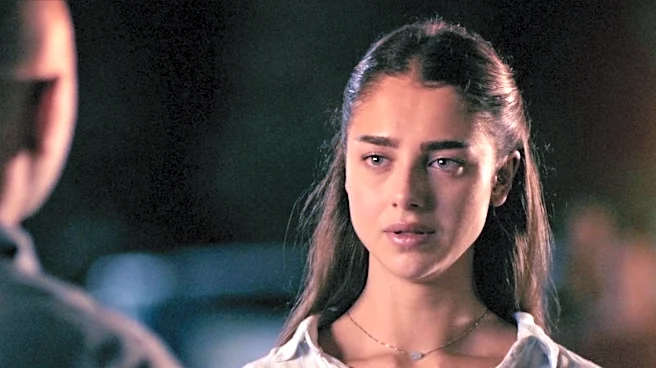
Premiering in the Centrepiece section of the 2026 Toronto International Film Festival, “Our Loves” follows five Israeli men and women in the days leading up to and on October 7. There is Liri (Noa Cohen), a young woman struggling with her father Shabi (Shalom Michaelshvili) divorcing her mother; Milly (Magi Azarzar), a policewoman hiding her pregnant fiancée from her mother; Nicco (Yaniv Biton), a security guard at the Nova music festival; and Sapir (Daniel Gimpel), a young woman freshly dumped by her boyfriend who wishes to dance the pain away. Their lives are upended by the horrific attacks of October 7 and they’re forced to put the pieces back together.
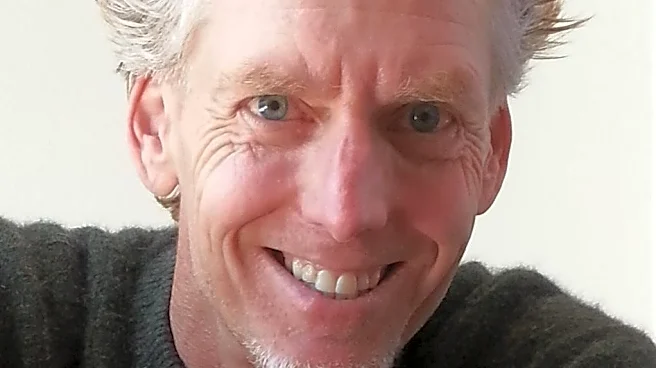
“Our Loves” is written and directed by veteran Israeli filmmaker Avi Nesher (“Past Life”), who culled its stories from real-life survivors. Nesher spent four years as an analyst in the IDF before becoming a director, and he is adamant that the movie is not an October 7 film, despite the final hour-plus of its two-hour runtime depicting the violent attacks across Israel, including the Nova music festival massacre.
“To be clear: this is not a film about the historic, military, or political aspects of October 7. It is not about the event itself, but about the people who were unwillingly caught up in it. Their inner lives, their choices, and the universal human truths that emerge when everything familiar falls apart,” Nesher said in a director’s statement for TIFF.
Up for 12 Ophir Awards — the Israeli Oscar — including Best Film, and serving as the opening night selection of the Haifa International Film Festival, “Our Loves” is poised to provoke plenty of conversation throughout festival and awards season.
Ahead of its world premiere at TIFF, Variety spoke with Nesher about “Our Loves,” the October 7 attacks, the subsequent war on Gaza that’s claimed the lives of 73,000 Palestinians, Benjamin Netanyahu’s culpability and more.
What inspired you to make a film that dramatizes the events of October 7?
I had a movie called “The Monkey House” that came out that year, in 2023, and it got really great reviews and opened to the biggest box office that any Israeli movie had that year, but it opened the week before October 7. We had this amazing first week and then all the movie houses were closed. My problems are miniscule or nothing compared to what happened, which is a big shock that one could compare to 9/11; it shook Israelis in more ways than you can imagine, and it went on for days and days and days, so one couldn’t step out of it. One was left paralyzed from the shock and sadness. I was faced with a similar sentiment six, seven years ago when I had a tragedy in my family that felt paralyzing and like we would never return back to normalcy. I lost my son, who was killed in a traffic accident. It was horrible. So, you’re paralyzed and you want to do something to help out.
And then what happened?
I got a call from somebody from a kibbutz down south that was badly damaged and many people were killed there. They said, “We really wanted to see your movie ‘The Monkey House’ and we finally got tickets for Saturday, October 7. It’s the last time I remember myself like a normal human being. They put a bunch of us up in some hotels by the Dead Sea, and you would be doing us a great favor if you could bring the movie to the hotel so we could see it, and we would like you to come and talk about the movie.” I said, “How could I talk about cinema to people who’ve faced such a horrible predicament?” But he insisted. So, I drove down there from Tel Aviv and got onstage in a room full of people and started apologizing, and they said, “Please, Mr. Nesher, let’s just talk about cinema.” And I said, “OK.”
I got offstage, they screened the movie, and pretty soon I started hearing laughter. I did the Q&A, stayed over and had breakfast with them the following morning. They started telling me stories of October 7 and it was nothing like what you’d expect. They were stories about what state they were in when they got into October 7, and there were stories that were funny, sad, emotional and romantic. I thought that if I were to ever do a movie about that event, it would be a movie about normal people. I did some research on five or six people who all were going through emotional problems, mostly related to their love life, and they all thought October 6 was the worst day of their life and one could not do any worse. It’s all based on true characters and I promised them all that I would not reveal their true names.
Who do you even get to play the Hamas terrorists in a movie like this?
You simply don’t. I made a movie called “Image of Victory” a few years ago and it was a movie that was considered dangerous to make in Israel because it told the story of a minor fight in the 1948 Battle of Nitzanim, and the movie contended that the Palestinian-Egyptian narrative was as legitimate as the Israeli one. I, of course, subscribe to the Israeli one being an Israeli, but I see their narrative as legitimate, and the movie told the story from two points of view, and it was easy for me to write the other side and identify with the so-called “enemy.” What happened on October 7 had nothing to do with that narrative. The atrocities that were committed there were so horrible that I wouldn’t know how to write such characters in the same way that I wouldn’t know how to write Charles Manson. I made the decision that they were kind of faceless and I didn’t want to go into any heavy-duty atrocities because that was not the point.
You dramatize the Nova music festival massacre in “Our Loves” and it felt like a fairly restrained depiction of what happened compared to the actual brutality of that day.
My commitment was to tell the story through the eyes of those people that I interviewed and these characters that I wrote, and what you see is pretty much what they saw. Other people experienced very different things, but they are not the people I wrote about. And it was very important for me to not create a movie about October 7 in the way that “Dunkirk” is not a movie about the military aspect of pulling soldiers out of the coast, it was about the people that somehow became part of it. There’s no way that I would attempt to describe October 7; that is for historians and journalists to do. I was interested in the human experience that took you to the worst place on Earth and yet humanity survived in such a way that you can find redemption.
You say it’s not a movie about October 7 but the last hour and 20 minutes of the movie depicts people getting gunned down on October 7.
Perhaps. You’d hear far worse stories if you want to read about it. There’s nothing that’s too graphic.
How did you even manage to shoot the Nova music festival massacre sequence without freaking out the locals?
I’ll tell you an interesting story about that. We built an elaborate set in a place about 30, 40 kilometers from Tel Aviv in the middle of nowhere. There’s a lot of dancing going on and the music is playing, which had all these whistles going on. I yelled, “Cut!” And the whistling continued. I thought it was not shot properly and said, “I yelled cut!” And they told me, “I did cut.” Apparently, an alarm was going off because that was the night that the Iran-Israeli war started. It was art imitating life or life imitating art. So, we had 100 extras and 60 crew members in the middle of nowhere with no taxis, no cars and no shelter. Stupidly enough, my instinct was, “Can I get a couple of shots more so we can be done with the scene?” That is the dementia of a filmmaker, where the movie comes first. Somehow, we scrambled away, but that was a night. A few months later, we rebuilt that set and finished the scene. That’s showbiz.
Fox Entertainment is distributing “Our Loves” internationally. Have you thought about how “Our Loves” will be received abroad? Anything that concerns Israel is bound to receive pushback right now.
If one thought about how their movies would be received one would never make movies. I have taken big chances with my movies from my very first movie, which I made when I was 24. You make movies for people. I love making movies but I hate getting up at four in the morning — it’s not fun — and the grueling 14-hour days. You make it for people with a broken heart who’ve messed up their lives. I think it’s amazing that the movie is playing at the Toronto Film Festival. I’ve been to TIFF five times before, and I’ve always loved Toronto because, for me, it’s the least politicized of all the festivals and is about the art of making movies. At other festivals, it’s deemed more “acceptable” if you’re on the “right” side. They saw the movie and must have found merit in the filmmaking and the acting; I don’t think they were making a statement of any kind. I cannot thank the TIFF people enough.
“Our Loves” received 12 Ophir Award nominations, and your films have been nominated for a ton of Ophir Awards but you’ve never won Best Director.
I’m reaching for higher branches — people like Hitchcock and Kubrick — but, you know, it’s nothing new under the sun. The people in the Israeli Academy are my brothers and my sisters, and the Academy is very important for the life of cinema in a given country, particularly at a time when cinema itself is in danger. Your guess is as good as mine and I don’t like speculating about things. Hopefully this time it’s different and maybe not! I’ve gotten a lifetime achievement award from every single Israeli festival. What can I say? Awards are great but movies have their own value. I’ve made some movies that have survived time and art that survives time is the greatest award.
Was this film financed by the Israeli government at all?
The Israeli government is not in the business of financing movies. There are two film funds in Israel, and the one we use takes most of their money from inheritance and stuff like this. I couldn’t honestly tell you they do not get any money from the government, but I have no idea. Categorically, the movie was not financed by the Israeli government and I do not think the Israeli government would be very happy with this movie.
Why do you say that?
We have an election in two months and this government — who is accused by many Israelis of being responsible for the failures of October 7 — it might be more expedient for them politically if this whole thing kind of goes away. This whole thing being reintroduced before an election is not a politician’s dream come true. But that’s not the issue, as far as I’m concerned. We’ve had many previews, which were great. You’ll need many tissues when you see the movie but there are moments when you’ll laugh and be charmed and I think you’ll have a full meal.
Do you feel that Netanyahu and his administration are responsible for the failures of October 7? We know about the “Jericho Wall” report and how Israeli intelligence knew all about the attack a year before it happened.
I’m always very careful of not saying categorically things that I have not seen with my own eyes or heard with my own ears. Many, many years ago, when I was very young, I served as an [IDF] analyst specializing in Soviet presence in the Middle East. I was the lowest on the totem pole. It was maybe a week or two before the Yom Kippur War and we knew a war was going to break out because the Soviet advisers were fleeing in droves from Syria. We expressed those warnings, and that government — which was a left-wing government as opposed to this right-wing government — chose to ignore it. After the war broke out, three of our young men, including two of my closest friends, got killed, and the government blamed the generals. That I know for a fact and have seen with my own eyes. Those politicians did not take responsibility and history will let us know more about these people. I think the upcoming elections will express how the Israelis feel about this government.
You served with Netanyahu and his brothers in Sayeret Matkal, right? The years overlap.
Young Netanyahu. I was for one year in that unit. The older brother, Yoni, was in charge of new recruits, which I was, and one of the great things about that unit is that officers and soldiers ate in the same dining hall. I saw there was a guy who was going to be in charge the next day named “Bibi.” I grew up in New York City, so I was the odd man out, and thought “Bibi” was a joke about Brigitte Bardot. I did not do well in that unit at all. I was injured after one year and when the cast came off, I went to Columbia University for a couple of years, majoring in international relations, before I went into the Israeli Army.
Why does a kid who grew up as a film geek on the Upper West Side go to Israel to enlist in the army?
For purely cinematic reasons. When you grow up on the Upper West Side, you become very good with words — very clever and conversational — but you do not experience real life. It was the old Hemingway thing of going off to experience life so that when the time came and I would write, I’d be writing with some knowledge. And it came in handy with some movies that I’ve made, including “Our Loves,” because I know what it feels like to be fired at and when your heart is racing.
How do you feel the IDF has conducted itself in the wake of October 7?
Again, that would be something that I have not experienced with my own eyes.
Right. But you served in the IDF and this also goes back to Netanyahu and his government — if you mention the IDF now in America and other parts of the world, they’re going to be met with some pretty harsh criticisms.
First of all, after World War II, the Marines were like the best people you could possibly hope one day to be like. And then came Vietnam. Were the Marines very different in Vietnam than they were in World War II? I kind of doubt it. Soldiers are soldiers. So, perception changes and the narrative changes. Soldiers are young men looking for trouble, as young men do. If you’re 18, hot-blooded and want to experience life, you go into the army. If you happen to be involved in a good story, then you’re a hero; and if you happen to be involved in a bad story, you’re a villain.
I was a kid growing up in New York City during the Vietnam era with all those marches against the war, and people were very much against the American government — perhaps rightfully so — and they were very much against the military and the military-industrial complex. They were not against Hollywood, American cinema, American literature and American arts. Nobody dreamt of boycotting American arts. To think that we have come to a point when one has to really appreciate a festival being open to a movie, one has to consider how much antisemitism plays into it. I have not made a study of it, but it is certainly quite unusual that you’d go past the normal route of blaming the government and blaming the military and go into blaming artists. Boycotting Israeli art is really heavy stuff. We’re the people that for four years have been fighting the Israeli government and have been holding steadfast from Israel being another Poland or another Hungary, and instead of being helped we’re being punished.
October 7 was a bad situation that was an evolution of another bad situation that was an evolution of another bad situation that could all be resolved by people on both sides being more reasonable, but that’s another story. People forget that the army works for the government and does not do anything on its own. Officers are totally dependent on politicians if you want to get ahead, and like any corporation, you have to please your bosses. I have no idea what went on but only know about what happened when I served, and I can vouch for not a single atrocity [occurring]. Now, mind you, special forces? Maybe. Are other units different? But the Israeli Army always theoretically upheld itself to a higher moral ground. At the end of the day, we really have to be aware that the army tries to please politicians because they’re the ones who advance your career or toss you out, and this approach to the IDF reminds me of Vietnam and the Marines. We all know about My Lai and that kind of stuff. Nothing in life is simple.
Israel has been accused of committing genocide against the Palestinians. What do you say to that?
I doubt very much that the people saying it have been on the ground and seen genocide. I certainly haven’t and you certainly haven’t, so neither one of us can conclusively say whether it’s true or not, nor can we look at footage that was shot by either side and say whether or not it was doctored or AI. For me, there is nothing more sacred than human life; and by picking a side, you are just prolonging the suffering, prolonging the danger and getting more people killed. The worst thing you can do is pick a side. The only sensible thing to do is say, “Guys, why don’t you sit down and work it out?” I’m telling you as a person who’s seen some blood and has lost many friends — and a son — the worst thing you can do is be righteous and the best thing you can do is be human, try to find a solution to stop a war and reach compromise.
This interview has been edited and condensed for clarity.