



Click here to read the full article.
Brad Bird, Roger Deakins and the teams behind “Toy Story 5,” “Spider-Man: Brand New Day” and “Project Hail Mary” head to Turin next week for the 27th View Conference, where AI and the economics of animation and VFX
are set to dominate the agenda.
Four of the films being unpacked at the Oct. 12-16 event — “Spider-Man: Brand New Day,” “The Odyssey,” “Toy Story 5” and “Project Hail Mary” — have collectively generated more than $6 billion worldwide this year. Those sessions sit within a lineup spanning Pixar, DreamWorks, Sony Pictures Animation, Disney Animation and Aardman, alongside senior executives from Industrial Light & Magic, Sony Pictures Imageworks and Skydance Animation.
The gathering comes as animation and visual effects companies navigate pressure on production economics, global competition and investment in artificial intelligence. Across five days, View’s filmmaking presentations and executive discussions offer different perspectives on how those pressures are reshaping production.
Five developments to watch:
Animation’s Franchises and Original Ambitions
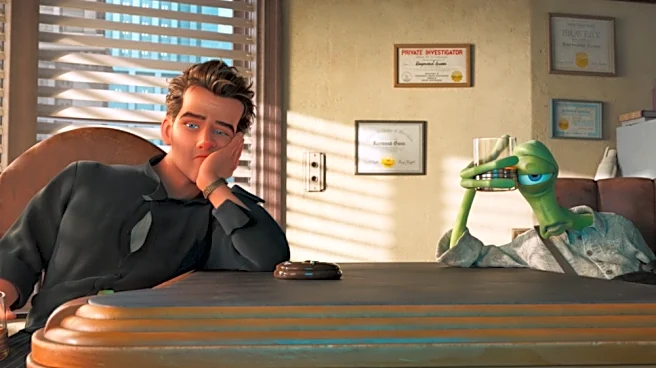
Brad Bird returns to Turin with “Ray Gunn,” his long-gestating animated sci-fi noir, on a program that brings original projects into the same conversation as some of Hollywood’s most established franchises.
Pixar presents “Toy Story 5” and “Hoppers,” while DreamWorks directors Joel Crawford and Januel P. Mercado discuss “Forgotten Island.” Sony Pictures Animation brings “GOAT,” and Disney Animation producer Yvett Merino presents “Hexed.” Aardman’s Merlin Crossingham addresses stop-motion filmmaking.
Bird’s project offers a different timescale from the industry’s emphasis on faster production. Developed across decades of changes in financing, studio ownership and technology, “Ray Gunn” provides an opportunity to examine how an original animated feature retains its creative identity over a prolonged development process.
Studio Leaders Confront the Business
The executive program may offer the clearest view of the decisions shaping where and how films are made.
Michelle Grady, president of Sony Pictures Imageworks; Holly Edwards, president of Skydance Animation; and Janet Lewin, senior VP, general manager and head of ILM, join Cinesite Group VFX COO Shawn Walsh and other senior figures for Industry Executives Shaping the Future of Cinema.
At last year’s View, Tippett Studio CEO Gary Mundell described AI as a tool to accelerate production, saying the challenge was to make it serve the studio’s purposes rather than the other way around. The question for this year’s executive panel may be how such ambitions translate into investment, staffing and sustainable business decisions.
Their companies operate across different parts of the production business, but face overlapping questions: how to manage capacity, retain experienced artists, compete internationally and assess investment in new tools while protecting margins.
Those decisions have consequences beyond individual productions. They influence where work is commissioned, which skills companies recruit and how much scope filmmakers have to develop increasingly complex vfx and animation within a fixed budget.
Inside the Year’s Major Productions
Presentations on “Spider-Man: Brand New Day,” “The Odyssey,” “Project Hail Mary,” “Avatar: Fire and Ash,” Steven Spielberg’s “Disclosure Day” and “The Mandalorian & Grogu” move the discussion from corporate strategy to production practice at the peak.
The sessions go deep each with an hour on stage; with their peers in attendance. Quality is high, often taking in how shots developed, which elements were achieved practically, what moved into postproduction and how teams coordinated the work.
These sessions also provide a useful counterpoint to claims that filmmaking is moving toward a single production model. Large-scale features continue to draw on combinations of physical construction, photography, animation and simulation, with the balance determined by the requirements of each sequence.
AI Moves Into the Production Debate
“AI will be the most hotly debated topic at VIEW Conference 2026,” VIEW CEO and executive director Dr. Maria Elena Gutierrez told Variety.
Runway co-founder and co-CEO Cristóbal Valenzuela and Nvidia global media and entertainment VP Richard Kerris headline panel Every Pixel Will Be Generated. Other sessions examine AI-native production and changing entry points into animation and VFX.
For studios and suppliers, the commercial question extends beyond what generative systems can produce. It is whether those outputs can be controlled, and integrated into a production pipeline reliably enough to deliver savings, and how companies grapple with the ethical questions those savings raise.
That brings the technology debate back to familiar concerns about creative authority, staffing, schedules and accountability.
Cinematography Closes the Conversation
Friday’s program brings several of the week’s themes together. “Toy Story 5” shares the day with Every Pixel Will Be Generated, presentations on “Avatar: Fire and Ash” and “Project Hail Mary,” and Aardman’s stop-motion filmmaking.
Two-time Oscar winner Roger Deakins and James Ellis Deakins then close the conference with a session on cinematography.
After so much discussion of what machines might make, and what companies could afford, the conference will end with two people considering how an image comes to mean something. It is a fitting conclusion. For the industry’s questions are not merely those of invention or economy; they concern the relation between the tools at its disposal and the stories us humans want to tell.