







Click here to read the full article.
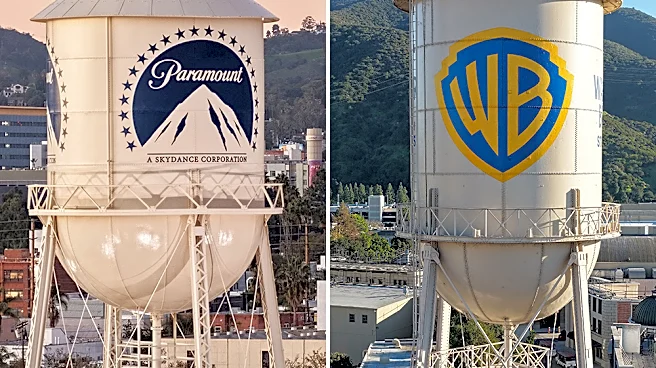
Two Republican attorneys general are hoping the Supreme Court will step in to stop the antitrust lawsuit filed by 12 Democratic state AGs seeking to block Paramount’s takeover of Warner Bros. Discovery.
Iowa Attorney
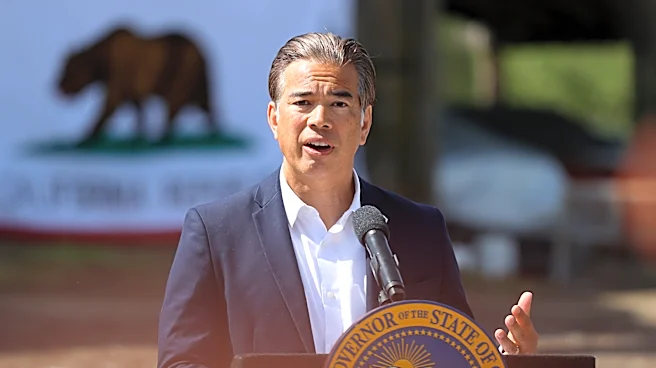
General Brenna Bird and Montana AG Austin Knudsen filed a motion with the Supreme Court, naming California and the 11 other states party to the Paramount lawsuit as defendants. The suit was filed on Tuesday, Aug. 25, according to Bird’s office. “Plaintiffs, the State of Iowa and State of Montana, respectfully move this Court for leave to file the attached Bill of Complaint to stop a politicized enforcement action that seeks to block the Paramount-Warner Bros. merger,” the filing says.
The development will test the Supreme Court’s interpretation of its authority to settle inter-state disputes. The U.S. Supreme Court is the court of original jurisdiction for issues that arise among states for things like boundary disputes and water rights, and it’s not clear the court will agree to hear the motion filed by Iowa and Montana regarding litigation that those states are not a party to.
Experts say the Iowa-Montana appeal is unlikely to go anywhere. “The Supreme Court is more likely to declare Donald Trump ‘litigator of the year’ than it is to block the states from enforcing their own antitrust rules,” said Erik Gordon, professor at the University of Michigan’s Ross School of Business.
Iowa and Montana argue in their lawsuit that they have no other venue than the Supreme Court to sue California and the 11 other states to resolve “a controversy between sovereigns.”
“Twelve states have effectively vetoed a transaction that the other thirty-eight, and the United States, declined to challenge,” the Iowa and Montana motion says. “No other forum can resolve that controversy. Congress made this Court’s jurisdiction over controversies between two or more states exclusive. … This Court is not merely the best forum for this controversy. It is the only one.”
The harms of the California-led antitrust lawsuit will have an impact on Iowa and Montana’s economies, the states argue in the suit, “especially the tens of thousands of employees of Paramount and Warner Bros., as well as hundreds of millions who watch their movies, shows, and news through a variety of sources. Iowans and Montanans are being deprived of the benefits of the deal that DOJ and their own state attorneys general approved.”
“This case is about the legal limits on politicized antitrust enforcement by a small handful of states seeking to enjoin a $110 billion merger that the United States, most American states, and competition regulators worldwide have cleared,” Iowa and Montana’s filing continues. “Plaintiff States have the same interest that Defendant States have in well-functioning markets, but believe the merger will help their economies. Because they have the same interest, they should be able to litigate the issue, but can only do so here” at the Supreme Court.
Asked by Variety for comment, the California AG’s office said it was reviewing the filing by Iowa and Montana.
In the 56-page filing, Iowa and Montana argue the 12-state antitrust suit “burdens the national economy, harms Plaintiff States’ quasi-sovereign interests, and conflicts with the federal antitrust enforcement regime.” The Iowa and Montana suit ask the Supreme Court to “enjoin the Defendant States’ suit and decide the issue for itself, ensuring a prompt and fair adjudication of the merger.”
A copy of the filing is available at this link.
In July, the 12 states led by California, sued in federal court to block Paramount’s Warner Bros. Discovery deal. The states have alleged the proposed merger will illegally reduce competition in the markets for theatrical and blockbuster films, as well as basic cable TV. Paramount agreed to pause the WBD merger until after the case goes to trial, which is scheduled for March 2, 2027. Paramount has an economic motivation to settle sooner than that: As of Oct. 1, the company will start incurring a $7 million daily “ticking fee” payable to Warner Bros. Discovery shareholders until the merger closes, amounting to about $1.3 billion by the time the trial is scheduled to conclude.
Iowa’s Bird penned an op-ed for The Daily Wire that was published Tuesday about her intention to turn to the Supreme Court to challenge the Democratic state AGs’ antitrust suit. “California is once again trying to be the country’s regulator. And once again California is defying common sense to raise costs around the country,” Bird wrote. “California needs to understand that it doesn’t get to decide what Americans can choose to watch or stream.”
The lawsuit filed by Iowa and Montana names as defendants the states of Arizona, California, Colorado, Connecticut, Massachusetts, Minnesota, Nevada, New Jersey, New Mexico, New York, Oregon and Washington.
Iowa and Montana also filed a motion with the Supreme Court to expedite consideration of the motion for leave to file a bill of complaint. They requested setting defendant states’ deadline to respond for Sept. 15, 2026, and distributing the case for an Oct. 9 conference.
The antitrust lawsuit by the states and a suit filed by the WGA are the only barriers remaining to the closing of the Paramount-Warner Bros. merger, which has received regulatory clearances from 68 jurisdictions.
“It is barely an exaggeration to say the [Paramount-Warner Bros.] merger was approved by every major country with a clearance regime (and many small countries) on every continent except Antarctica,” Iowa and Montana say in their filing.