







Click here to read the full article.
As Hollywood continues to navigate the plethora of questions surrounding AI and its place in the industry, one former talent agent hopes to be the link between everyone involved.
Enter Collage, a new management and investment
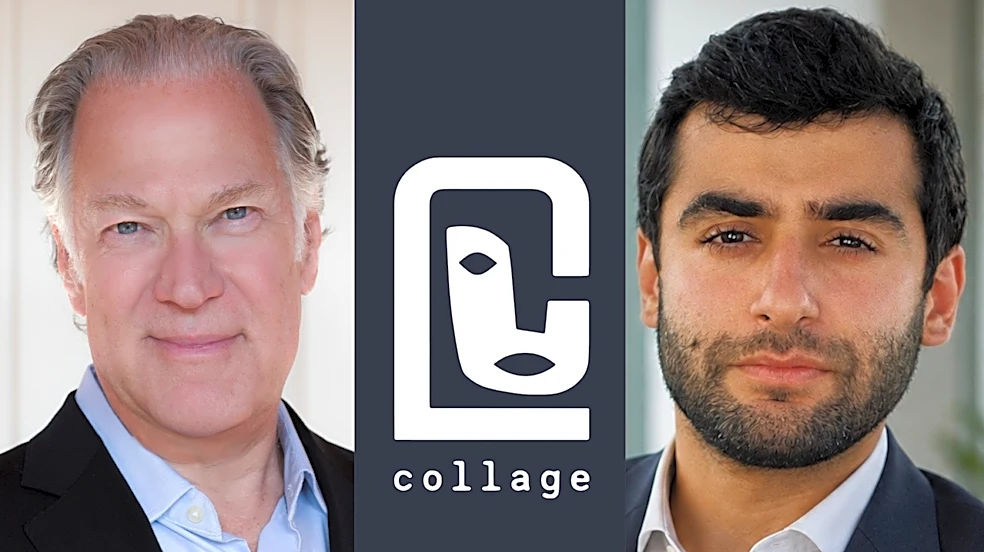
company aimed at helping AI-first production companies navigate the Hollywood pipeline. Founded in July by former UTA agent Dante DeSario and media investor Michael Lambert, who worked within the talent agency’s independent film group before leaving in March, the company has completed a seed funding round — the amount of which DeSario would not disclose — backed by a suite of investors and advisers: Black Bear and Fundamental Films, Dennis Miller, Blue Deer Media, GOAL Ventures, AGC Studios, Roy Lee, Marty Bowen, Todd Lieberman, Todd Garner, Barry Porter, George Huber, Max Michael and Ric Roman Waugh, among others. The firm, based in Beverly Hills, currently has five full-time employees and roughly a dozen part-time staffers.
The earliest inklings for Collage came in February 2024, after DeSario got his hands on an early demo of OpenAI’s short-lived video generator Sora. After meeting with — and signing — some filmmakers who played with the generator and seeing them build their own companies focused on AI productions, DeSario realized that his own venture could “support these artists in a way that they needed help in various degrees” while helping “Hollywood navigate this, frankly, incredibly sensitive time over AI.”
Much of DeSario’s work includes aiding the initial batch of companies — which includes AI studios like Asteria, Native Foreign, Obsidian, and Jason Zada’s Secret Level — as they navigate Hollywood guilds, “studio bureaucrats,” copyright issues and demonstrations of the technology’s capabilities. DeSario’s firm also acts as an investment company, though he would not disclose which companies he’s invested in. “We’re here to offer the menu of things to what this new category needs,” he says.
On the Hollywood side, DeSario wants to demonstrate to studios which companies are making human-led work and “who to stay away from” in an era of seemingly never-ending upstarts.
Collage’s model comes as legacy Hollywood companies figure out how to engage with AIat a time when consternation persists among both creatives and audiences over issues surrounding jobs, slop content and the impact on creativity. DeSario hopes Collage can act as “infrastructure,” a bridge between the various stakeholders in the industry that allows more stories to be told while encouraging acceptance of the technology.
“I’m an independent film guy,” he said. “I just want to help filmmakers get their projects made. That was my whole intention, and realizing that this is something that is unlike what a lot of people think. There’s a lot of fallacy. It’s not pushing a button. There’s real craft and real differentiation between those who can have taste and want to tell stories and helping them get out there.”
He’s also hoping that, as more of these companies emerge, they’ll be able to compete with and complement the companies that have maintained footprints in Hollywood through their traditional filmmaking offerings. “The legacy system should be inviting them because they’re incredible craftspeople to work with all of the various people who are already working on films,” DeSario says.
A goal for him, he says, is to help audiences witness the AI version of a “Toy Story” moment, or a film developed with AI that breaks through with general moviegoers.
“I’ve personally seen work that has made me feel something,” he says. “You want to feel something. I’ve had that experience. I think a lot of people haven’t had that experience, and because it’s hard to feel something when there’s so much fear in the air. I want to help show the general audiences and help facilitate what I’ve seen to everyone else because it’s pretty potent.”