


Click here to read the full article.
Venice Film Festival artistic director Alberto Barbera took to social media on Wednesday to fight back against criticism of the inclusion of Russian filmmaker Ilya Khrzhanovsky’s “DAU” in this year’s edition.
Acknowledging
the “bloody and cruel war” in Ukraine, Barbera wrote in an Instagram post that “to build a web of accusations based on false premises and the manipulation of reality in order to attack the Biennale and a film invited to compete is a petty and unacceptable act. ‘DAU’ is not a Russian film; it is not pro-Putin propaganda. It is a film that denounces totalitarian regimes and their intrusion into citizens’ lives to restrict their freedom.”
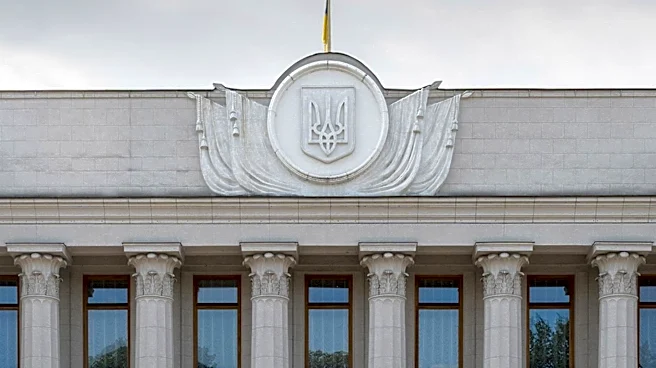
The initial criticism of the festival came two days ago in a joint statement released by the Ukraine Ministry of Foreign Affairs and the Ministry of Culture as well as the Ukrainian Embassy in Italy. “At the time when Russia is continuing its war of aggression against Ukraine, systematically destroying cities, cultural heritage and national identity, offering one of the world’s most prestigious cultural platforms to a project linked to the Russian state and its networks of influence sends a deeply worrying signal,” the statement said. It goes on to reference the film’s main actor, Teodor Currentzis, as having his Russian citizenship “conferred on him by Vladimir Putin” and whose musical career was “funded by Russian banks.” Likewise, it noted that “DAU” was funded by Russian business man Sergei Adoniev, who was sanctioned by the U.S. in 2023 and Ukraine in 2022.
In his social media post, Barbera described Khrzhanovsky as “a Russian dissident who ended up on the regime’s blacklist as a terrorist and enemy of the state — a director who, from the very beginning, has taken a stand against the Russian invasion of Ukraine,” adding that critiques are an “inexplicable smear campaign against a film that its accusers have evidently not even seen yet.”
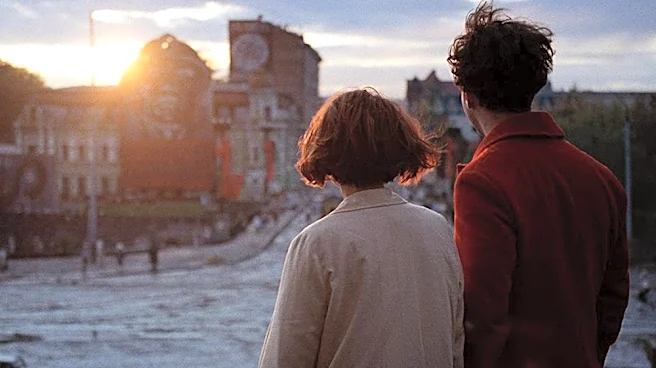
The principal filming of the “DAU” project, it should be noted, took place over three years from 2008 to 2011, a decade before the Russian invasion of Ukraine in 2022. Its early development was partly funded by the Ukrainian State Film Agency in 2012 and it was filmed in Kharkiv, Ukraine, where a massive closed set was created featuring 400 non-actors, many of whom were isolated from the outside world during the filming. Hundreds of hours of material were amassed, from which two films have already been released: “DAU. Degeneration” (2019) and “DAU. Natasha,” which won the Silver Bear in Berlin in 2022. “DAU,” which will compete for Venice’s Golden Lion in September, will be the third of what’s projected to be a 14-film sequence.
Initially conceived as a biopic of the Nobel Prize-winning Soviet scientist Lev Landau (nicknamed Dau), it soon grew into a massive immersive installation project, comparable to something out of “The Truman Show” or “Syndoche, New York.” The project has already sparked controversy with questions raised prior to the Berlin screening of “DAU. Natasha” about unprofessional and unsafe conditions, especially relating to the treatment of actresses and the use of unsimulated violence. These have been strongly denied by Khrzhanovsky and members of his cast, including lead actress Natalia Berezhnaya.
Asked by Variety last year if he had any regrets about the method of making the film, the director replied, “Not at all. I think the method was absolutely unique and perfect. Methodologically, I think I did everything right. And I think it’s a very interesting methodology, and I think it’s important to look at it without preconception, and without using the rumors.”
Venice programmers have also been criticized this year for the paucity of women directors in its competition lineup as well as speculation as to the lack of big Hollywood studios. Barbera, however, appears sanguine, telling Variety on Wednesday: “I don’t think that the Biennale Cinema is coming in for more targeted criticism this year than usual, unless you’re referring to the controversy surrounding the opening of the Venice Art Biennale.”
That controversy occurred earlier this year, when pavilions for Israel and Russia were granted at the annual event, causing the mass resignation of the jury, the withdrawal from the festival by dozens of artists and demonstrations against the organizers.
See Barbera’s full statement about “DAU,” translated from Italian, below.
I know that in Ukraine, which has been invaded by the Russians, a bloody and cruel war is raging. I know that wars are fought not only on the front lines but also through propaganda. But to build a web of accusations based on false premises and the manipulation of reality in order to attack the Biennale and a film invited to compete is a petty and unacceptable act. DAU is not a Russian film; it is not pro-Putin propaganda. It is a film that denounces totalitarian regimes and their intrusion into citizens’ lives to restrict their freedom. It is the work of a Russian dissident who ended up on the regime’s blacklist as a terrorist and enemy of the state—a director who, from the very beginning, has taken a stand against the Russian invasion of Ukraine. Why, then, this inexplicable smear campaign against a film that its accusers have evidently not even seen yet? Why make the Biennale yet another target of a gratuitous and unjustified attack? Perhaps because the Venice Biennale remains one of the few bastions in the world defending freedom of expression, regardless of geographical origin or nationality. Let us defend the autonomy and freedom of the Venice Biennale.