


Click here to read the full article.
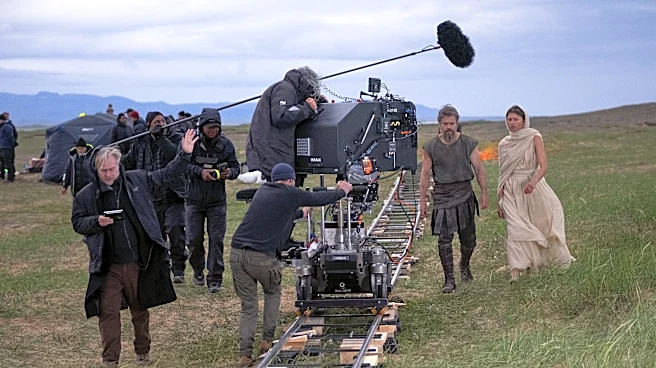
Back in May 2025, it was revealed that Christopher Nolan’s “The Odyssey” ” would be the first feature film shot entirely with Imax 70mm cameras. That announcement sparked interest from other filmmakers.
As “The Odyssey’s”
box office sails to nearly $300 million domestically, with Imax 70mm screenings sold out for weeks in advance, a source at Imax says that success is likely to launch interest in shooting entirely on Imax into another stratosphere.
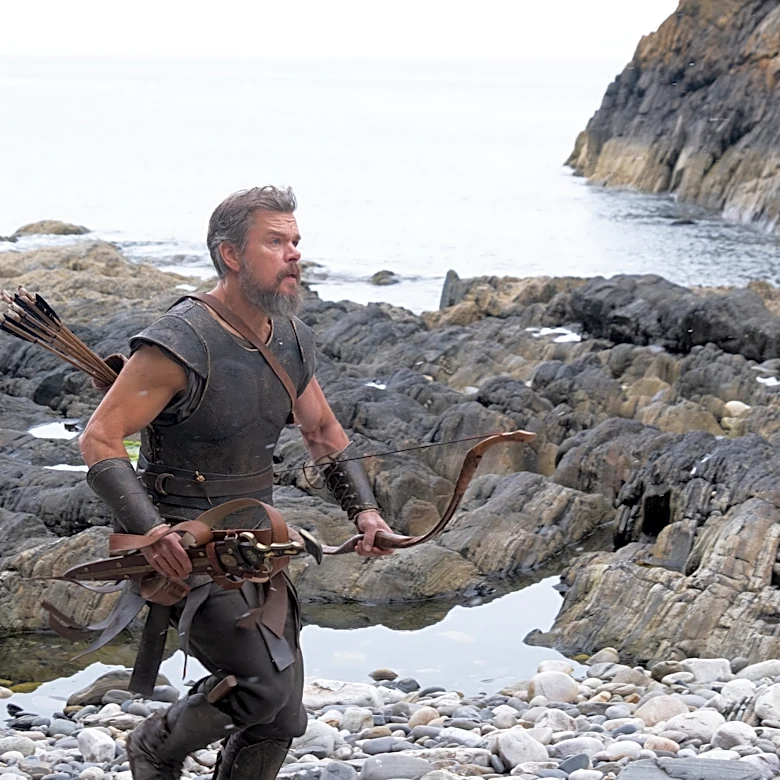
Ever since Nolan first used Imax on “The Dark Knight,” he’s been working towards this. Visually, “The Odyssey” is sharper, and the projection is much brighter making the audience experience even more immersive.
But which filmmakers aside from Nolan have the skill and resources to shoot a film entirely on Imax?
Shooting with the cameras isn’t cheap. “The Odyssey” cost $250 million to produce and is the most expensive film of Nolan’s career to date. Raw film stock alone costs approximately $1.50 per foot, and with the production sailing through two million feet of film, that total alone equates to roughly $3 million.
Then there are the developing and processing costs. A source confirmed that one print of “The Odyssey” costs $50,000. “It’s also up to the studio how many prints they actually want to create,” the source added.
So who could be next? Denis Villeneuve has revealed he shot much of “Dune: Part Three” on Imax 70mm film. At the film’s trailer event, he said, “A big part of it was shot in Imax film, which was the first time for me, but I kept the desert in digital because I like the brutality of the digital Imax.” Filming with the “epic” Imax cameras was unique, he said. “When you see the result on screen, it’s quite unmatchable,” he added. “I hope I will have the chance to do it again.” The James Bond movie is up next for Villeneuve — and could be a large-scale canvas to work on.
And then there’s Ryan Coogler, whose next film is “Black Panther 3.” Coogler, working with his longtime collaborator, cinematographer Autumn Durald Arkapaw, shot sequences of “Sinners” using a combination of 15-perf Imax film (for a towering 1.43:1 ratio) and Ultra Panavision 70 (for an ultra-wide 2.76:1 ratio).
While it’s not yet confirmed if Durald Arkapaw will shoot the film, it was revealed during Marvel Studio’s Comic Con panel that the film will partially be shot in large format on 70mm film – becoming the first Marvel film to shoot that way. The Imax source says, “Ryan is an amazing partner. We were deeply involved in ‘Sinners’ and very supportive of that film. He shot sequences on film. We hope that he would do it again without question.”
The Imax source continues, “We cannot speak at all to whether they’re interested in the challenge of taking it on fully. But we have enough cameras and we have enough blimps that if those guys wanted to do it, we would figure out a way to make it happen.”
With the success of “The Odyssey,” and audiences filling theaters to watch films in Imax, there’s no question that the format will continue to draw interest — whether it’s shooting on film or in digital. Michael B. Jordan’s “The Thomas Crown Affair” remake was shot for Imax as well as “The End of Oak Street” (filmed for Imax), “Resident Evil” (filmed for Imax) and “Digger” (filmed in VistaVision and shown in Imax).
As Imax continues to be a gamechanger at the box office, the company says its mission is to serve filmmakers, and there are other options available.
“Project Hail Mary” was shot using Imax-certified digital camera, but the company created film prints for it.
So, if Villeneuve or Coogler, or any ambitious filmmaker wants to shoot their next film entirely on Imax, it’s possible. “As long as we’re able to handle it from like a scheduling perspective in terms of the cameras, and as long we have enough time to work on each production to create the film prints in partnership with Kodak and Fotokem, we’re willing to do as much as people want to do,” says the Imax source. “If people want to create for our format, we do everything within our power to enable them to do that. We try to create a lot of different options so we can serve a variety of different filmmakers.”