







Click here to read the full article.
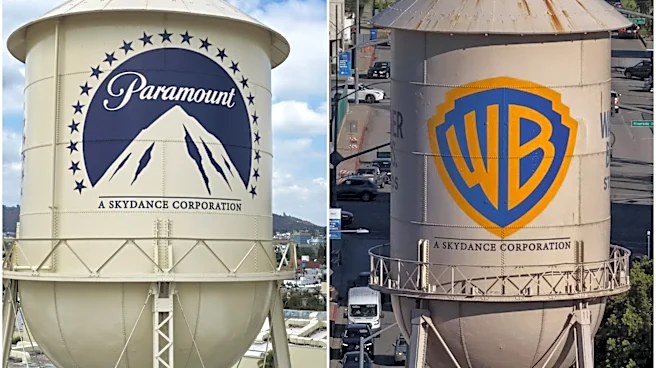
David Ellison’s freshly formed Skydance Corp. is off to a rocky start on Wall Street.
He won Warner Bros. Discovery after a yearlong battle. But investors, at this point, appear to believe he wildly overpaid for the
deal — that the newly merged company, dubbed Skydance Corp., is worth nowhere near the $78 billion in cash Paramount shelled out for WBD.
As of Oct. 5, the last day of trading for WBD and Paramount Skydance (PSKY) on Nasdaq, Warner Bros. Discovery had a market capitalization of $77.7 billion and Paramount was around $11 billion. Today, Skydance has a market cap of under $40 billion — less than half the predecessor companies’ combined value.
On Wednesday, Skydance’s stock plunged 22%. That came after the company distributed about 471 million warrants giving holders of Paramount Skydance’s PSKY Class B shares the option to purchase stock in the new company for $12/share.
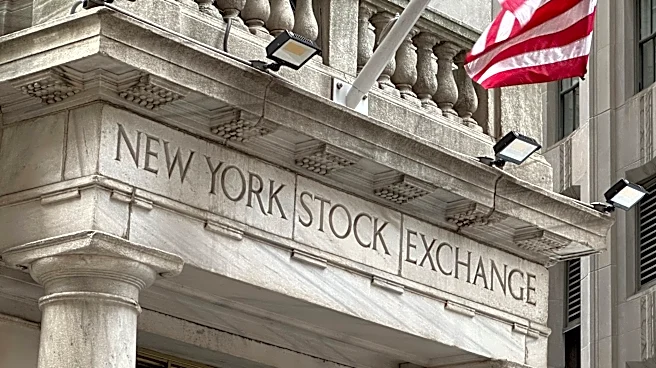
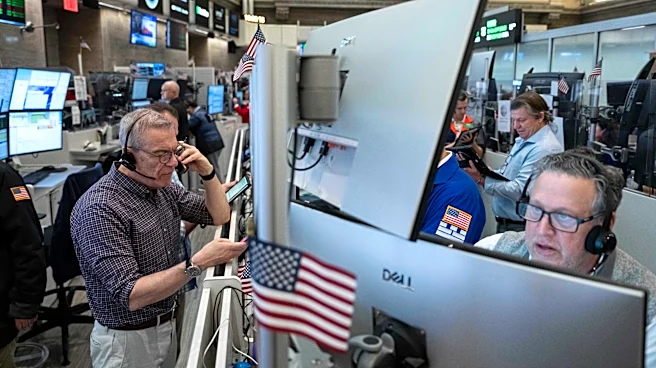
What happened? On Tuesday after the market close, the New York Stock Exchange made a technical adjustment to Skydance’s share price, reducing it by 19.4 cents, to account for the issuance of the warrants (trading on NYSE as “SKYD.WS”). The speculation is that index funds sold off the warrants they held when those start trading; that, in turn, was interpreted as a sell-off event by automated trading systems, which pushed down the price of SKYD stock. Skydance issued a press release Wednesday after market close noting that the warrants represent only around 9% of its Class B common stock.
According to Skydance, the implied value with the warrant distribution would have given Skydance a market cap of $45.6 billion at the $9.07/share price of the Class B stock — and that the value of the warrants at $2.20 each was around $1 billion (for total equity value of $46.6 billion). With the stock drop Wednesday, the market cap was around $36 billion. On Thursday, Skydance stock rebounded slightly, closing up 2.8% to $7.26, bringing the company’s market cap to $36.6 billion (not including the value of warrants, which had a closing price Thursday of $2.96 each).
But beyond the disruption from the issuance of the stock warrants, there’s skepticism among analysts and credit-rating agencies that Skydance can hit the numbers they have projected. Ellison and his team will have to prove to Wall Street that they can achieve the $6 billion cost savings (on an annualized basis over the next three years) while continuing to invest in content — including more than 30 films released theatrically per year — and the rest of the business. All the while, Skydance will have to pay down its massive debt load. As it currently stands, the company’s interest payments alone will be north of $6 billion per year.
With the merger’s closing, Paramount paid WBD shareholders an amount in cash equal to $31.01666668 per share for a total of about $78 billion. Under the terms of the deal, Paramount also is assuming WBD’s debt ($33.1 billion as of the end of June), leaving the merged company’s net debt at nearly $80 billion.
Meanwhile, Skydance’s Class B investors don’t have a say in corporate governance issues. The Ellison family and RedBird Capital Partners are the sole holders of Skydance’s Class A stock, giving them 100% control the voting shares. (Those Class A shares do not have intrinsic value but have the option to for each share to be converted into 1.5 Class B shares, according to a Skydance SEC filing.)
Some market watchers see a Skydance as an attractive investment opportunity after Wednesday’s stock drop.
“There could be a buying opportunity in Skydance stock because the company’s share count hasn’t changed much with the warrant issuance” and “Skydance’s outlook hasn’t changed,” Barron’s associate editor Andrew Bary wrote in an Oct. 14 article. While the warrants, with the $12/share price, are currently underwater, they have value based on option pricing models “due to the long maturity of 10 years and the possibility that Skydance stock will rally in the coming years,” Bary added.