




Click here to read the full article.
Adobe is stepping up its efforts to fuel creative work from independent voices in the entertainment biz — including directly giving money to creators.
In 2024, the digital creative tools and services giant launched the Adobe
Film & TV Fund, aimed at expanding opportunities for emerging and mid-career filmmakers to get their projects made. Now it’s announcing the first cohort of 10 filmmakers receiving a combined $1 million in direct grants, building on the company’s nearly $10 million commitment in grants and donated products for 2026.
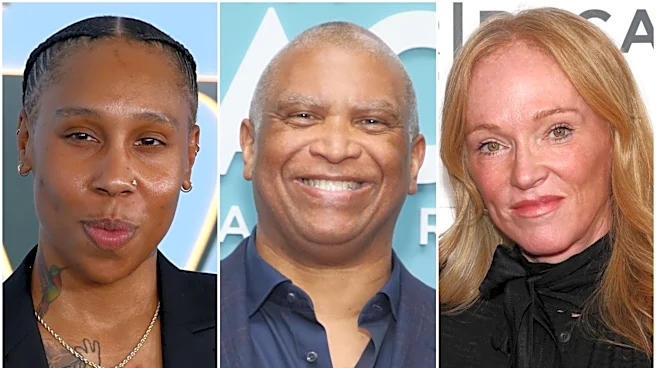
In addition, Adobe announced the formation of a new Film & TV Fund Advisory Board featuring entertainment leaders including Lena Waithe, Reggie Hudlin and Kerstin Emhoff. The news comes ahead of the company’s Adobe MAX 2026 conference, taking place Nov. 10-12 in Miami.
“We believe in Hollywood. We’ve been a trusted partner to Hollywood for decades,” Lara Balazs, Adobe’s chief marketing officer, told Variety. “We want to empower filmmakers — we care about this community. We also understand that funding is hard to come by, and we can play a role in that.” The company’s direct funding for creators has no strings attached, she said.
Since launching, the Adobe Film & TV Fund has supported more than 1,000 creators through fellowships, financial support, mentorship and access to Adobe’s professional creative tools. The company has worked alongside nonprofit and industry partners including Gold House, Rideback RISE and Sundance Institute to assist filmmakers and bring their projects to major industry stages like Sundance.
“We’re about celebrating this community. Their livelihood is something we care about,” Balazs said. She added, “It’s such an exciting time to see AI-driven tools that are actually helping the entire ecosystem to do work — and to bring their ideas to fruition.”
The Film & TV Fund’s inaugural direct-grant cohort includes 10 filmmakers spanning narrative features, documentaries, shorts and student films. Beyond financial support, recipients will have access to Adobe’s professional creative tools, including Premiere and Adobe Firefly, to support their creative process. They were nominated by industry and community organizations and selected by Adobe with input from the fund’s advisory board.
As storytelling evolves across new screens, formats and technologies, Adobe wants to support a diverse range of creators, said Balazs. “More voices of more creators that inspire us in ways we didn’t expect is exciting,” she said, “and we believe it’s the golden age of creativity and content.”
Here are the recipients of Adobe’s direct grants:
Narrative Features
- Austin Everett, writer-director. A two-time Black List writer and one of Variety‘s 10 Screenwriters to Watch, Everett has features in development with Columbia Pictures, Lionsgate and TriStar. His directorial debut, “Akiya,” is a horror film starring Karen Fukuhara and Robbie Amell about a couple whose new home in rural Japan is haunted by spirits.
- Lara Everly, director. An award-winning director working across narrative and branded content, Everly brings humor to unexpected stories. Her feature “Reconstructing Charlie,” adapted from her acclaimed short film, follows a woman navigating an early breast cancer diagnosis.
Documentary Features
- Sue Ding, director. A 2026 Creative Capital Awardee whose short documentaries have premiered at SXSW, IDFA and True/False, Ding explores the experiences of Asian American teens who shaped Southern California’s 1990s import car culture in “Rice Rocket Revolution.”
- Molly Gillis, filmmaker. A New York Times video editor whose award-winning shorts have screened at SXSW, Outfest and Palm Springs ShortFest, Gillis follows American comedians performing solo shows at the Edinburgh Fringe Festival in “Fringe.”
Shorts
- Jasmine J. Johnson, director, writer and producer. Johnson’s shorts have screened at SXSW and Tribeca, with support from Tribeca, Chanel and The Gotham. Her film “Break” follows a young surfer whose painful accident goes viral without her consent.
- Gabriela Garcia Medina, filmmaker. A two-time Tribeca fellow and alum of the Academy Film Accelerator and Film Independent Directing Lab, Garcia Medina tells the story of an upbeat Uber driver saving to reunite her family in the U.S. in “Cuqui.”
- Maria Burton, director. Having directed six independent features and been recognized as one of Variety‘s “Talent to Watch,” Burton explores the story of Jerrie Cobb, one of the first women tested for spaceflight, in “How High the Moon.”
- Spencer Jamison, filmmaker. A Film Independent Episodic Lab fellow featured in CAA’s showcase of rising Black filmmakers, Jamison explores family and grief in “Numina,” following a musician who inherits her grandparents’ home.
Student Films
- Djibril Keita, filmmaker. An NYU Tisch graduate film student raised between Mali and the U.S., Keita explores identity and technology in “Verified,” following a delivery driver locked out of his work app after an accident changes his face.
- Olajide “Kay” Hamed, writer, director and producer. An MFA directing candidate at Chapman University’s Dodge College of Film and Media Arts, Hamed explores Booker T. Washington’s historic 1901 dinner with Theodore Roosevelt in “Dinner at the White House.”
The Adobe Film & TV Fund Advisory Board comprises accomplished filmmakers, producers, creative executives and industry advocates. Members include:
- Jon Mone, film producer, founder and CEO of TrueTake; former Universal Pictures production executive
- Kerstin Emhoff, Emmy-winning producer, co-founder and CEO of Prettybird and Ventureland
- Lena Waithe, Emmy-winning writer, producer, actor and founder of Hillman Grad
- Phil Sun, founder and CEO of 1v1 Entertainment; co-founder and managing partner, M88
- Reggie Hudlin, Oscar-nominated producer, director and president of Hudlin Entertainment; former
president of entertainment of BET - Sophia Rzankowski, executive, Superconnector Studios
- Dr. Stacy L. Smith, founder, USC Annenberg Inclusion Initiative
- Stacy Martinet, chief content and creative officer, Adobe
- Stacey Walker King, chief brand officer, MACRO
Waithe said in a statement, “If we want an industry that continues to grow, evolve and reflect the world around us, we have to invest the next generation of filmmakers now. I’ve seen firsthand how many talented storytellers struggle to get their projects off the ground, not for lack of vision, but because they lack access to funding and the right industry support. That’s why I’m excited to join Adobe’s Film & TV Fund Advisory Board to help create more opportunities for filmmakers to build their careers and tell the stories only they can tell.”
USC’s Smith added, “Some of the most influential films in history started as ideas that someone had to take a chance on. As the industry becomes more cautious about what gets made, we can’t afford to stop investing in bold, original voices. I’m proud to join Adobe’s Film & TV Fund Advisory Board to create opportunities for filmmakers with something new to say and give the next generation of storytellers a real shot at making their mark.”