









Click here to read the full article.
The Vancouver International Film Festival’s Institute for the Moving Image has announced a new partnership with Spain’s Málaga Film Festival to launch an exchange between their respective emerging-talent programs –
the Málaga Talent program and VIFF Catalyst.
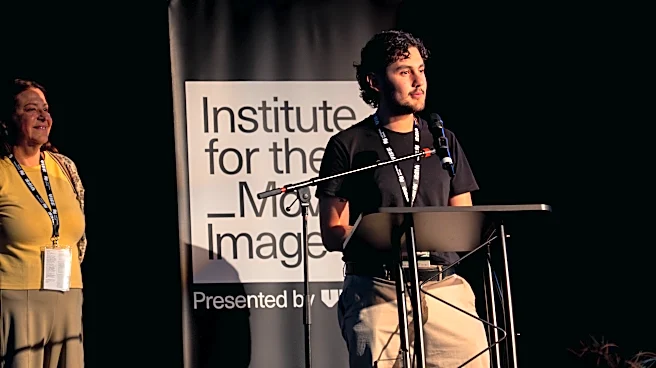
The first filmmaker selected from this year’s Catalyst participants is Diego Minor Martínez, a Mexico-born filmmaker who is now based in Vancouver. The Málaga Talent’s program is aimed at filmmakers under 30 and is conducted in Spanish. Martínez will travel to Spain to participate early next year, while a participant from Málaga Talent’s 2027 cohort will come to Vancouver for Catalyst later that year. There’s no age limit for Catalyst.
The exchange gives filmmakers not just access to new markets and potential collaborators, but is also designed to give them exposure to a different culture and industry at an early stage of their careers, when international relationships can potentially shape future projects.
“This is a way to bring a new experience to that specific participant, connecting with a market that maybe will be interesting to explore,” Ana Belén Asfura, director of the Institute for the Moving Image, tells Variety.
Asfura, who attended Málaga this year as part of Mafiz, the festival’s industry program, says the relationship grew out of conversations with the team there, including with Mafiz director Annabelle Aramburu. “Hopefully this partnership will open other things that we are also discussing with Málaga, in terms of bringing a delegation of producers and companies from Spain next year as well.”
The exchange removes some of the financial barriers for emerging filmmakers that would otherwise make international opportunities inaccessible — covering flights, accommodation and meals.
The Catalyst program includes 10 sessions, roughly three hours each, covering areas including production, grants, distribution, marketing and post-production. Participants also get to visit local studios and receive access to all of VIFF’s programming including industry events, panels, masterclasses, the AMP Music Media Summit and film screenings.
Asfura sees international collaboration as increasingly important not only as a financing strategy, but because audiences themselves have become more global and culturally diverse.
“If you think about every country, we have a multicultural background everywhere,” she says. “We need to try to attend to those needs of the audience.”
Building new partnerships and relationships around the world, ultimately, helps fulfill the needs of the audience, she argues.
“I think that’s more of a globalized vision that we have. And we understand that growth as a creator is about that. It’s about knowing other cultures, knowing other ways to tell stories.”
There’s a difference in how various countries and cultures tell stories, and through exchanges like this, filmmakers have an opportunity to pick up new approaches.
This is the first partnership with an international film festival, but Asfura hopes this is only the first step toward bringing in more in the years to follow.
“We have a great group of Indigenous content creators here, and I think it would be super beneficial for them, for example, to take part in other programs that are focused on Indigenous communities in other places — for example, in Norway or in Brazil.”
It’s important for her to see filmmakers get these opportunities at an early stage, because, she says, “you have more space to grow.”