










Click here to read the full article.
If you purchase an independently reviewed product or service through a link on our website, Variety may receive an affiliate commission.
The rise in popularity of soundbars and powered speakers over the years has diminished
the necessity for a stereo receiver, but it’s still one of the most important components in a classic home audio or home theater system.
It’s easy to overlook if you’re setting up your first system, especially if you’ve only ever used speakers that have built-in amplification. One of the chief reasons to build a home theater or home audio system with a stereo receiver is longevity and flexibility.
You can connect any speakers you’d like to the receiver, and slowly build a 5.1 or Dolby Atmos-compatable surround sound system piece by piece. Once your system sounds perfect to your ears, you won’t have to worry about upgrading it.
In fact, many audiophiles consider stereo receivers built in the 1960s and 1970s to still be some of the best-sounding audio components ever made, and they still work without much maintenance. You can conceivably use the stereo receiver you get today for decades.

BEST OVERALL
Denon AVR-S770H Home Theater Receiver
Our pick for the best overall stereo receiver is the Denon AVR-S770H, which has all the features you could want from an AV receiver, and can serve as the hub and foundation of your stereo or multichannel home theater system. It’s equipped with six HDMI ports (three of which can pass through an 8K video signal) with support for Dolby Vision HDR.
On the audio side, it’s equipped with two pairs of RCA inputs, a phono input, and a complement of optical audio inputs. You can hook it up to seven speakers and a subwoofer, and the receiver supports Dolby Atmos, as well as DTX: X and DTS Neutral formats. It supports HEOS and Wi-Fi connectivity for higher-fidelity wireless audio streaming too.

BEST PREMIUM
Onkyo TX-RZ50 AV Receiver
The Onkyo TX-RZ50 is a tank, but it’s worth the weight, size, and price if you want a premium and durable home theater setup that would last you for years to come. It’s a 9.1 receiver with support for Dolby Atmos, and has six HDMI 2.3 ports that can pass through an 8K video signal. It has six sets of RCA inputs (plus a phono input), and even component and composite video, which we didn’t find elsewhere.
On top of that, it supports Bluetooth, and can be integrated into a Sonos system. It can supply enough power per channel to power virtually any speaker, so you can change the other audio components in your setup without having to touch the receiver (outside of connecting and disconnecting devices).

BEST COMPACT
Denon AVR-S980H Receiver
The Denon AVR-S980H is the step-up pick from our top recommendation, and it offers even more power and features in the same-sized package. It has double the number of RCA inputs, two and HDMI outputs, so you can connect it to a TV, or digital projectors, if you have multiple setups.
In terms of wireless connectivity, it supports HEOS, Wi-Fi streaming, and Bluetooth. The receiver outputs 90 watts of power per channel instead of 75 watts, which gives you some headroom for a wider array of speakers. It’s less bulky than most of our recommendations without coming up short on inputs, outputs, and power.

BEST SURROUND SOUND
Onkyo TX-NR6100 AV Receiver
If you want a receiver that’s great in both a home theater and home audio system environment, the Onkyo TX-NR6110 is the one to get. It can be used in an up to a 7.2 surround sound system and has six HDMI ports (three of which support an 8K signal), four sets of RCA inputs (plus a phono input), and two subwoofer outputs.
You can use it in a 5.2.2 Dolby Atmos, or THX-certified, surround sound system with height speakers. The Sonos-certified receiver has Bluetooth built-in too, and can output up to 100 watts per channel, so you won’t be hurting for speaker options.

BEST FOR MUSIC
Sony STRDH190 Home Stereo Receiver
The Sony STRDH190 is a classic stereo receiver that’s a great choice, if you’re just getting back into listening to music on vinyl records, cassette tapes and CDs. It has four sets of RCA inputs in addition to its Phono input and grounding peg, plus support for Bluetooth if you’d like to stream audio to it wirelessly.
It doesn’t support surround sound, and can’t pass a video signal from your peripherals to a TV or projector, but it’s perfectly fine if you want to listen to music. Its headphone jack is arguably more important than the ones built into our other recommendations since it’s a music-focused receiver.
What is a Stereo Receiver?
A stereo receiver is an audio component that connects your source (a turntable, CD player, digital audio player, computer, etc.) to a non-powered set of speakers. They’re equipped with multiple ports (also known as inputs), which allow you to connect several sources to them at the same time. Many have a phono input, which allows you to use them with any turntable instead of being limited to models with a built-in preamp. You switch between sources by twisting a knob, pushing a button, or using the included remote.
How is a Stereo Receiver Different from an AV Receiver?
These terms are generally used interchangeably, but there’s one big difference between them: AV receivers handle both audio and video signals, while stereo receivers only handle audio. An AV receiver will typically have both RCA (red and white) ports and HDMI ports. Once you’ve connected all of your components to the AV receiver, you’ll need to hook it up to your TV or projector’s HDMI ARC (Audio Return Channel) port. The ARC port, which is labeled, allows your TV to send an audio signal to your speakers, while accepting a video signal from your source.
How We Tested the Best Stereo Receivers
We tested stereo receivers both as part of a stereo setup and assessed its ability to function in a surround sound system and be hooked up to a TV, digital projector, gaming console, 4K Blu-ray player or other peripheral.
How We Chose the Best Stereo Receivers
Inputs: We factored in both the types of ports each receiver had and how many of each were available. All of our recommendations have a built-in phono input, which we considered mandatory. When assessing HDMI ports, we considered their maximum resolution (4K or 8K).
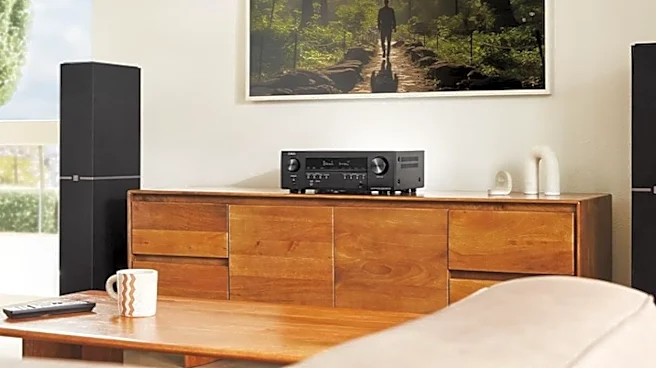
Size: One of the big knocks against stereo receivers is their large size. All of the models we tested will require a fair amount of space, but were generally the same width. Some of the more premium models, which have larger components, were a lot taller and weighed a lot more. If you’re setting up a system with a stereo receiver, we recommend getting a proper media center to house it.
Power output (in watts per channel): Every receiver has to send through a power signal when connected to non-active speakers. Certain speakers will require more power to be “driven” than others, especially at higher volumes. It’s a little less important if you don’t plan on pushing your receiver very often (if your room is small, you live in an apartment or attached housing, etc.), but it doesn’t hurt to have a receiver that’s more powerful than your needs right now in case you move into a larger space or want to play around with different speakers as you upgrade your setup.
Surround sound compatibility: Most of the receivers we tested allow you to hook up enough speakers to create at least a 5.1 (five speakers plus a subwoofer) surround sound system. Higher-end receivers allow you to hook up even more, which is necessary if you’re creating a Dolby Atmos audio system that requires speakers for the height channels. Those receivers had components that allowed them to properly play back and decode Dolby Atmos audio tracks.
Wireless streaming: The point of a stereo receiver is to hook up a bunch of audio and video components to it, but some allow you to stream media to them wirelessly from your smartphone, tablet, or computer. That feature can come in handy if you’ve set up a home theater in your living room and want to quickly put on some background music instead of spinning vinyl or using your go-to media streamer.