






Click here to read the full article.
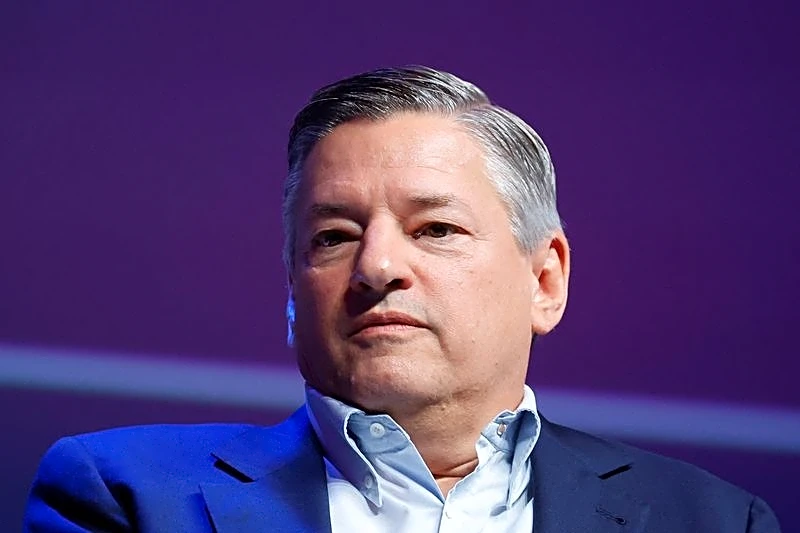
As Netflix undergoes its biggest content leadership shake-up in years, co-CEO Ted Sarandos has a clear message: The streamer’s international strategy is working, it’s the U.S. slate that needs fixing.
Speaking during
Netflix’s third-quarter earnings call Tuesday, Sarandos defended the company’s content strategy as the appointment of former Disney executive Peter Rice to replace Bela Bajaria as chief content officer raises questions about the streamer’s future commissioning priorities.
“Our strategy is unchanged,” Sarandos said, emphasizing that Netflix originals remain at the heart of its business. “The anchor of that strategy are the Netflix originals. Differentiated, exclusive, ambitious, professionally produced series and films and live events.”
He said the streamer pairs that “exclusive programming with kind of a broad offering of third-party programming, including second run titles.” He then said Netflix also looks “to new ways to bring third-party content onto the service as well to complement those originals. Like we just did with TF1 in France, where you’re ingesting a full network of programming.”
While the leadership shake-up has cast uncertainty over the company’s commissioning priorities, Netflix executives pointed to strong performance across Europe, Latin America and Asia, where local productions continue to drive engagement, subscriber growth and revenue.
“We had great results in APAC, LATAM and EMEA. Our local titles from those regions are driving engagement and they’re driving business growth. And you can see how our business model works here,” said co-CEO Greg Peters on the call.
Sarandos acknowledged that the U.S. slate needs to deliver stronger results, particularly as American hits remain an important driver of engagement around the world. But he indicated that the company’s international content operation would not undergo a fundamental change under Rice.
In the U.K., one of Netflix’s most established international production hubs, the shake-up has generated some anxiety, although local producers believe the British scripted operation, led by Anne Mensah, enjoys a great deal of autonomy, having delivered delivered a string of global hits including “Baby Reindeer” and “Adolescence.”
“I have a sense they have real autonomy in the U.K.,” said one scripted producer who has worked with the local originals team. “Much more so than some of the other streamers who are much more dependent on what the American scripted commissioners or heads think about stuff.”
The recent layoffs have nevertheless unsettled Britain’s independent production community, which has already endured several difficult years of shrinking budgets and fewer commissions. With Netflix among the remaining major buyers of high-end unscripted programming, any slowdown in spending could have significant consequences for local producers.
Still, producers expect any changes introduced by Rice to take time to filter through, particularly in scripted television, where projects are commissioned years in advance. Much of the next two to three years of programming is already planned, with productions such as “The Gentlemen” Season 3 unlikely to reach screens before 2028.
Beyond the uncertainty surrounding Netflix’s commissioning priorities, the earnings call highlighted another part of the streamer’s international strategy: its growing interest in partnerships with traditional broadcasters to expand its local programming offering.
France, where Netflix is believed to have roughly 14 million subscribers, was mentioned during the call not as a showcase for its local originals (with the exception of Omar Sy’s hit heist show “Lupin”), but as an example of a distribution strategy that could be replicated elsewhere. Earlier this year, Netflix kicked off its distribution deal with leading commercial broadcaster TF1, giving subscribers access to the network’s linear and on-demand programming directly through the streaming platform.
Speaking about the company’s broader approach to licensing and partnerships, Peters said Netflix was looking for new ways to bring more programming to subscribers.
“We are always seeking new ways to expand our offering, new ways to provide more professionally produced film, TV, live events, more core entertainment value. And that means we do things like licensing. It also means we look for new creative partnerships like we did with TF1,” Peters said.
The deal has been delivering encouraging results, according to Peters. “We are very pleased with the early performance that we’ve seen in that integration. We have been able to enhance an already very compelling service for our French members with even more local popular French programming.”
Peters said TF1 viewing on Netflix was growing every month and early testing suggested the additional programming was generating incremental viewing rather than simply drawing audiences away from Netflix’s existing offering.
The executive said Netflix will look to “replicate similar positive results with other partners.”
These type of alliances with broadcasters are allowing Netflix to expand its offering with local programming without having to bear the full cost of producing it. For broadcasters, such partnerships offer a way to reach Netflix’s large subscriber base while bringing additional revenue from existing programming. Producers, meanwhile, are more wary of these types of deals because it impacts the value of shows that suddenly become simultaneously available on multiple platforms, therefore losing their exclusivity.
The push for more licensing deals comes as Netflix is seeking to loosen some of the investment obligations imposed on streamers in Europe.
In France, Netflix became the country’s largest private contributor to local creation in 2025, investing €308 million ($345 million) across film and television, according to French broadcasting regulator Arcom. Yet the streamer has also been seeking to limit some of its investment obligations. Alongside Amazon Prime Video and Disney+, Netflix has lodged an appeal with France’s highest administrative court, the Conseil d’État, challenging new sub-quotas for investment in documentaries and animation.
At the European level, Netflix is also lobbying for more flexible local content requirements as the European Commission reviews the Audiovisual Media Services Directive, which kicked off in 2022.
In Italy, Netflix already has licensing arrangements with public broadcaster RAI that give the streamer second-window access to some of its biggest shows, including “Sandokan,” a modern adaptation of Emilio Salgari’s classic pirate adventures, and Naples-set prison drama “The Sea Beyond.”
Whether that relationship could evolve into a broader aggregation deal along the lines of TF1 remains unclear. But Netflix’s Italian content chief, Eleonora Andreatta, previously served as RAI’s head of drama, giving her deep ties to the broadcaster and the local production community.
In Spain, licensing programming from established broadcasters is already a significant part of Netflix’s business. The volume of licensed content on Netflix in Spain rose from 2,420 hours in 2024 to 2,829 hours in 2025, according to estimates from Ampere Analysis. That included approximately 700 hours sourced from public broadcaster RTVE and commercial broadcaster Atresmedia, up from 543 hours the previous year.
While broadcaster partnerships are giving Netflix more ways to expand its international offering, Rice’s arrival has also raised questions about how much the company will continue to spend on original productions, particularly films.
“It’s very interesting Netflix hasn’t gone for someone who’s not a TV person but has a very high film profile,” said one leading Spanish producer, who questioned whether Netflix’s previous emphasis on producing a large volume of original films had delivered sufficient results.
“Netflix was producing around 80 original films [in the U.S.] out of which I don’t know how many were remotely relevant, just pouring tons of money in originals that nobody was seeing,” the producer said.
“Rice has been the head of a studio and head of a studio internationally and someone who knows the world market. It’s going to be key to see who is named to substitute Dan Lin and how that could play a role also in films and originals.”
Brazil offers another example of Netflix’s growing appetite for broadcaster partnerships, and it was the international market Sarandos spent the most time discussing during the call. Netflix recently struck its largest-ever licensing agreement with Globo, Latin America’s biggest media company, securing 18 titles from a broadcaster that had long resisted licensing its programming to Netflix within Brazil.
“This is the most meaningful licensing deal we’ve ever done in Brazil,” Sarandos said. “They are the leading series and film producer and distributor in that country. And they have also been a long holdout licensing content to us locally.”
Although Netflix previously carried Globo programming elsewhere in Latin America and internationally, the broadcaster had kept much of its content off the platform in its home market, where it operates its own premium streaming service, Globoplay.
The new agreement, which starts December and runs through mid-2027, includes Brazilian rights to Walter Salles’ Oscar-winning drama “I’m Still Here” and “India — A Love Story,” the internationally successful telenovela created by Glória Perez that won an International Emmy in 2009.
Fourteen of the 18 titles are films, offering a potentially valuable second window for Brazilian productions that often struggle to find audiences beyond their domestic theatrical release. While “I’m Still Here” grossed $19.6 million in Brazil, many local films attract only a fraction of that audience.
“A lot of other Brazilian films make 10,000 admissions in theaters. And that kills the film,” producer Rodrigo Teixeira said at the San Sebastián Film Festival’s Creative Investors Conference.
If broadcaster partnerships are helping Netflix expand its offering in Europe and Latin America, India shows why the streamer is unlikely to retreat from investing in local originals. It was the standout performer in the third quarter, with viewing hours jumping 24% year-over-year and revenue rising nearly 20%, according to Peters.
Sarandos also singled out Korea, Japan and the Nordic countries as examples of markets where local programming has been delivering strong results.
Vivek Couto, co-founder and CEO of Media Partners Asia, said Asia-Pacific remains Netflix’s fastest-growing region when currency fluctuations are excluded, although its contribution to revenue still trails its share of the subscriber base.
“Asia is about a fifth of Netflix’s subscribers but only around 12% of its revenue,” Couto said. “We see APAC reaching $8 billion by 2030, with upside, and the real question is what it takes to get to $10 billion.”
Couto said India and Japan would be central to that expansion, alongside continued growth in Southeast Asia, where Netflix has been investing in programming that resembles traditional free-to-air television.
“Netflix is consistently hitting its straps in Southeast Asia but still has a long way to go there as it leans into free-to-air style local programming. Korea is the mature market, and its next leg of growth is advertising,” he said.
According to Media Partners Asia estimates, the third quarter was Netflix’s strongest ever for paid subscriber additions in India. Local unscripted programming has been particularly successful, with “Lock Upp” becoming the streamer’s most-watched title in the country, while distribution arrangements such as its Flipkart bundle have helped broaden its reach.
Peters grouped India, Indonesia and Colombia among markets where Netflix still has considerable room to add subscribers and plans to maintain accessible entry-level prices.
In more mature markets such as the U.S., U.K. and Australia, revenue growth is expected to come primarily from pricing and advertising. Japan and Mexico fall somewhere in between, offering opportunities for both subscriber growth and higher revenue per member.
Given Netflix is also looking to expand its advertising tier into 15 additional countries in 2027, marking its first expansion into new advertising markets since launching the offering, it’s unlikely seismic changes are on the horizon, but it remains to be seen how far the aftershock’s from last week’s U.S. shake up will reverberate.