



Click here to read the full article.
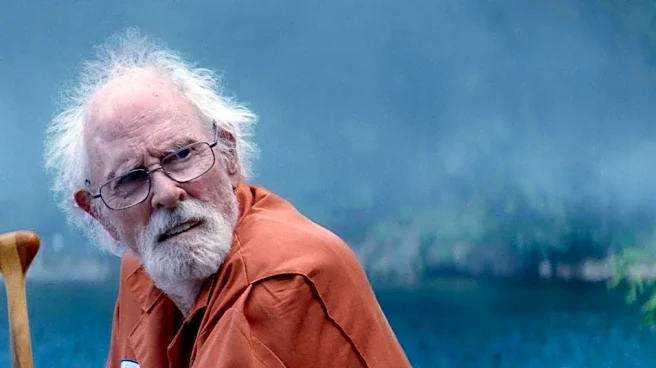
There is a pleasantly peppery performance from a bewhiskered — and bewhiskyed — Bruce Dern in William Scoular’s “Northbound,” but its spice is lost to the coziness of an approach that sets a higher premium on amiability
than originality. Kicking off to Trooper’s stadium staple “Raise a Little Hell” and closing out with the plaintive piano-rock of Keane’s “Somewhere Only We Know,” in between, “Northbound” plots such a straight line from one mood to the other, from mildly irascible rebellion to melodic, melancholic wisdom, that its central road trip feels less like a late-life adventure and more like a familiar commute. But the time of its overly neat wrap-up, the only unanswered question here is why we needed so many large-print signposts for an emotional journey that never leaves the well-trafficked highway.
Dern, echoing his Oscar-nominated “Nebraska” role just with the edges sanded down, plays Arthur, an octogenarian hellion who demonstrates his refusal to go gentle into that good night by careening around the manicured lawns of his elder-care home in a golf cart, accompanied by a sex worker and a bottle of tequila. Duly, he is expelled from the place, and is picked up resignedly by his grandson, Kevin (Hunter Parrish). Kevin has been given brusque instructions by his distant businessman father (Dylan Baker) to put Arthur on a plane bound for the next in a long line of nursing facilities. Arthur has other ideas.
Chiefly, he is hankering to go home — by which he means back to Canada, to the ex-wife (Joanna Cassidy) he claims still to love, and to the small-batch whisky distillery he founded decades before. Fueled by affection for Gramps, by nostalgia for a childhood steeped in whiskymaking lore, and by a distinct lack of zeal for his law-firm day job, Kevin agrees to drive him the 2,000-odd miles from Arizona. Some intergenerational sparring ensues, as Kevin scolds Arthur for his more outré boomer comments, and Arthur in turn sneers at his grandson’s millennial lameness. Urging the younger man to be more romantically proactive, at one point Arthur invokes Lancelot and Guinevere. “Nobody cares about that macho shit, Gramps,” sniffs Kevin piously, as he moisturizes before bedtime. “The Round Table was nothing but a circle-jerk of toxic masculinity.”
Thankfully, just as Ashlin Halfnight’s pro forma screenplay begins to chug on the fumes of old-chestnut gags about how uptight Kevin is and how long it takes Arthur to pee, they pick up Adrien (Julia Fox), a pretty, deaf hitchhiker and things get a bit more lively, as they tend to do whenever Julia Fox is involved. She turns out to be neither deaf, nor an errant claims processor on her way to Buffalo; instead her real backstory means not only can she handle herself in a fight, she actually has quite an urgent reason for needing to cross the border. It is also, unfortunately, a story that deserves a more serious-minded drama than “Northbound” wants to be, and its cursory treatment here is one of the film’s frustrations.
But as Peter Menzies Jr.’s attractive cinematography segues into another drone shot drifting over a winding road or a forested lakeside, and another obvious needle-drop reminds anyone who may be looking away from the screen that we’re “Back on the Road” again or that someone is hurting someone they love to “You Always Hurt the One You Love,” it becomes apparent that the movie suffers from misplaced focus in general. Its fine supporting cast (including Baker, Fox, Cassidy and the late Graham Greene in a too-brief cameo) is sidelined by a script that keeps insisting the least interesting character is the most important. No shade on Parrish — as written, milquetoast Kevin is little more than an air of genial befuddlement with a jawline, an impression not helped by the predictability of his arc. His main dilemma — whether to veto the sale of the underperforming distillery and run it himself, or return Stateside to a job and a life he clearly dislikes — is hardly a Scylla-or-Charibdis situation.
Despite his top billing and his undeniable curmudgeon charisma, even Dern ends up underserved by a role that is eventually reduced to so much benign backdrop for a much blander hero’s journey. There can be no doubting the sincerity of Scoular’s ambition to pay admiring tribute to a larger-than-life elder, but like too many portrayals of seniors, this one stops short of imagining that the life experience of an older person might have intrinsic, first-person value, rather than being solely of instructional usefulness to a younger generation who can parse it for inspirational or cautionary motivation. In so doing, the terminally nice “Northbound” goes south, squandering its greatest asset by all but giving him a halo when surely, a guy like Arthur would have more than a little hell left to raise.