



Click here to read the full article.
We don’t get a close enough look to see if the Devil actually wears Prada, but regardless, in Paolo Strippoli’s new horror romp “The Spiral,” she’s very chicly turned out indeed: Cool, crisp and collected in a tightly
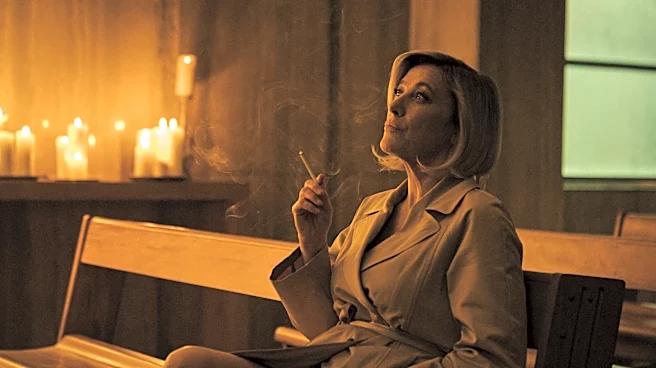
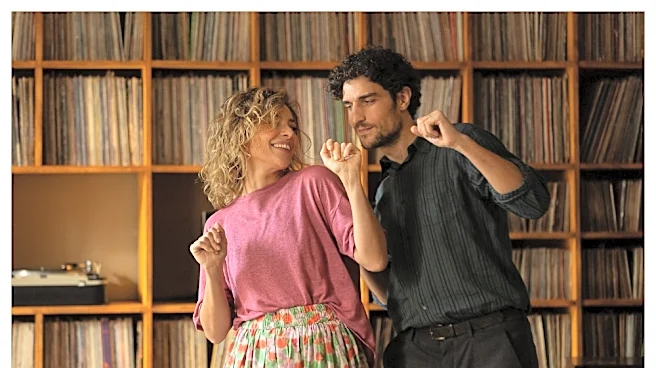
belted camel trenchcoat, hair pristinely bobbed and lips perfectly rouged, wielding a cigarette like a laser pointer. As played with her signature husky-flutey delivery by Valeria Bruni Tedeschi, this film’s Lucifer has seemingly stepped straight out of a film noir, though she hardly needs to use her femme fatale wiles to seduce well-to-do fashionista and mother-of-two Anna (Jasmine Trinca) — she just needs to prey, with casual malice, on any parent’s worst fears regarding their families, and if that also means asking Anna to choose between her children, so much the better. Step on our necks, mother Mephistopheles, and let the kids suffer the consequences.
A faintly absurd Faustian fable blown up to grand guignol proportions through Strippoli’s brash formal command of his favorite genre, “The Spiral” doesn’t add up to an awful lot, but the sum of its parts is flashily entertaining enough. It’s the fourth feature from the 33-year-old Italian horror specialist, and his first to be programmed in the main competition at Venice — a status upgrade that, given the new film’s lurid but quite superficial pleasures, might strike some as premature.
In fact, it might be a year late. “The Spiral” arrives hot on the heels of Strippoli’s third feature “The Holy Boy,” a wickedly clever, creepy tale of small-town trauma, terror and faith that was a standout of Venice’s out-of-competition sidebar a year ago, and is an altogether more layered, probing and frankly frightening film than this one. Perhaps this year’s selection is the festival’s mea culpa; perhaps the star presence of veteran Euro-arthouse queen Bruni Tedeschi makes all the difference. Either way, this stylish hokum secures Strippoli’s claim to horror-auteur status, and should see him cross over into the international elevated-genre market. It would be no great surprise if Hollywood remake rights are negotiated before the film even makes it to U.S. screens, while major studios looking to zhuzh up their upcoming horror properties could do far worse than to take Strippoli’s card.
It certainly begins as it intends to continue, going straight in with the ear-splitting attack of Quentin Collette’s maximalist sound design — all manner of natural and unnatural phenomena shrieking in unison as the camera opens on a hand clutching a plane armrest for dear life, as extreme turbulence batters the aircraft hither and thither. Outside the window, a none-too-encouraging cyclone is forming in the clouds: the first of several spirals in the film’s image system, which, like many passing details in “The Spiral,” look cool and unnerving without leading anywhere in particular.
Cut to terra ferma, where the almighty rainstorm soaking the streets of Rome seems a comparatively trifling bit of weather. Anna, damp and frazzled, turns up unannounced at the door of her apprehensive adult daughter Alice (Romana Maggiora Vergano), insisting she has a terrible family secret to reveal, that can’t wait a minute longer. Her timing isn’t great; as it turns out, it never has been.
We rewind a quarter-century or so to the first of the film’s formally marked chapters, each titled after a different member of the family in question, though the story’s point of view doesn’t notably shift between them. In sunny Bari, Anna and husband Walter (Adriano Giannini) head up a picture-perfect model family — so very model, in fact, that seven-year-old Alice (Gabriella Telegrafo) has just been cast in a Barilla pasta ad. That goes out the window when, at a lush garden party on their luxury estate, Alice is brutally and unaccountably mauled by their bull terrier; ER doctors save her life, but as they bluntly inform her parents, they’re unlikely to save her leg.
With the threat of amputation looming, Anna heads to the church chapel — an ominous space merging gaudy Italo-modernism with aggressively Catholic candlelight, one of several coups here by production designer Marcello Di Carlo — to breathe, cry and pray. God doesn’t answer, but someone else does. Enter Bruni Tedeschi’s unnamed eavesdropper (“The Stranger,” to translate the film’s original Italian title), who at first gently commiserates with the distraught mother, before revealing some unsettling knowledge of the family’s situation, and proposing an even more unsettling solution: She can ensure that little Alice keeps her leg, but at some physical cost to her older brother Tobia (Alessandro Carbonara). Scarcely believing this outlandish offer and not in her right mind to begin with, Anna agrees.
Cue years of staggered, steadily worsening consequences, unboxed by Strippoli with gruesome relish. It’s for viewers to decide whether the streak of ableism and body-shaming that accompanies this fallout is the film’s failing or the work of the Devil herself, in what arguably amounts to a sick joke about Italian image-consciousness, Catholic guilt, or perhaps nothing all that deep. Mostly, Strippoli wants us to enjoy the loud, bumpy ride, and to a point, we do.
But his script winds up spiraling inwards rather than outwards. The belabored flashback structure saps some tension from the enterprise, while Anna’s dreadful secret (revealed rather early in proceedings) doesn’t really build in physical, moral or spiritual resonance, leaving it to Strippoli’s enjoyably vulgar, pedal-to-the-metal aesthetic to gee up the film’s narrative sputtering engine. He does, however, give Bruni Tedeschi’s very soigné Satan a few more opportunities to re-up the terms and conditions of her initial dastardly contract, giving the proceedings a welcome injection of camp energy each time. We all knew the Devil has all the best tunes — who knew she has all the best shoes too?