


Click here to read the full article.
For Egyptian filmmaker Sara Shazli, the camera became a way of asking her mother questions she had carried since childhood. Returning to Cairo from film school in Cuba, she would wait in the family kitchen, camera in hand,
hoping to understand the woman whose devotion to cinema had so often left her feeling alone.
“Was the camera protecting me from the answers she could give me? Was the camera a way of having her attention?,” Shazli wonders. With cinema occupying such a central place in her mother’s life, filming their conversations offered a way of reaching her through the very medium that had so often kept them apart.
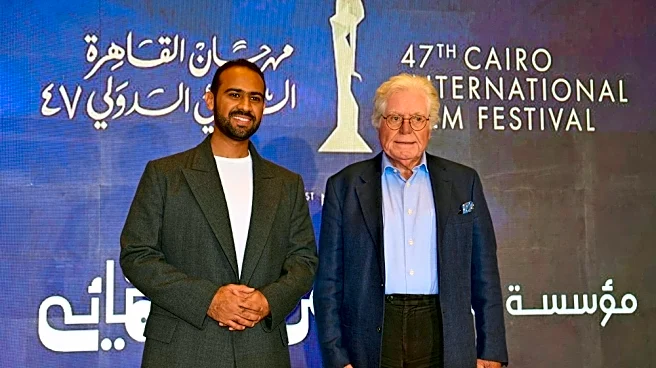
Those encounters became the foundation of “Your Daughter,” Shazli’s documentary about her relationship with her mother Marianne Khoury, the Egyptian producer and filmmaker who spent decades working alongside her uncle, renowned director Youssef Chahine. Premiering at the 47th Cairo Intl. Film Festival, the film charts a daughter’s changing understanding of her mother, from resentment over her childhood absence to an admiration she had never anticipated.
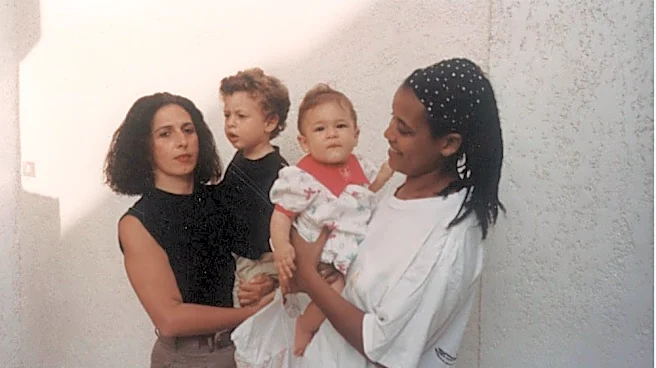
Shazli initially conceived the project as a search for Woody, the nanny who had helped raise her, hoping to reconnect with a figure who had played such an important role in her childhood. But as she developed the film and attended workshops with other filmmakers, their observations helped her recognize a more deeply personal story taking shape in the footage of her mother.
“Someone told me, ‘Look at how you film your mother. You film her with so much love,’” she recalls. “It was actually painful,” she adds, because acknowledging that love meant confronting difficult questions, ones she had avoided for far too long.
Those questions extended beyond Khoury’s absence to the expectations she passed on to her daughter. “I grew up with a mother telling me that you have to be independent from any man in the world,” Shazli says. “But it was so extreme. Why can’t both the dad and the mom help? Why can’t both be responsible?”
Khoury had built her career while shouldering much of the financial burden and everyday demands of family life. Shazli admired her mother’s determination but questioned the sacrifices that came along with it. She sought a different kind of partnership, with a husband who shares childcare and financial responsibilities, rather than carrying those burdens alone.
Her family’s cinematic legacy brought pressures of its own. Growing up around Chahine, whom she affectionately calls “Uncle Joe,” Shazli struggled to establish her own identity as a filmmaker.
“Nobody put that pressure on me,” she says. “It was me, coming from that Chahine family, being compared to such a titan. What are you going to do with all this?” Studying film in Cuba offered distance from her family and from Egypt, helping her discover what she wanted to say as a filmmaker.
“I started to see her differently and I started to feel for her,” Shazli tells Variety of her conversations with Khoury. She came to understand how her mother’s own upbringing had shaped the way she expressed affection. “It did hurt me to realize that she had grown up with a different kind of love, one where affection wasn’t always expressed through time and attention. She gave what she knew. You give what you receive.”
Her growing empathy did not erase the hurt of her childhood, but it allowed her to see Khoury beyond the role of mother. Khoury, who took over Chahine’s production outfit Misr International after his passing, remains as devoted to her work as ever, but Shazli no longer sees that devotion solely through the lens of what she missed growing up.
Becoming a mother herself brought another shift in perspective. “Now I feel like I really admire her,” Shazli says. “How on earth did she manage to do all this?”
“That says a lot about her energy, about how much ambition she has,” she adds. “I’m nowhere near that, and I’m alright with that too. I’m actually happy that I don’t have that because you suffer when you have that. You want to be everywhere and do everything.” But that admiration does not mean she intends to follow the same path.
For Shazli, whose earlier documentary “Back Home” explored her relationship with her father, filmmaking is also a means of working through deeply personal questions. “For me, filmmaking is really about healing,” she says. “If there’s no problem, there’s no film. If there’s nothing to discover, to heal, to dig deep into, there’s no film.”
The Cairo premiere has brought an unexpected response, including from men who recognized their own family relationships in the film. “When somebody comes and tells you, ‘You made me want to speak to my mother,’ or ‘You made me want to speak to my father,’ that’s exactly what it should do,” she says.
But having explored both parents on screen, Shazli is ready to turn toward fiction. “I did a film about my dad. I did a film about my mom. I’m done,” she says. “Now I want to have more fun. I want to write a fiction. I want to work with actors. I want to create differently now.”