





What's Happening?
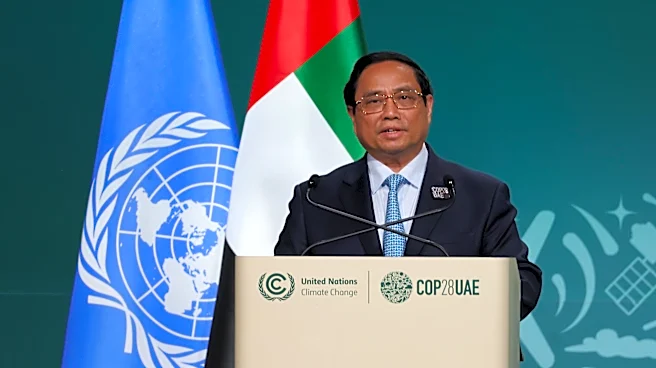
Asian Development Bank (ADB) President Masato Kanda has called for a decisive shift from dialogue to tangible delivery in climate action during high-level meetings at COP31 in Türkiye. Mr. Kanda emphasized the urgent need to translate global commitments
into financed projects and accelerated implementation, particularly to benefit vulnerable communities. During his visit to Antalya, he urged world leaders to convert international pledges into investments that safeguard lives, livelihoods, and economic growth. Speaking at an MDB Presidents Event, Mr. Kanda advocated for enhanced cooperation to simplify access to financing, expedite projects designed to withstand natural hazards, and transform country-specific priorities into concrete results. He also highlighted the role of development banks in absorbing risks and reducing borrowing costs to help developing economies modernize industries and create quality jobs, reaffirming ADB's commitment to blended finance and policy support for sustainable industrial growth. A significant step taken was ADB's formal membership in the Türkiye Industrial Decarbonization Investment Platform (TIDIP), alongside other major financial institutions, to support cleaner industrial production and job creation.
Why It's Important?
This call to action from the ADB President underscores a critical juncture in global climate efforts, moving beyond policy discussions to practical implementation. The emphasis on accelerating project financing and simplifying access to funds is vital for developing nations, which often bear the brunt of climate change impacts but lack the resources for effective adaptation and mitigation. By urging development banks to absorb risks and lower borrowing costs, Mr. Kanda aims to unlock significant investment in green industrialization, fostering economic growth and job creation in emerging economies. ADB's participation in initiatives like the Türkiye Industrial Decarbonization Investment Platform signals a collaborative approach among multilateral development banks to pool resources and expertise, enhancing the collective capacity to address climate challenges. This strategic shift is crucial for ensuring that climate finance reaches the ground level, enabling vulnerable communities to build resilience and transition to sustainable development pathways, thereby mitigating long-term economic and social disruptions.
What's Next?
Following President Kanda's strong push for delivery, the ADB is expected to intensify its efforts in facilitating climate finance and project implementation across Asia and the Pacific. The bank will likely focus on strengthening partnerships with governments and other financial institutions to streamline funding mechanisms and accelerate the pipeline of climate-resilient projects. Further engagement in platforms like the Türkiye Industrial Decarbonization Investment Platform indicates a continued commitment to supporting industrial modernization and decarbonization in developing member countries. The ADB will also likely continue to advocate for innovative financial tools, such as blended finance, to mobilize private capital and de-risk investments in climate action. Future initiatives may include enhanced technical assistance and capacity building for countries to develop bankable climate projects and improve their access to international climate funds, ensuring that the momentum from COP31 translates into tangible, on-the-ground progress in climate resilience and sustainable development.
Beyond the Headlines
The ADB's pivot towards 'delivery' at COP31 reflects a broader recognition within the international development community that climate commitments must be matched with concrete, actionable strategies. This shift has profound implications beyond immediate project financing, signaling a potential re-evaluation of how development aid and climate finance are structured and disbursed. It highlights the ethical imperative to support vulnerable nations that contribute least to climate change but suffer its most severe consequences, emphasizing equity and justice in global climate action. Furthermore, by advocating for development banks to absorb risks, the ADB is implicitly challenging traditional financial models that often shy away from high-risk, high-impact climate projects in developing regions. This could lead to innovative financial instruments and risk-sharing mechanisms that fundamentally alter the landscape of climate investment, fostering a more proactive and equitable approach to global environmental challenges and sustainable development.