

What's Happening?
An adolescent great horned owl, discovered trapped in a concrete mixer at a construction site in southwestern Utah last October, has been successfully rehabilitated and released back into the wild. The owl was initially found by workers who were pouring
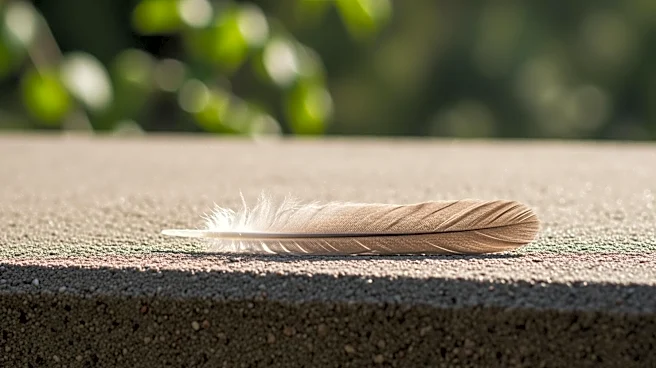
concrete and subsequently taken to the Best Friends Animal Sanctuary in Kanab. The sanctuary staff meticulously removed concrete from the owl's feathers and performed a procedure called imping, which involved grafting donor feathers onto the owl's damaged wings. This allowed the owl to regain its ability to fly silently, a crucial trait for hunting. The owl's recovery was closely monitored, and after a successful test flight, it was released into the wild.
Why It's Important?
The successful rehabilitation and release of the owl highlight the importance of wildlife rescue and rehabilitation efforts. Such initiatives not only save individual animals but also contribute to the preservation of species and biodiversity. The use of imping, a technique traditionally used by falconers, demonstrates innovative approaches in wildlife care that can be applied to other cases. This event underscores the role of animal sanctuaries and the dedication of their staff in wildlife conservation. The owl's return to the wild also serves as a reminder of the impact human activities can have on wildlife and the responsibility to mitigate such effects.
What's Next?
Following its release, the owl will need to adapt to its natural environment, find a territory, and potentially mate. The sanctuary will likely continue to monitor the area to ensure the owl's successful reintegration into the wild. This case may encourage further research and application of imping and other rehabilitation techniques in wildlife rescue operations. Additionally, construction sites and other industrial areas may implement more wildlife-friendly practices to prevent similar incidents.