









What's Happening?
Scientists have discovered a black fungus, Cladosporium sphaerospermum, thriving in the Chernobyl exclusion zone, an area known for its high levels of ionizing radiation. This fungus, rich in melanin, appears to harness ionizing radiation in a manner
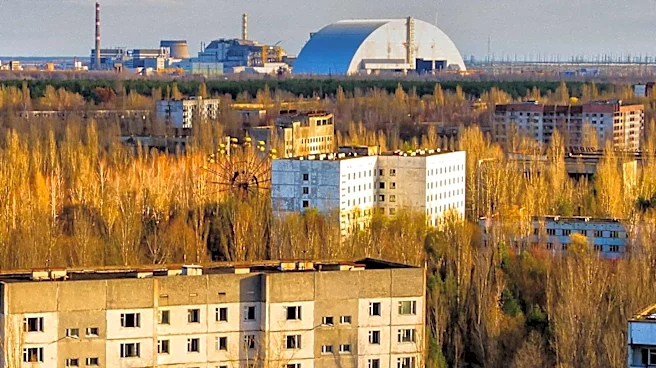
similar to photosynthesis, a process termed radiosynthesis. The discovery was made during a field survey in the late 1990s, where researchers found a community of fungi in the shelter surrounding the ruined reactor. Subsequent studies have shown that the fungus not only survives but flourishes in the presence of ionizing radiation, suggesting a unique adaptation that allows it to convert radiation into energy.
Why It's Important?
The ability of Cladosporium sphaerospermum to thrive in high-radiation environments could have significant implications for biotechnology and space exploration. Understanding this fungus's mechanism for radiation resistance could lead to the development of new materials or methods for protecting humans and equipment from radiation. Additionally, the potential use of such fungi as a biological shield in space missions could revolutionize how we approach long-term space travel and habitation. This discovery also highlights the resilience of life and its ability to adapt to extreme conditions.
Beyond the Headlines
The concept of radiosynthesis, while still a theory, challenges our understanding of biological energy conversion and adaptation. If proven, it could redefine how we perceive life in extreme environments and open new avenues for research in astrobiology and radiation biology. The study of such organisms could also provide insights into the evolutionary processes that enable life to persist in seemingly inhospitable conditions.