






What's Happening?
Rep. Jay Obernolte, a Republican from California, is actively involved in legislative efforts concerning artificial intelligence (AI) on Capitol Hill. He has co-authored the Frontier Act with Rep. Lori Trahan, D-Mass., which aims to establish new safety
and transparency rules for large AI companies. This bill is one of several AI-related legislative proposals introduced in Congress, though none have yet gained significant traction. Obernolte has also introduced the AI LABS Act, designed to provide federal grants for K-12 schools to create dedicated AI labs, fostering hands-on learning and educator understanding of AI. Additionally, he co-introduced the Liquid Cooling for AI Act, which focuses on assessing and advancing the use of liquid cooling technologies in U.S. data centers to enhance AI computing capabilities. These initiatives come amidst increasing concerns among lawmakers and tech experts regarding the rapid advancement and potential risks of AI.
Why It's Important?
The legislative efforts led by Rep. Obernolte are crucial for establishing a regulatory framework for artificial intelligence in the United States. The Frontier Act, if passed, would introduce mandatory safety and transparency standards for major AI developers, shifting from the current voluntary commitments. This could significantly impact the operational procedures and development timelines for AI companies, potentially increasing compliance costs but also fostering greater public trust and mitigating risks. The AI LABS Act addresses the critical need for AI literacy and workforce development, aiming to equip future generations with the skills necessary to navigate an AI-driven economy. The Liquid Cooling for AI Act highlights the infrastructure demands of advanced AI, pointing to the need for energy-efficient solutions to support the growing computational power required for AI development. These bills collectively underscore a bipartisan recognition of AI's transformative potential and the urgent need for proactive governance to ensure responsible innovation and maintain U.S. competitiveness in the global AI landscape, particularly in relation to countries like China.
What's Next?
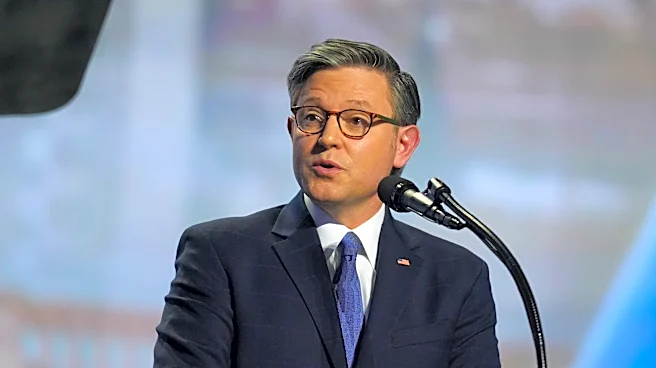
Despite the growing urgency surrounding AI regulation, the immediate future for these legislative proposals remains uncertain. The Frontier Act, along with other AI-related bills, has yet to gain significant traction in Congress, with action unlikely before the upcoming election. House Speaker Mike Johnson has indicated a cautious approach, emphasizing the need for meaningful regulation that does not stifle American innovation or put the U.S. at a disadvantage against competitors like China. Discussions are ongoing, with some senators drafting legislation that would impose a binding legal duty of care on AI companies and grant federal authority to block unsafe models. However, there is no consensus on the scope of such authority or the specific mechanisms for pre-release evaluation. The debate will likely continue to involve various stakeholders, including tech leaders, policymakers, and safety experts, as Congress grapples with how to balance innovation with the need for robust safety guardrails.
Beyond the Headlines
The legislative push by Rep. Obernolte and his colleagues reflects a deeper societal reckoning with the ethical and existential implications of artificial intelligence. Beyond immediate safety concerns, the debate touches upon fundamental questions of control, accountability, and the future of human-AI interaction. The proposed 'pause button' for AI models, as envisioned in some legislative drafts, highlights the unprecedented power AI systems could wield and the potential need for governmental intervention in their deployment. The focus on K-12 AI education through the AI LABS Act points to a long-term strategy for societal adaptation, recognizing that AI literacy will become as fundamental as traditional subjects. Furthermore, the emphasis on liquid cooling for data centers underscores the environmental footprint of advanced AI, raising questions about sustainable development and the energy demands of future technological progress. These discussions are not merely about technology but about shaping the foundational principles for a future increasingly intertwined with intelligent machines.