
What's Happening?
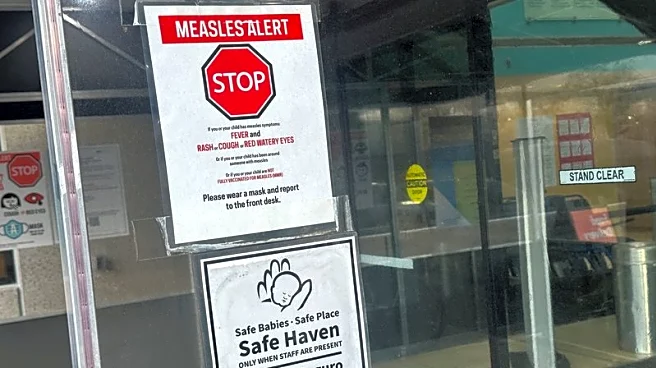
Health officials in Montgomery County, Pennsylvania, have issued a warning about a potential measles exposure at the Patient First Primary and Urgent Care-Collegeville. A contagious individual was present
at the facility on January 29, between 1:15 and 4:15 p.m. Those who visited the center during this time are advised to monitor for symptoms such as fever, rash, cough, congestion, or red watery eyes for 21 days. The Montgomery County Department of Health recommends checking vaccination records, as those born before 1957, who received two doses of the MMR vaccine, or have lab-confirmed immunity are likely protected. Measles is highly contagious, spreading through the air and via droplets from infected individuals. Infants, young children, pregnant women, and immunocompromised individuals are at higher risk for complications.
Why It's Important?
The potential measles exposure in Montgomery County underscores the ongoing public health challenge posed by declining vaccination rates. Measles is a preventable disease, yet its resurgence highlights gaps in immunization coverage. The situation serves as a reminder of the importance of maintaining high vaccination rates to protect vulnerable populations and prevent outbreaks. Public health warnings aim to prevent further spread by encouraging those potentially exposed to seek medical advice and verify their vaccination status. The incident may prompt increased public health efforts to raise awareness about the importance of vaccinations and address vaccine hesitancy.
What's Next?
Montgomery County health officials will likely continue monitoring the situation and may implement additional measures to prevent further spread. Public health campaigns could be intensified to educate the community about the benefits of vaccination and the risks of measles. The county may also collaborate with healthcare providers to ensure that vaccination records are up-to-date and accessible. Ongoing communication with the public will be crucial to manage the situation and prevent panic. The incident may also lead to discussions on policy measures to improve vaccination rates and prevent future outbreaks.