






What's Happening?
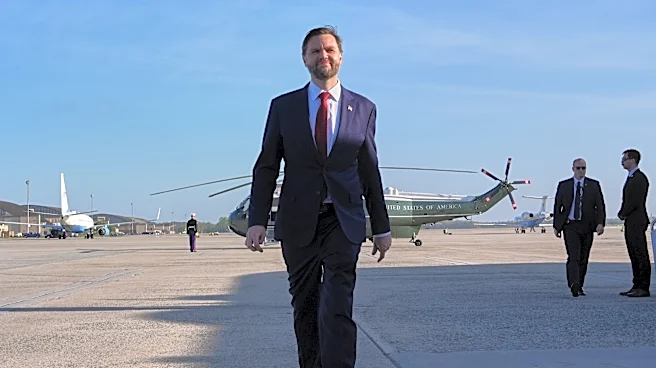
The Serena Hotel in Islamabad, Pakistan, has been chosen as the venue for critical peace talks aimed at resolving the ongoing conflict involving Iran. The talks are led by U.S. Vice President JD Vance, who is heading the American delegation. The city
is under heightened security measures, with thousands of security personnel, including paramilitary and army troops, establishing checkpoints and blockades. The Serena Hotel, known for its picturesque grounds and Moorish architecture, is strategically located near the diplomatic zone, making it a suitable choice despite its proximity to the site of a major militant attack in 2008. The hotel boasts a robust security setup, with well-trained staff, many of whom are retired security officials, and strong coordination with state security agencies. The venue's extensive premises can accommodate the large delegations from both the U.S. and Iran, comprising over 150 people.
Why It's Important?
The peace talks at the Serena Hotel represent a significant diplomatic effort to address the conflict involving Iran, which has broader implications for regional stability and international relations. The involvement of the U.S. Vice President underscores the importance of these negotiations in potentially easing tensions and fostering peace. Successful talks could lead to a reduction in hostilities and contribute to global security, impacting economic and political dynamics in the Middle East. The choice of venue, with its fortified security measures, reflects the high stakes and the need for a secure environment to facilitate dialogue. The outcome of these talks could influence U.S. foreign policy and its approach to Middle Eastern affairs, affecting stakeholders ranging from government entities to international businesses operating in the region.
What's Next?
The next steps following the peace talks will likely involve continued diplomatic engagement between the U.S. and Iran, with potential agreements or frameworks being established to address key issues. Stakeholders, including political leaders and international organizations, will be closely monitoring the outcomes to assess their impact on regional stability and global security. Further negotiations may be scheduled to build on any progress made during these talks, with the possibility of involving additional countries or entities to support the peace process. The international community will be keen to see tangible results that could lead to a de-escalation of tensions and promote cooperation in addressing broader geopolitical challenges.