



What's Happening?
The Department of Justice (DOJ) has initiated an investigation into Minnesota Governor Tim Walz and Minneapolis Mayor Jacob Frey. This development was confirmed by a U.S. official who requested anonymity due to the sensitive nature of the information.
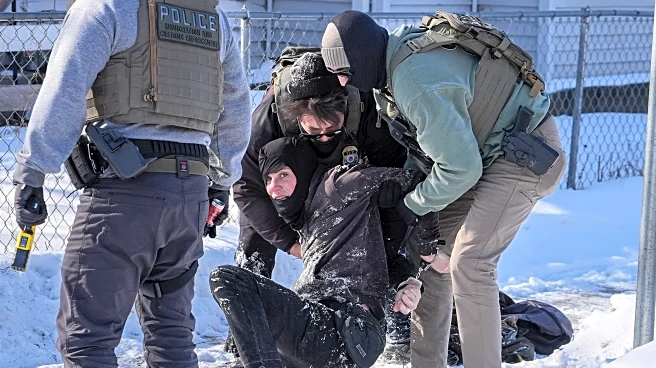
The investigation is reportedly linked to allegations of a conspiracy to impede federal immigration agents. Mayor Frey has publicly criticized the investigation, describing it as an attempt to intimidate him for his stance against federal actions in Minneapolis. Governor Walz, while not directly addressing the investigation, has expressed concerns over what he perceives as the weaponization of the justice system. The backdrop to this investigation includes the recent killing of Renee Macklin Good by an Immigration and Customs Enforcement (ICE) officer, which has intensified local opposition to federal agents operating in Minnesota.
Why It's Important?
This investigation highlights ongoing tensions between state and federal authorities, particularly concerning immigration enforcement. The actions of the DOJ could have significant implications for federal-state relations, especially in states with strong opposition to federal immigration policies. The investigation may also influence public perception of the DOJ's impartiality, as accusations of political motivations in legal actions could undermine trust in federal institutions. For local governments, this situation underscores the challenges of balancing federal directives with local governance priorities, particularly in areas with contentious federal policies.
What's Next?
As the investigation progresses, responses from political leaders and civil society groups are anticipated. Governor Walz and Mayor Frey may seek legal avenues to challenge the investigation, potentially escalating the matter to higher courts. Public demonstrations or political rallies could occur as local communities react to the DOJ's actions. Additionally, the investigation's outcome could set precedents for how similar cases are handled in the future, influencing the dynamics of federal and state interactions.