




What's Happening?
The Philippines is in discussions with the U.S. International Development Finance Corporation (DFC) regarding potential loan financing of up to $5 billion to support its nuclear energy program. This financing, if approved, could offer terms of up to 25
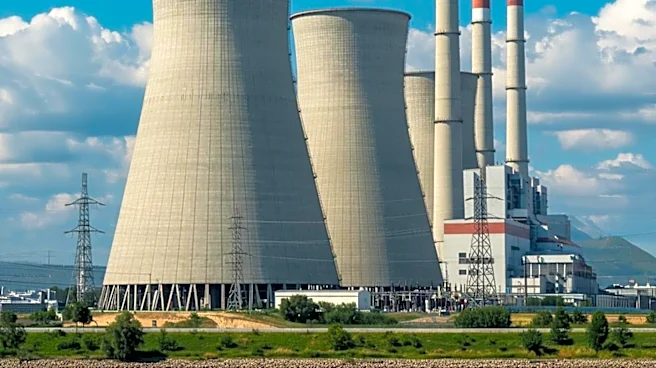
years to private investors involved in nuclear power plant development. The Philippine government aims to significantly increase its installed nuclear capacity, targeting 1,200 MW by 2032, 2,400 MW by 2035, and up to 4,800 MW by mid-century. Small modular reactors (SMRs) are expected to play a crucial role in achieving these goals, with their deployment contingent on the commercial availability of various technologies. The Philippines is also actively developing its legislative framework and nuclear regulatory system, while continuing its cooperation with the International Atomic Energy Agency (IAEA).
Why It's Important?
This potential U.S. financing for the Philippines' nuclear program signifies a strategic move by the U.S. to bolster its influence in the Indo-Pacific region and support energy security among its allies. For the U.S., providing such financing can open doors for American nuclear technology suppliers, particularly in the SMR sector, fostering economic ties and technological leadership. It also aligns with broader U.S. foreign policy objectives of promoting stable, low-carbon energy sources globally. For the Philippines, securing this financing would be critical for diversifying its energy mix, reducing reliance on fossil fuels, and meeting its growing electricity demand. The emphasis on SMRs also highlights a global trend towards smaller, more flexible nuclear power solutions, which could become a significant export market for U.S. companies.
What's Next?
The discussions with the DFC represent a potential financing option, not a finalized loan or commitment. The Philippines will continue to develop its legislative and regulatory frameworks for nuclear power, and the commercial availability of SMR technologies will be a key factor in their deployment. The U.S. Trade and Development Agency (USTDA) has already provided funding for technical assistance to Philippine company Meralco PowerGen (MGEN) to assess U.S. SMR technologies and develop a deployment timeline. Further cooperation includes personnel training, technical consultations, and sharing regulatory experience. A Philippine delegation recently visited the U.S. for talks with technology suppliers and financial institutions, indicating ongoing efforts to solidify these partnerships and advance their nuclear ambitions.
Beyond the Headlines
The U.S. engagement in the Philippines' nuclear energy development extends beyond financial aid; it represents a strategic effort to counter the growing influence of other nuclear technology providers, particularly from countries like Russia and China. By supporting the Philippines, the U.S. is not only promoting its own nuclear industry but also reinforcing its geopolitical standing in a critical region. The focus on SMRs also reflects a broader shift in nuclear energy strategy, moving towards more adaptable and potentially safer reactor designs. This could set a precedent for other developing nations looking to adopt nuclear power, with the U.S. positioning itself as a preferred partner. The long-term implications include enhanced energy independence for the Philippines, reduced carbon emissions, and a strengthened alliance with the U.S. in a region of increasing strategic importance.