




What's Happening?
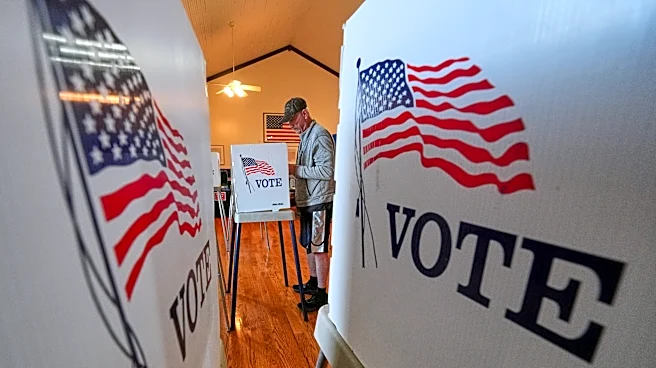
The mayoral race in Spring Lake Park, Minnesota, is set to be decided by a game of chance after incumbent mayor Robert Nelson and challenger Hayln Roth received an identical number of votes. Both candidates garnered 1,401 votes, with an additional 13
write-in votes preventing either from securing an outright victory. Under Minnesota law, a tie in an election is resolved by drawing lots. City officials will first canvass the results to confirm the tie. If the tie persists, the candidates' names will be printed on slips of paper, folded, placed into two small containers, and then put into a bag for a random selection. The winner of this drawing will become the next mayor of Spring Lake Park. The city council meeting where this drawing is scheduled to occur is set for 5:30 p.m. on Monday. The losing candidate will have the option to request an official recount, which could potentially extend the resolution of the election until November 17.
Why It's Important?
This unusual method of resolving an election highlights a unique aspect of electoral law in Minnesota and other states, where a 'game of chance' can determine leadership. While City Administrator Daniel Buchholtz views the process as fair and transparent, challenger Hayln Roth has expressed frustration, suggesting that lawmakers should reconsider the statute given the potential for more tied votes in an increasingly divided electorate. The situation underscores the principle that every vote counts, as a single additional vote could have prevented this outcome. The reliance on a random drawing for a significant public office raises questions about democratic principles and the perceived legitimacy of leadership chosen by chance rather than direct electoral majority. It also brings attention to the varying state laws regarding tie-breaking procedures, with some states opting for new elections or legislative intervention instead of random selection.
What's Next?
City officials will proceed with the canvassing of the election results. If the tie between Robert Nelson and Hayln Roth is confirmed, the drawing of lots will take place at the city council meeting on Monday at 5:30 p.m. The public nature of this drawing is intended to ensure transparency. Following the drawing, the candidate whose name is not selected will have the opportunity to request an official recount. Such a recount could potentially delay the final confirmation of the mayoral winner until November 17. This event may also prompt discussions among Minnesota lawmakers regarding the current state law for resolving tied elections, particularly in light of public sentiment and the increasing likelihood of close electoral contests.
Beyond the Headlines
The scenario in Spring Lake Park, where a mayoral race is decided by drawing lots, delves into the philosophical underpinnings of democratic governance. While legal and transparent, the method of random selection for a public office can challenge public perception of electoral fairness and the mandate of elected officials. It raises questions about whether such a process adequately reflects the will of the voters, even when a tie makes a definitive choice impossible through traditional means. The incident could spark broader conversations about electoral reform, encouraging states to review and potentially revise their tie-breaking statutes to better align with contemporary democratic expectations. The frustration expressed by one of the candidates suggests a potential erosion of public trust in outcomes determined by chance, emphasizing the need for electoral processes that are not only fair but also perceived as legitimate by the electorate.