
What's Happening?
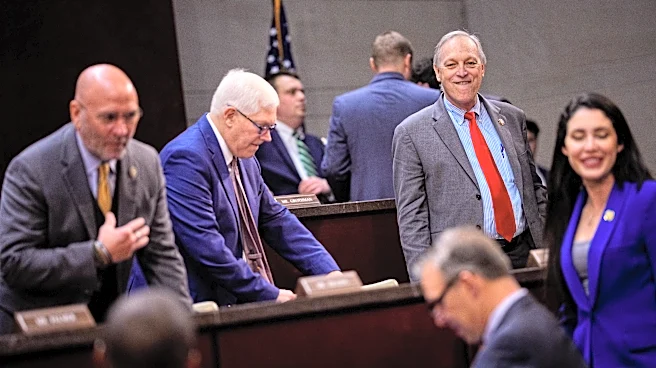
The Anchorage Assembly is facing a substantial accumulation of legislative tasks, with nearly 30 public hearings and policy decisions scheduled across its final three meetings of the year. Key items on the agenda
include the approval of the 2027 municipal budget, a proposed zoning change aimed at increasing housing density, adjustments to local election procedures, and tax incentives for mixed-use, multifamily housing developments. Assembly members, including Erin Baldwin Day, have acknowledged the body has 'collectively backed ourselves into a corner' due to the volume of work. Chair Anna Brawley issued a statement on November 6, informing residents that it is 'unlikely' all agenda items will be addressed, encouraging them to contact legislation sponsors directly. This backlog has been exacerbated by ongoing debates since April on contentious issues such as police surveillance, member discipline, and housing development zoning, which have frequently taken precedence and led to postponements of other matters.
Why It's Important?
The significant backlog of the Anchorage Assembly's legislative agenda carries several critical implications for the municipality and its residents. Delays in approving the 2027 municipal budget could impact city services and departmental operations, potentially leading to disruptions or inefficiencies. The postponement of a zoning change designed to increase housing density, such as the 'Missing Middle Housing Opportunity overlay' (MMHOP), could exacerbate existing housing shortages and affordability issues within Anchorage, affecting residents' access to diverse housing options. Furthermore, the recurring delays make it challenging for the public to track and provide input on policies that directly affect their neighborhoods and daily lives, undermining civic engagement and transparency. The inability to address critical issues in a timely manner can also erode public trust in local governance and hinder the city's progress on key development and operational fronts.
What's Next?
The Anchorage Assembly is scheduled to meet next on November 17, with at least 19 public hearings slated for that session. Given the current workload and past trends, it is anticipated that many items may again be postponed. The contentious 'Missing Middle Housing Opportunity overlay' (MMHOP) zoning proposal, which has seen multiple delays and versions, has been moved for discussion to a regular meeting on December 1. Assembly Chair Anna Brawley has indicated that while some items can wait, critical matters like the 2027 municipal budget and the city's Legislative Program must be passed before the end of December, alongside a steady flow of contract approvals typical at the fiscal year-end. The Assembly will likely continue to prioritize time-sensitive business, potentially pushing less urgent but still important policy decisions into the new year, further extending the backlog.
Beyond the Headlines
The persistent workload challenges within the Anchorage Assembly highlight deeper systemic issues in local governance, including potential inefficiencies in legislative processes and the management of contentious public discourse. The difficulty in processing a high volume of diverse and often divisive issues suggests a need for re-evaluation of procedural rules, agenda setting, and perhaps even the frequency or structure of meetings. The impact on public participation is also significant; when agenda items are repeatedly delayed or rescheduled, it creates barriers for residents who wish to engage, potentially leading to disenfranchisement and a perception that their voices are not adequately heard. This situation could foster a cycle where complex issues become even more entrenched due to a lack of timely resolution, affecting long-term urban planning, economic development, and community well-being in Anchorage.