








What's Happening?
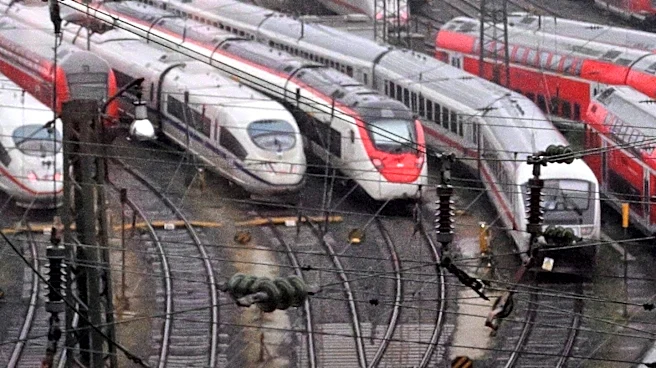
A scheduled maintenance on Germany's railway communication system led to a nationwide train outage, causing significant disruption for travelers. The outage, which occurred late Tuesday, halted all train services across the country, leaving passengers
stranded and forming long lines at information desks. Deutsche Bahn, the federal government-owned railway operator, attributed the disruption to a fault that arose during maintenance work on a central component of the GSM-R digital communication system. This fault triggered a mandatory safety procedure, stopping passenger trains at stations and parking freight trains. Although services resumed about two hours later, many passengers experienced delays and confusion due to a lack of information and limited availability of hotel accommodations. Deutsche Bahn offered taxi and hotel vouchers to affected travelers and pledged to analyze the cause to prevent future occurrences.
Why It's Important?
The incident highlights the vulnerability of critical infrastructure to technical failures, especially in a country with Europe's largest railway network. The disruption underscores the challenges faced by Deutsche Bahn, which has been criticized for frequent delays and service interruptions. The outage not only affected domestic travelers but also had potential implications for international rail connections, given Germany's central role in European rail transport. The event raises questions about the resilience of transportation systems and the need for robust emergency mechanisms to ensure reliability. The economic impact could be significant, affecting commuters, businesses relying on freight services, and the tourism sector.
What's Next?
Deutsche Bahn has committed to a thorough investigation to understand the root cause of the outage and implement measures to prevent similar incidents. The company is also undergoing extensive overhauls of major routes to improve service reliability, although these improvements are expected to take time. Stakeholders, including government officials and consumer advocacy groups, may push for increased investment in infrastructure and more stringent safety protocols. The incident could lead to policy discussions on enhancing the resilience of critical infrastructure and improving communication with passengers during disruptions.