


What's Happening?
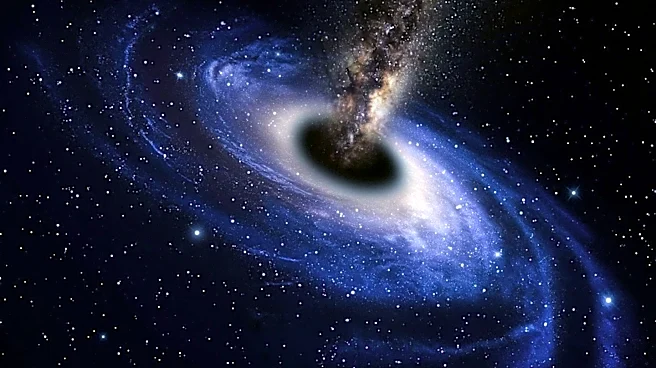
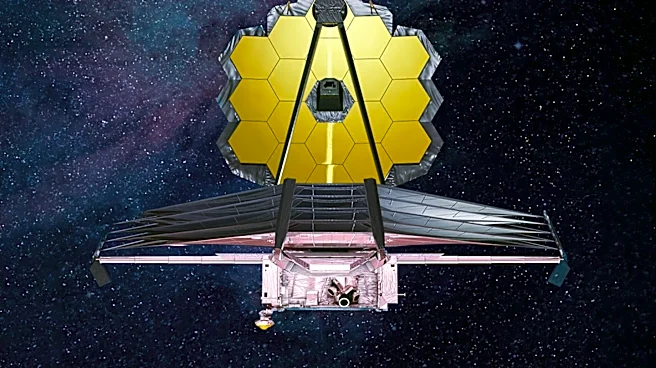
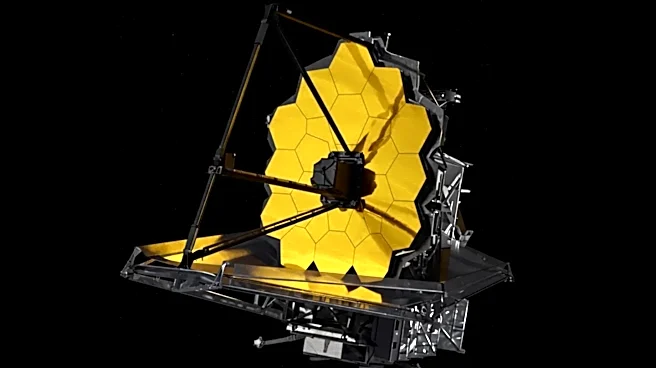
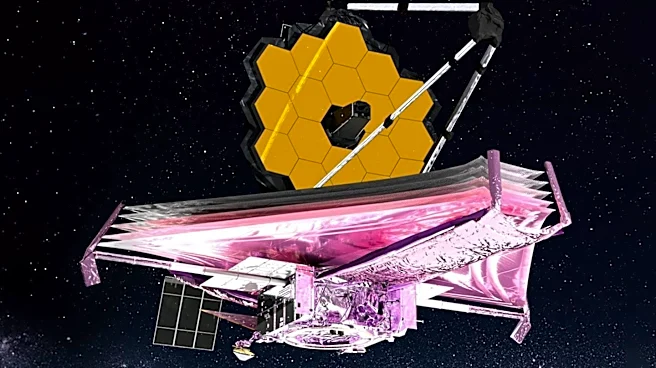
The James Webb Space Telescope (JWST) has utilized gravitational lensing to capture images of ancient galaxies, providing insights into the early universe. This phenomenon, predicted by Albert Einstein, involves massive celestial objects bending light,
allowing telescopes to observe distant galaxies. The latest JWST image features the galaxy cluster MACS J0553.4-3342, where gravitational lensing reveals light from galaxies formed less than a billion years after the Big Bang. The image showcases repeated images of a single galaxy, offering a unique view of the universe's formative years.
Why It's Important?
Gravitational lensing is a powerful tool for astronomers, enabling the study of galaxies that would otherwise be too faint to observe. The JWST's observations provide critical data on the formation and evolution of the universe, challenging existing cosmological theories. By examining these ancient galaxies, scientists can gain a better understanding of the universe's history and the processes that led to the development of stars and galaxies. This research has the potential to reshape our knowledge of cosmology and the fundamental laws governing the universe.
What's Next?
The JWST will continue to explore the universe using gravitational lensing, potentially uncovering more about the early stages of galaxy formation. Future observations may reveal new insights into the nature of dark matter and dark energy, furthering our understanding of the universe's composition. As the telescope continues its mission, it is expected to provide groundbreaking discoveries that will keep astronomers engaged for decades.