



What's Happening?
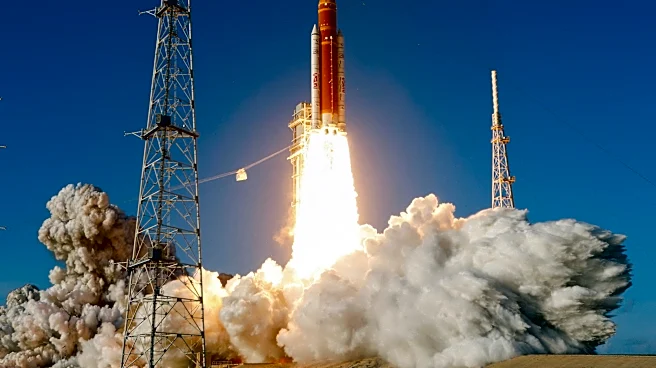
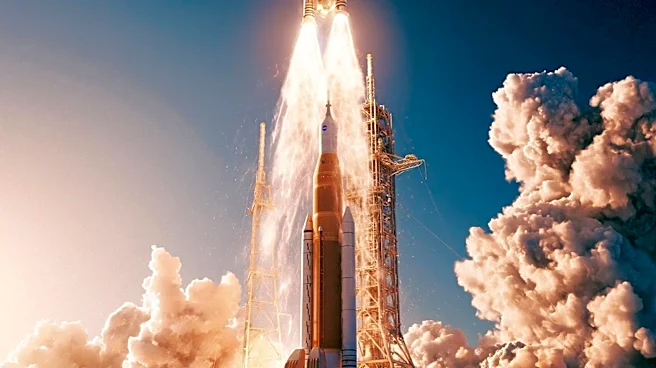
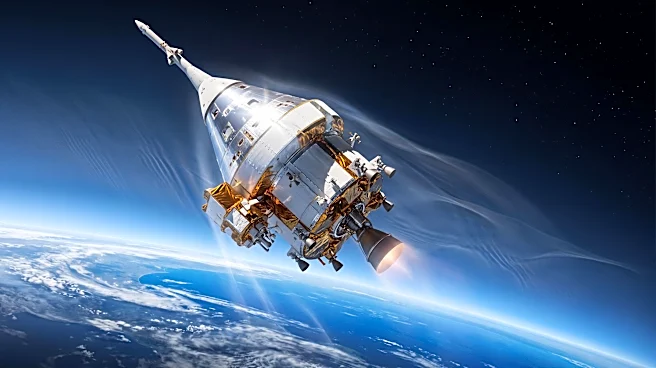
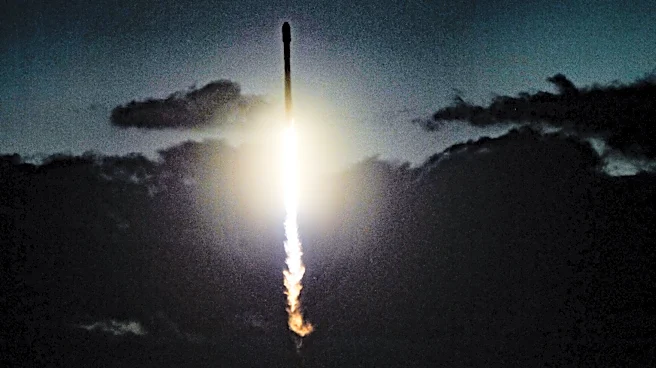
NASA's Artemis II mission, launched on April 1, 2026, from Kennedy Space Center in Florida, generated three distinct and unprecedented disturbances in Earth's upper atmosphere. Scientists from National Cheng Kung University in Taiwan, utilizing ground-based
GPS receivers, identified these disturbances. The most significant effects were not from the initial liftoff but from subsequent engine maneuvers as the spacecraft prepared for its lunar journey. One maneuver, an apogee raise burn approximately one hour after liftoff, created shock waves and large-scale disturbances that spread across 50 degrees longitude over North America. A third disturbance occurred during the trans-lunar injection burn 25 hours after launch. These events temporarily stripped electrons from the ionosphere, an electrically charged layer of the upper atmosphere crucial for radio and navigation signals. The research indicates these disturbances were more intense than those from any previous rocket launch, including SpaceX's Starship test flights, and represent the first time a single space mission produced three instances of ionospheric disturbances over the same region during successive orbital maneuvers.
Why It's Important?
The atmospheric disturbances caused by the Artemis II mission raise significant concerns regarding the reliability of satellite-dependent technologies, particularly GPS. The ionosphere's electron density variations can alter radio signal propagation, introducing delays and reducing positioning accuracy. While modern dual-frequency GPS systems can often correct for these delays, standard single-frequency devices, commonly used in commercial drones and autonomous vehicles, remain vulnerable to errors of several meters. Such positioning errors could cause an autonomous car to change lanes or affect drone positioning, potentially impacting safety and functionality in critical applications. As space agencies and commercial operators plan more frequent launches with increasingly powerful propulsion systems for missions beyond low Earth orbit, the potential for more widespread and intense atmospheric interference grows. This highlights a need for engineers to consider these effects in the design and operation of satellite-dependent technologies, especially as they become more integrated into daily life and critical infrastructure.
What's Next?
The findings, currently in a preprint study awaiting peer review, suggest a need for further research into the long-term effects and precise duration of these ionospheric depletions. Future studies will likely focus on how launch trajectories, burn altitudes, and the frequency of powerful rocket maneuvers influence the size and impact of these atmospheric disturbances. Space agencies and commercial operators may need to incorporate these findings into mission planning to anticipate and mitigate potential interference with navigation and communication systems. This could involve developing improved forecasting models for ionospheric disturbances and establishing protocols for operators of precision agriculture, survey crews, and autonomous vehicles to treat launch windows as potential minor space weather events, requiring reliance on backup sensors and not solely on satellite positioning for safety-critical tasks. The increasing number of missions to the Moon and Mars will make understanding and addressing these space weather effects more critical.
Beyond the Headlines
The Artemis II findings underscore a less obvious implication of increased space exploration: the potential for human-made space weather. While solar storms are traditionally recognized as sources of ionospheric disruption, this research demonstrates that powerful rocket launches and orbital maneuvers can also significantly alter Earth's upper atmosphere. This introduces a new dimension to space traffic management and environmental considerations, extending beyond orbital debris to atmospheric impacts. The ethical implications arise in balancing the pursuit of space exploration and its benefits against potential disruptions to essential terrestrial technologies. It also highlights the interconnectedness of Earth's atmosphere and space, suggesting that activities in one domain can have measurable, and potentially impactful, consequences in the other. This development could spur innovation in more resilient navigation systems and a deeper understanding of atmospheric physics in the context of human activity.