






What's Happening?
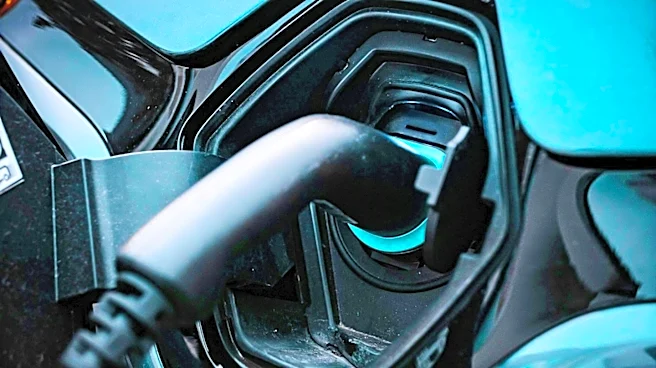
Electric vehicle (EV) sales have reached new heights globally, with a significant boost attributed to the recent oil crisis exacerbated by the U.S.-Iran conflict. According to the International Energy Agency (IEA), EV and plug-in hybrid electric vehicle (PHEV)
sales increased by 4% year-over-year and 35% over the previous quarter, now projected to account for 29% of global car sales in 2026. Despite a downturn in the overall auto industry, with a 5% drop in global car sales in the first half of 2026, EV sales have surged in regions like Europe, India, Brazil, Australia, and Korea. However, the U.S. market has seen a decline in EV sales following the elimination of federal EV tax credits and weakened fuel economy rules under the Trump administration. China remains a major player, with a significant portion of its car exports being electric vehicles, although it currently faces an oversupply issue.
Why It's Important?
The surge in EV sales highlights a significant shift in consumer behavior driven by rising fuel prices and environmental concerns. This trend presents both opportunities and challenges for the auto industry. While regions like Europe and Asia are experiencing growth, the U.S. market's decline underscores the impact of policy changes on consumer adoption of EVs. The global push towards electrification is reshaping the automotive landscape, with countries and companies vying for leadership in this emerging market. China's dominance in the battery supply chain poses a competitive challenge for other nations, emphasizing the need for coordinated efforts to enhance domestic capabilities.
What's Next?
As the global demand for EVs continues to rise, automakers and governments are likely to increase investments in infrastructure and technology to support this transition. The U.S. may need to reconsider its policies to remain competitive in the EV market. Additionally, the oversupply issue in China could lead to strategic adjustments in production and export strategies. The ongoing geopolitical tensions and their impact on oil prices will continue to influence the pace of EV adoption worldwide.